ToolMage
Sign in

Best 1 Practice AI tools for Communication

Popular Practice AI tools in Communication include DoppBot, helping you work more efficiently.

DoppBot
Freemium

DoppBot

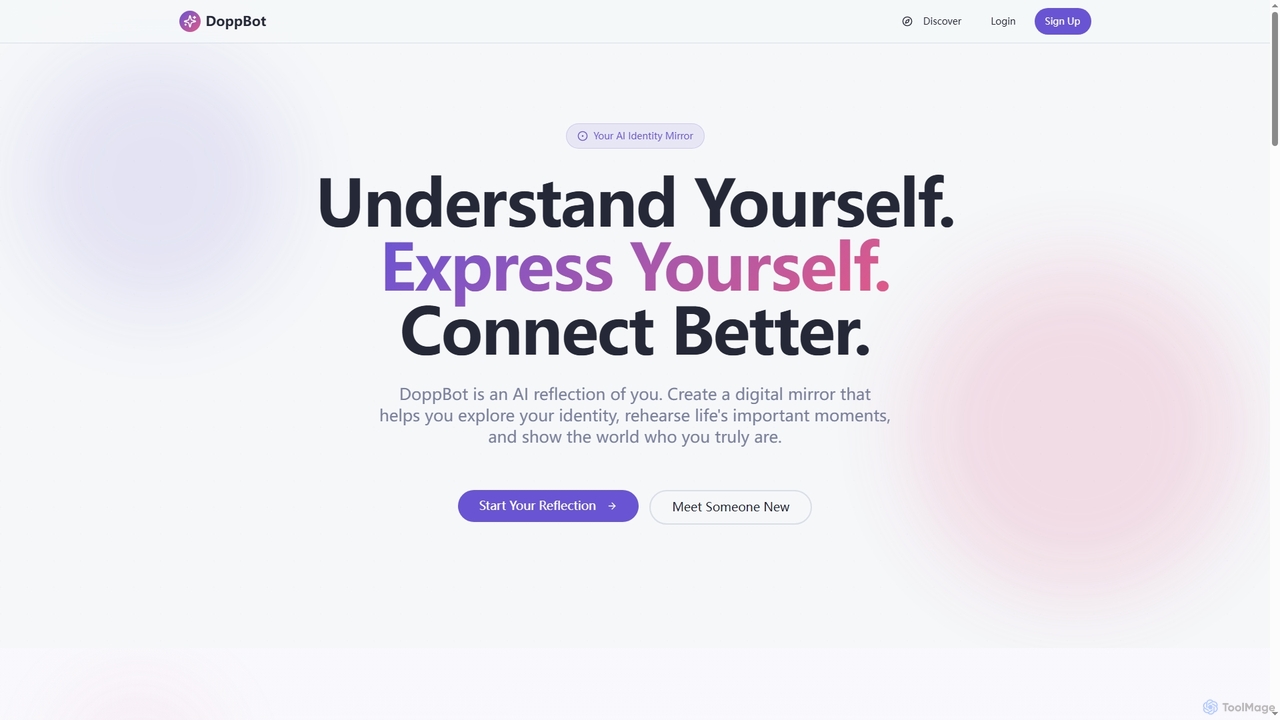
DoppBot is an innovative AI reflection tool that creates a digital mirror of your identity. It helps users understand themselves better, express their true self, and improve interactions by providing a safe space to explore thoughts, rehearse conversations, and preserve personal legacies.

Practice
Visits 6.4KFavorites 151Likes 149

About Practice

AI Practice tools are a specialized category within Communication AI, meticulously designed to help users rehearse, refine, and significantly improve various communication skills. These innovative tools leverage advanced AI algorithms to simulate realistic real-world scenarios, provide objective, data-driven feedback, and offer personalized, actionable guidance. They empower individuals across all professional and personal stages to build confidence, enhance clarity, and master their speaking, interviewing, or presentation abilities through structured, repetitive practice and insightful performance analytics.

Core Features

  • Real-time Performance Feedback: Analyzes speech patterns, vocal tone, speaking pace, and even non-verbal cues (when webcam access is utilized) during practice sessions, offering immediate insights.
  • Simulated Communication Scenarios: Provides immersive virtual environments for conducting mock job interviews, rehearsing public speaking engagements, practicing complex sales pitches, or engaging in conversational language learning.
  • Personalized Improvement Suggestions: Delivers actionable advice, targeted exercises, and specific recommendations based on a comprehensive analysis of the user's practice performance.
  • Content Generation & Scripting Support: Assists users in drafting effective responses, structuring compelling arguments, refining presentation content, or generating ideas for various communication tasks.
  • Pronunciation & Fluency Analysis: Particularly beneficial for language learners, this feature accurately identifies and corrects pronunciation errors, assesses grammatical accuracy, and evaluates overall conversational flow and naturalness.

Applicable Scenarios

These tools prove invaluable for job seekers meticulously preparing for critical interviews, professionals rehearsing high-stakes presentations or crucial sales pitches, and language learners striving to perfect their speaking and conversational skills. They also significantly benefit public speakers aiming to refine their delivery, enhance their stage presence, and boost overall confidence in front of an audience.

How to Choose

When selecting an AI Practice tool, it's crucial to consider its specific skill focus (e.g., dedicated public speaking, comprehensive interview preparation, or advanced language learning). Evaluate the depth and type of feedback provided (e.g., verbal clarity, non-verbal communication, content structure analysis), the realism and customization options of simulated scenarios, and its potential for integration with existing learning paths or educational curricula.

Practice use cases

1

Public Speaking Rehearsal for Conferences

A professional speaker uses an AI practice tool to rehearse their keynote address for an upcoming industry conference. The tool analyzes their speaking pace, identifies filler words, provides feedback on vocal variety and tone, and suggests improvements for body language captured via webcam. This helps them deliver a more engaging and polished presentation.

2

Job Interview Preparation for Tech Roles

A software engineer preparing for a technical interview utilizes an AI practice platform to simulate common interview questions and behavioral scenarios. The tool evaluates their answers for clarity, conciseness, and relevance, while also assessing their confidence and eye contact. This targeted feedback helps them refine their responses and present themselves more effectively.

3

Sales Pitch Refinement for New Products

A sales representative practices their pitch for a new product launch using an AI tool. The platform simulates client objections and provides real-time feedback on persuasive language, empathy, and objection handling techniques. This allows the rep to iterate on their pitch, making it more compelling and increasing their chances of closing deals.

4

Language Pronunciation and Fluency Practice

An intermediate English learner uses an AI practice application to improve their pronunciation and conversational fluency. The tool listens to their speech, highlights specific words or sounds that need correction, and offers phonetic guidance. It also engages them in simulated dialogues, helping them practice natural conversation flow and vocabulary usage.

5

Presentation Delivery Coaching for Students

A university student rehearses an academic presentation using an AI coach. The tool provides feedback on the structure of their arguments, the clarity of their explanations, and their overall delivery style. It helps them manage their time effectively, maintain audience engagement, and present complex information coherently.

6

Negotiation Skill Practice for Business Deals

A business development manager practices negotiation tactics for a high-value deal with an AI simulator. The tool presents various negotiation scenarios, evaluates the manager's responses for assertiveness, compromise, and strategic thinking, and offers alternative approaches. This helps them develop stronger negotiation skills and achieve better outcomes.

Practice FAQ

What are AI Practice tools and how do they work?

AI Practice tools are applications designed to help users improve specific communication skills by simulating real-world scenarios and providing data-driven feedback. They work by using AI to analyze aspects like speech patterns, tone, pace, body language, and content. Users practice in a virtual environment, and the AI provides immediate, objective insights and suggestions for improvement, often through metrics and personalized exercises.

How do AI Practice tools specifically enhance communication abilities?

These tools enhance communication abilities by offering a safe, repetitive, and objective practice environment. They provide detailed analytics on performance, highlighting strengths and weaknesses that a human observer might miss. By simulating diverse scenarios, users can experiment with different approaches, receive instant feedback, and refine their delivery, content, and non-verbal cues, leading to measurable skill improvement and increased confidence.

What is the main difference between AI Practice tools and traditional communication coaching?

The main difference lies in scalability, objectivity, and accessibility. AI Practice tools offer on-demand, repetitive practice with consistent, data-driven feedback, often at a lower cost. Traditional coaching provides human nuance, empathy, and deeper psychological insights, which AI currently cannot fully replicate. AI tools complement coaching by providing a robust platform for skill rehearsal and measurable progress tracking.

What types of communication skills can AI Practice tools help users improve?

AI Practice tools can help improve a wide range of communication skills. This includes public speaking (delivery, confidence, filler words), job interviewing (response clarity, demeanor, body language), sales pitching (persuasion, objection handling), language learning (pronunciation, fluency, grammar), and general presentation skills (structure, timing, engagement). They are versatile for various professional and personal communication needs.

How should I choose the right AI Practice tool for my specific needs?

To choose the right AI Practice tool, first identify your primary communication goal: is it public speaking, interview prep, or language learning? Then, evaluate the tool's specific features, such as the depth of feedback (verbal, non-verbal, content), the realism and variety of its simulated scenarios, and its reporting capabilities. Consider user reviews, pricing models, and whether it integrates with other learning resources you use.