
ToolMage
Sign in

Best 1 Real Time Translation AI tools for Communication

Popular Real Time Translation AI tools in Communication include amuring, helping you work more efficiently.

amuring
Paid

amuring

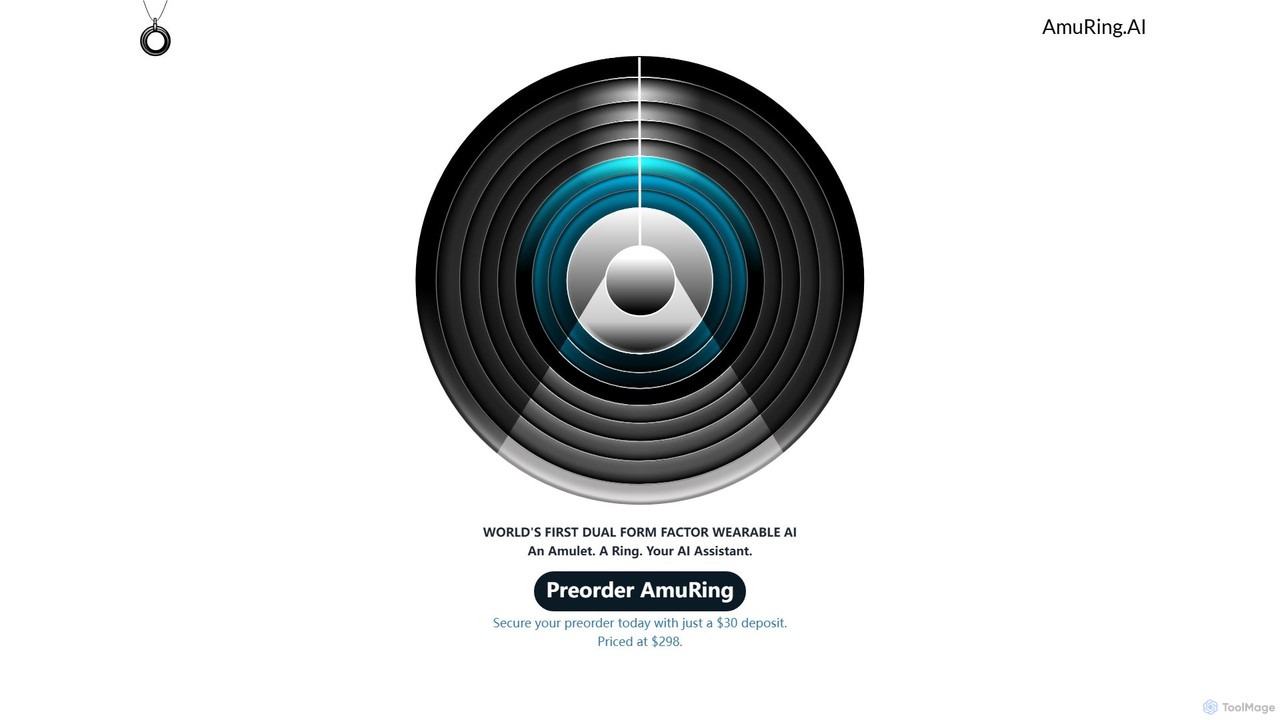
amuring is a revolutionary wearable AI companion featuring a unique dual form factor, multilingual support, and a Community-driven, Open-Source Software (COSS) platform. It can be worn as a stylish ring or a discreet pendant, offering seamless access to a personal AI assistant for real-time translation, voice commands, health tracking, and more, without needing to look at a screen.

Real Time Translation
Visits 5.6KFavorites 140Likes 140

About Real Time Translation

Real Time Translation tools are AI applications that instantly convert spoken or written language from one language to another. These tools leverage a combination of Automatic Speech Recognition (ASR), Neural Machine Translation (NMT), and Text-to-Speech (TTS) technologies to deliver translations with minimal delay. Their primary value lies in enabling fluid, natural conversations between individuals who speak different languages, effectively breaking down communication barriers in live interactions. This makes them distinct from traditional translation software by focusing on speed and conversational context for immediate use.

Core Features

  • Speech-to-Speech Translation: Instantly captures spoken words, translates them, and vocalizes the output in the target language's voice.
  • Live Captioning & Subtitles: Generates translated text overlays for video calls, webinars, or live streams as they happen.
  • Conversation Mode: Supports multi-person dialogues by identifying different speakers and translating their contributions sequentially.
  • Text & Document Translation: Provides immediate translation for typed messages in chats, emails, and collaborative documents.
  • Camera Translation: Uses the device's camera to translate text from signs, menus, or printed materials in real time.

Use Cases

These tools are essential for international business, where they facilitate multilingual video conferences and negotiations. In global customer support, they allow agents to communicate seamlessly with customers worldwide. They are also widely used by travelers for navigating foreign countries, by event organizers for creating accessible global livestreams, and in healthcare for clear doctor-patient communication.

How to Choose

When selecting a Real Time Translation tool, prioritize translation accuracy and naturalness for your required language pairs. Evaluate the latency (delay), as lower latency is crucial for smooth conversations. Check the breadth of language and dialect support. Finally, consider its integration capabilities with your existing platforms like Zoom, Microsoft Teams, or other communication apps.

Real Time Translation use cases

1

Facilitating International Business Video Conferences

A project manager at a multinational corporation needs to host a weekly sync-up with teams in Japan, Germany, and Brazil. Using a real-time translation tool integrated into their video conferencing platform, the manager's English speech is instantly converted into translated audio and live captions for each participant group. This ensures that complex technical details and project deadlines are understood clearly by everyone, eliminating misunderstandings and saving the cost of hiring multiple interpreters. The meeting's transcript is also saved with translations, providing an accurate record for all stakeholders.

2

Enhancing Global Customer Support via Live Chat

A customer support agent for an e-commerce company receives a query in Spanish via live chat. The agent, who only speaks English, uses a real-time translation tool integrated into the support desk software. The tool instantly translates the customer's Spanish messages into English for the agent and translates the agent's English replies back into Spanish for the customer. This seamless, instantaneous communication allows the agent to resolve the customer's issue with their order quickly and effectively, improving customer satisfaction and reducing the need for a dedicated multilingual support team.

3

Breaking Language Barriers for International Travelers

A tourist visiting Italy uses a real-time translation app on their smartphone. When trying to buy a train ticket, they speak into the phone in English, asking for a ticket to Rome. The app instantly plays back the translation in Italian to the ticket agent. The agent replies in Italian, and the app translates it back to English for the tourist. This speech-to-speech interaction allows the traveler to handle essential tasks like navigating public transport, ordering at restaurants, and asking for directions without needing to know the local language, making their travel experience smoother and more immersive.

4

Creating Accessible Multilingual Live Events

An event organizer is hosting a global technology summit streamed online. To reach a wider audience, they use a real-time translation service that provides live, AI-generated subtitles in multiple languages. As speakers present in English, attendees from around the world can select their preferred language (e.g., French, Mandarin, Portuguese) and see accurate, synchronized captions on their screen. This makes the event's valuable content accessible to non-English speakers, significantly increasing global engagement and participation without the high cost and complexity of simultaneous human interpretation for numerous languages.

5

Improving Doctor-Patient Communication in Healthcare

A doctor in a hospital needs to communicate a diagnosis to a patient who speaks a different language. Using a dedicated medical real-time translation device, the doctor speaks in their native language, and the device provides an immediate, accurate audio translation to the patient. The device is trained on medical terminology to ensure precision. This clear, real-time communication helps in accurately conveying complex medical information, ensuring the patient understands their condition and treatment plan, which is critical for patient safety and informed consent.

6

Enabling Seamless Cross-Cultural Team Collaboration

A distributed software development team with members in the USA, Ukraine, and India uses a collaboration platform with a built-in real-time text translation feature. When a developer from India posts an update in their team chat channel in English, it is automatically displayed in Ukrainian for the team in Kyiv. A Ukrainian developer can reply in their native language, and it is instantly translated back to English for others. This removes the language barrier in daily text-based communication, fostering a more inclusive and efficient environment where ideas and feedback can be shared freely and accurately without delay.

Real Time Translation FAQ

What is Real Time Translation?

Real Time Translation is the use of AI technology to instantly convert speech or text from a source language to a target language with minimal delay. Unlike traditional translation tools that may process text in batches, real-time systems are optimized for speed to facilitate live, interactive conversations. They typically combine technologies like Automatic Speech Recognition (ASR) to capture voice, Neural Machine Translation (NMT) for accurate conversion, and Text-to-Speech (TTS) to produce spoken output. This makes them ideal for video calls, live events, and in-person conversations.

How to choose the right Real Time Translation tool?

When selecting a real-time translation tool, consider these key factors:

  • Accuracy and Context: Check how well the tool handles nuances, industry-specific jargon, and conversational context for your primary language pairs.
  • Speed and Latency: For live conversations, the delay between speaking and translation output should be minimal to avoid awkward pauses.
  • Language Support: Ensure the tool supports all the languages and dialects your business or personal use requires.
  • Integration: Look for tools that integrate seamlessly with your existing workflow, such as video conferencing software (Zoom, Teams), chat platforms (Slack), or CRM systems.
  • Security: If you handle sensitive information, verify the tool's data privacy and security policies to ensure compliance.
What's the difference between Real Time Translation and standard Machine Translation?

The primary difference is speed and application. Real Time Translation is optimized for low latency to enable live, back-and-forth conversations, often involving speech-to-speech or live chat translation. Its success is measured by how fluidly it facilitates communication. Standard Machine Translation (like translating a document on Google Translate) prioritizes the highest possible accuracy for a static block of text and is not designed for immediate interaction. It may have a noticeable processing delay, making it unsuitable for live dialogue. Real-time systems are built for conversational flow, while standard systems are built for textual accuracy.

Are Real Time Translation tools accurate enough for professional use?

The accuracy of real-time translation has improved significantly and is often sufficient for many professional scenarios, such as internal team meetings, customer support chats, and informal business discussions. However, for situations requiring absolute precision and legal or contractual weight, such as legal proceedings, complex medical diagnoses, or high-stakes negotiations, they should be used with caution. It's often recommended to use them as a powerful aid alongside a human interpreter or to have critical information verified by a professional translator. For specialized fields, look for tools trained on specific industry vocabularies.

Who can benefit from using Real Time Translation tools?

A wide range of users can benefit from real-time translation tools. Key groups include:

  • Multinational Corporations: For seamless communication in global meetings, internal collaboration, and training.
  • Global Customer Support Teams: To assist customers worldwide in their native language without hiring multilingual staff.
  • International Travelers: For navigating, dining, and interacting with locals in foreign countries.
  • Event Organizers: To make conferences, webinars, and live streams accessible to a global audience.
  • Healthcare Providers: To communicate clearly with patients from diverse linguistic backgrounds, improving care and safety.
  • Content Creators: To add real-time subtitles to their videos and streams, expanding their reach.