Communication Best in category 1 results Reporting AI Tool

Popular AI tools in the Reporting field of Communication include dailystatus.ai, etc., helping you quickly improve efficiency.

dailystatus.ai

dailystatus.ai

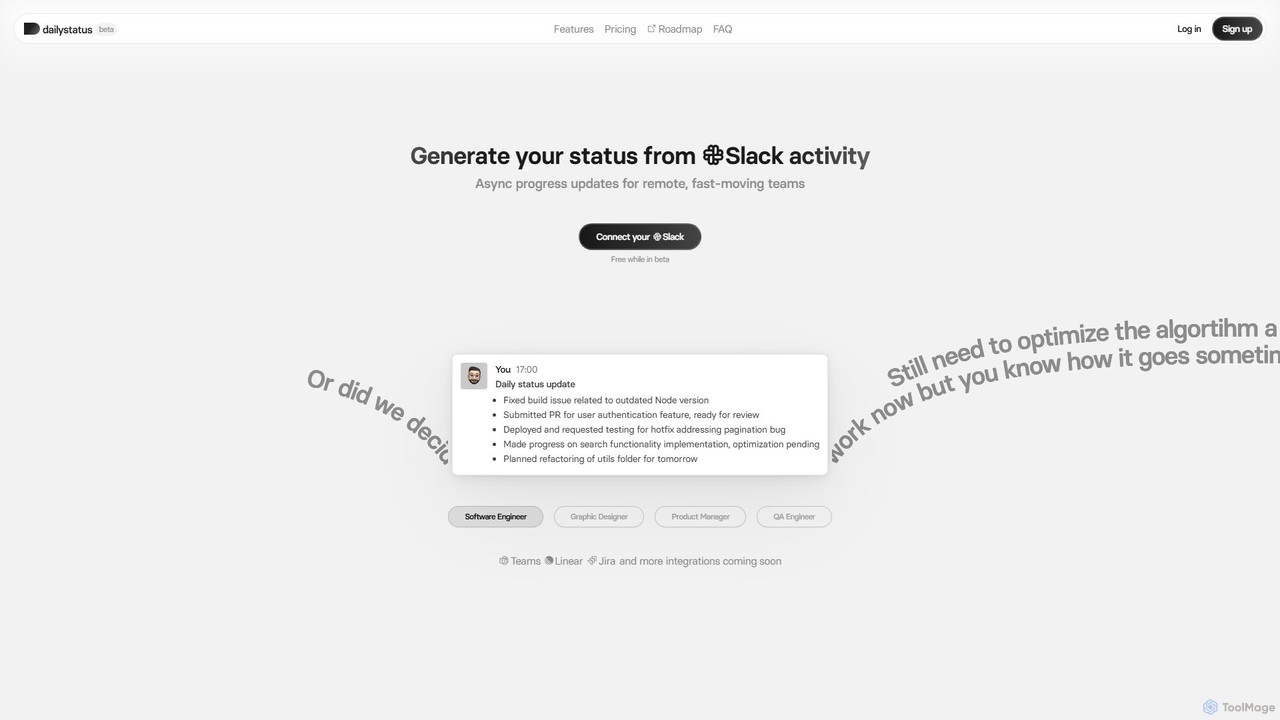
dailystatus.ai is an AI-powered tool that automates daily progress updates for remote teams. It intelligently generates concise status …

2.3K

About Reporting

Reporting tools are AI-powered solutions that automate the collection, analysis, and visualization of data to generate insightful reports. These tools leverage advanced machine learning algorithms to identify trends, anomalies, and key performance indicators (KPIs) from vast datasets. They transform complex raw data into clear, actionable intelligence, enabling businesses to communicate performance effectively and make informed decisions. This makes them a vital component within the broader communication ecosystem, ensuring data-driven narratives are consistently delivered.

Core Features

  • Automated Data Integration: Seamlessly connect to various data sources like CRM, ERP, marketing platforms, and databases, ensuring real-time data ingestion without manual effort.
  • Intelligent Data Analysis: Utilize AI to detect hidden patterns, predict future trends, and highlight critical insights, transforming raw numbers into strategic information for communication.
  • Customizable Dashboard & Visualization: Create dynamic, interactive dashboards and visual reports tailored to specific audiences and communication needs, allowing for clear and engaging presentation of complex data.
  • Natural Language Generation (NLG): Automatically generate narrative summaries and textual explanations for data insights, simplifying complex reports into easily digestible written content.
  • Anomaly Detection: Proactively identify unusual data points or performance deviations, enabling immediate alerts and facilitating timely communication for corrective actions.

Applicable Scenarios

These tools are widely adopted by business analysts, marketing teams, sales departments, and executive leadership across various industries. They are essential for monitoring business performance, tracking marketing campaign effectiveness, analyzing sales trends, and presenting project progress to stakeholders. From financial performance reviews to customer behavior analysis, AI reporting streamlines the process of transforming data into compelling narratives for internal and external communication.

Key Selection Points

When selecting an AI reporting tool, consider its data integration capabilities with your existing systems, ensuring comprehensive data coverage. Evaluate the depth of its AI-driven analytical features, including predictive modeling and anomaly detection. Assess the flexibility of its visualization and customization options to meet diverse reporting needs. Furthermore, investigate its natural language generation (NLG) capabilities for automated narrative creation and ensure it offers robust security, compliance features, and scalability for sensitive data growth.

ReportingUse Cases

1

Automated Marketing Campaign Performance Reports

Marketing managers can use AI reporting tools to automatically gather data from various channels (social media, email, ads) and generate comprehensive performance reports. The AI identifies top-performing campaigns, audience segments, and content types, providing actionable insights to optimize future strategies and communicate ROI to stakeholders without manual data aggregation.

2

Real-time Sales Performance Monitoring

Sales directors leverage AI reporting to monitor sales team performance, track revenue generation, and identify bottlenecks in the sales funnel in real-time. The tools can predict future sales trends, highlight underperforming regions or products, and generate immediate reports for daily stand-ups, enabling proactive adjustments and better resource allocation.

3

Financial Health and Budget Compliance Reporting

Finance departments utilize AI reporting to consolidate financial data from ERP systems, track budget adherence, and identify spending anomalies. The AI can automatically generate monthly or quarterly financial statements, compliance reports, and variance analyses, providing clear insights into the company's financial health for executive communication and strategic planning.

4

Customer Service Trend Analysis and Reporting

Customer service managers employ AI reporting to analyze interaction data (calls, chats, tickets) to identify common customer issues, sentiment trends, and agent performance. The AI can generate reports on resolution rates, customer satisfaction scores, and emerging pain points, helping to improve service quality and inform product development teams.

5

Project Progress and Resource Utilization Reports

Project managers use AI reporting to track project milestones, task completion rates, and resource allocation across multiple projects. The tools can automatically generate progress reports, highlight potential delays or resource overloads, and provide predictive insights into project timelines, facilitating transparent communication with clients and internal teams.

6

Supply Chain Efficiency and Risk Reporting

Operations managers deploy AI reporting to monitor supply chain metrics such as inventory levels, delivery times, and supplier performance. The AI identifies potential disruptions, optimizes logistics routes, and generates risk assessment reports, enabling proactive communication with partners and stakeholders to mitigate issues and ensure operational continuity.

ReportingFrequently Asked Questions