Meet Febin
Meet Febin is a personal innovation hub showcasing a collection of experimental AI projects. It features unique tools …
Meet Febin is a personal innovation hub showcasing a collection of experimental AI projects. It features unique tools like Film Flow for emotional film analysis, Peace Messenger for empathetic communication, and Crowd Feel for sentiment analysis, offering a glimpse into the future of human-centric AI applications.
mculture
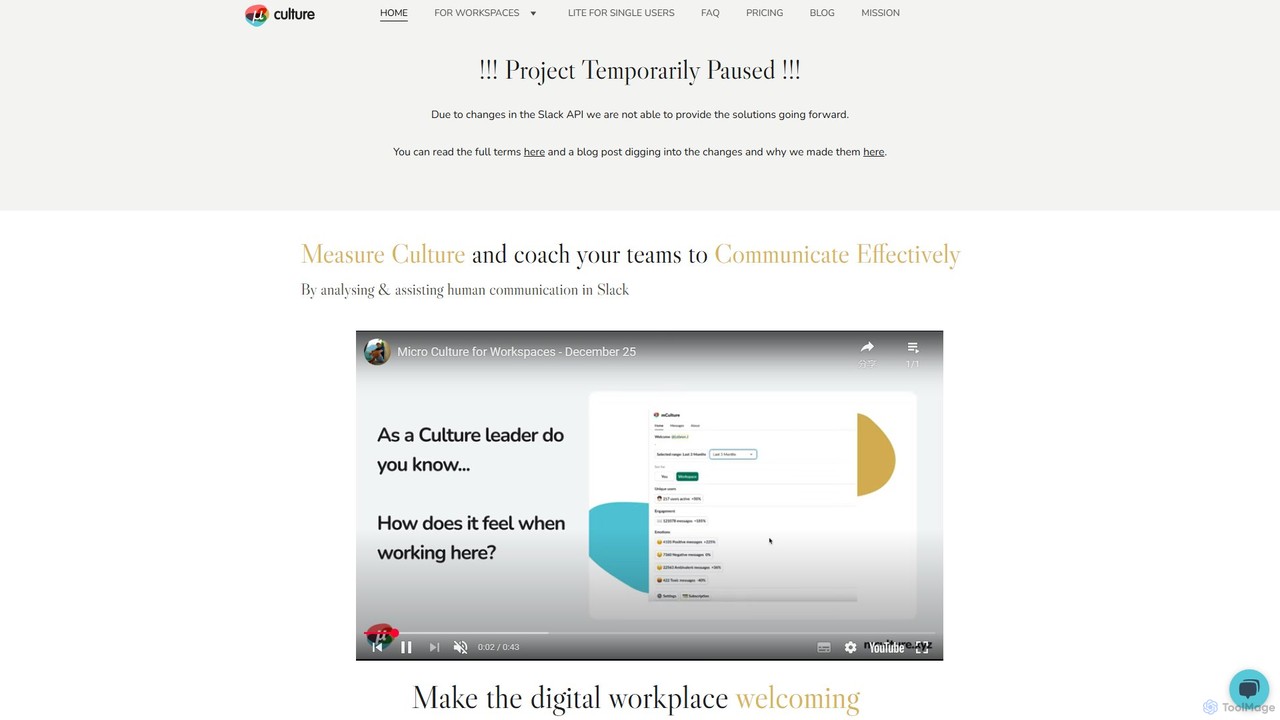
mculture is a people analytics platform for Slack that uses AI to analyze communication sentiment. It aims to …
mculture is a people analytics platform for Slack that uses AI to analyze communication sentiment. It aims to foster a positive work culture, improve team collaboration, and reduce employee turnover by providing insights into communication patterns and promoting self-awareness among team members.
About Sentiment Analysis
Sentiment Analysis tools are a class of AI that automatically interpret and classify emotions within text data. These tools leverage Natural Language Processing (NLP) to identify whether the underlying opinion is positive, negative, or neutral. Their primary value lies in transforming vast amounts of unstructured text—like reviews, social media comments, and support tickets—into structured, actionable insights. This enables organizations to gauge public opinion, monitor brand health, and understand customer experiences at scale.
Core Features
- Polarity Detection: Classifies text into positive, negative, or neutral categories to provide a high-level emotional overview.
- Emotion Recognition: Identifies more granular emotions such as joy, anger, sadness, or surprise within the text.
- Aspect-Based Analysis: Pinpoints sentiment towards specific features or topics mentioned in a text (e.g., positive about 'battery life' but negative about 'screen size').
- Intent Analysis: Determines the underlying purpose of the text, such as a complaint, a query, or a purchase intention.
- Sentiment Trend Tracking: Monitors and visualizes changes in sentiment over time to detect shifts in public opinion or campaign effectiveness.
Use Cases
Sentiment Analysis is widely used in marketing, customer service, and product development. Social media managers use it to monitor brand reputation in real-time, while customer support teams use it to prioritize urgent issues based on customer frustration levels. Product managers analyze user feedback to guide feature development and identify areas for improvement.
How to Choose
When selecting a Sentiment Analysis tool, consider its accuracy and language support. Evaluate its integration capabilities with your existing platforms like CRMs or social media management tools. Also, assess whether you need real-time analysis or batch processing, and check the granularity of the insights provided, such as aspect-based analysis for detailed feedback.
Sentiment AnalysisUse Cases
Monitor Social Media Brand Reputation
A marketing manager for a global electronics brand uses a sentiment analysis tool to track all public mentions of their new smartphone on Twitter and Facebook. The tool automatically categorizes thousands of daily posts into positive, negative, and neutral sentiments. This allows the marketing team to quickly identify and amplify positive user testimonials. More importantly, they can instantly detect emerging issues or negative feedback, forwarding critical comments to the support team to address problems proactively before they escalate into a wider crisis.
Analyze Customer Feedback from Surveys
A product manager for a SaaS company analyzes thousands of open-ended responses from a recent customer satisfaction survey. Instead of manually reading each comment, they use a sentiment analysis tool with aspect-based capabilities. The tool not only provides an overall satisfaction score but also identifies sentiment for specific features like 'user interface,' 'reporting tools,' and 'customer support.' This reveals that while customers are generally happy (positive sentiment), they are frustrated with the reporting tools (strong negative sentiment), providing a clear, data-driven priority for the next development cycle.
Prioritize Customer Support Tickets
A customer support team at an e-commerce company integrates a sentiment analysis tool with their help desk software. The tool automatically scans every new incoming ticket and assigns a sentiment score. Tickets with highly negative sentiment, which often indicate an angry or very frustrated customer, are automatically flagged and routed to a priority queue. This ensures that the most critical customer issues are addressed first, helping to de-escalate tense situations, reduce customer churn, and improve overall service quality without manual triage.
Conduct Market Research and Competitor Analysis
A market research analyst for a beverage company wants to understand public perception of a competitor's new product launch. They use a sentiment analysis tool to collect and analyze thousands of online reviews, news articles, and social media posts related to the new drink. The analysis reveals that while the initial marketing buzz was positive, a significant portion of consumer reviews express negative sentiment about the taste. This insight helps the analyst's company refine its own product development strategy and avoid a similar pitfall.
Gauge Employee Morale from Feedback
An HR department wants to understand employee sentiment following a major company restructuring. They deploy an anonymous survey and use a sentiment analysis tool to process the qualitative feedback. The tool helps identify key themes and the emotions associated with them, such as anxiety about 'job security' (negative) and optimism about 'new opportunities' (positive). This allows HR to move beyond simple quantitative scores and gain a nuanced understanding of employee morale, enabling them to design targeted communication and support programs to address specific concerns.
Assess Public Reaction to Political Campaigns
A political campaign analyst uses a sentiment analysis tool to monitor public opinion across social media and news outlets regarding their candidate. The tool tracks sentiment trends in real-time, allowing the campaign team to see how specific speeches, policy announcements, or debate performances are being received by the public. For example, they might notice a sharp increase in negative sentiment following a controversial statement, enabling them to quickly craft a response or clarification to manage the narrative and mitigate potential damage.