Communication Best in category 1 results Spam Filtering AI Tool

Popular AI tools in the Spam Filtering field of Communication include Unspam, etc., helping you quickly improve efficiency.

Unspam

Unspam

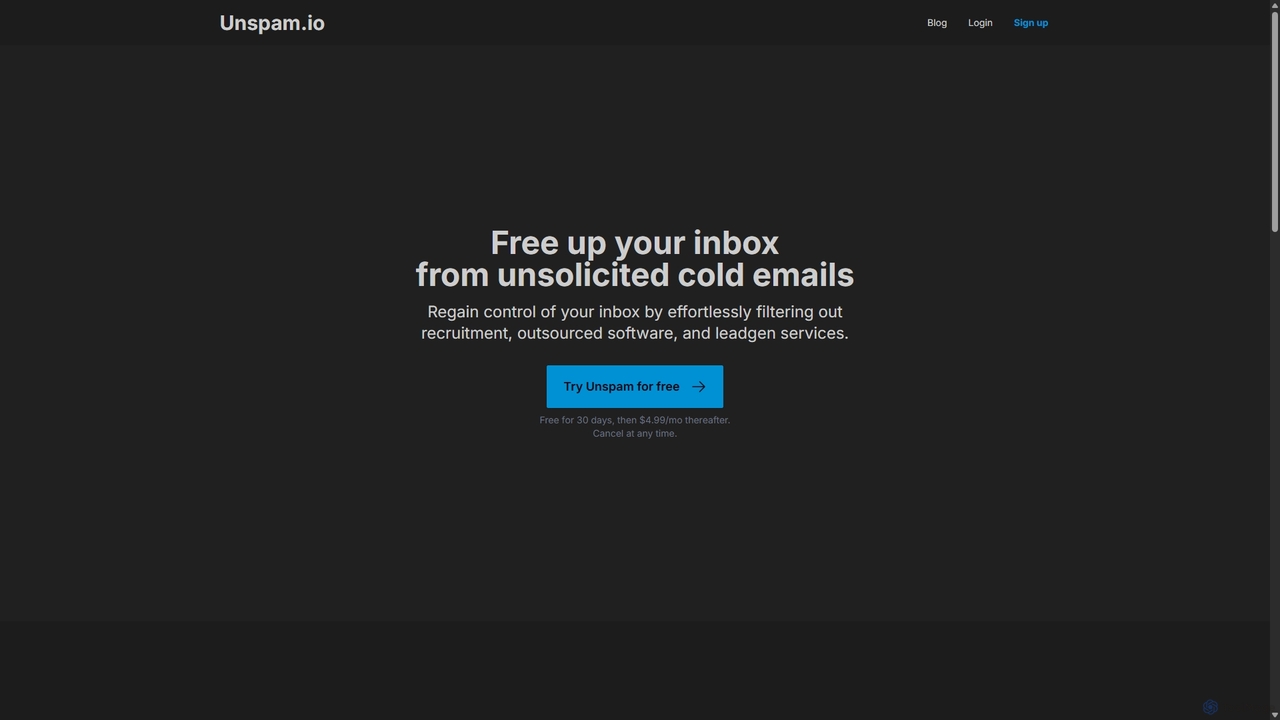
Unspam is an AI-powered tool designed to clean up your inbox by automatically filtering unsolicited cold emails. It …

2.8K

About Spam Filtering

Spam Filtering tools are AI-powered applications that automatically identify and block unwanted, malicious, or unsolicited emails from reaching an inbox. These tools utilize machine learning models, including Natural Language Processing (NLP), to analyze email content, sender reputation, and behavioral patterns in real-time. Their primary value lies in enhancing email security, protecting users from phishing scams and malware, and improving productivity by maintaining a clean, relevant inbox. Unlike traditional rule-based filters, AI spam filtering systems continuously adapt to new threats, offering more dynamic and accurate protection.

Core Features

  • Behavioral Analysis: Learns from user actions, such as marking emails as spam or not spam, to personalize filtering rules and improve accuracy over time.
  • Sender Reputation Scoring: Evaluates the sender's domain, IP address, and historical sending patterns to assess their trustworthiness before an email is delivered.
  • Content and Link Scanning: Uses NLP to detect suspicious language, phishing attempts, malicious URLs, and unsafe attachments within the email body.
  • Adaptive Threat Detection: Continuously updates its algorithms to recognize and block new and evolving spam tactics, including zero-day attacks.
  • Quarantine Management: Safely isolates potentially harmful emails, allowing users or administrators to review them before permanent deletion or delivery.

Applicable Scenarios

These tools are essential for businesses of all sizes to protect their corporate email infrastructure from cyber threats. IT administrators use them to enforce security policies across an organization. Individuals also leverage advanced spam filtering to augment the native protection of their email providers, ensuring a higher level of security for personal communications and sensitive data.

Selection Criteria

When choosing a spam filtering tool, consider its detection accuracy and the rate of false positives. Evaluate its integration capabilities with your existing email platform (e.g., Google Workspace, Microsoft 365). Also, assess the level of customization available for setting filter sensitivity and rules, and check for robust reporting features that provide insights into blocked threats.

Spam FilteringUse Cases

1

Protecting Corporate Email Systems

An IT administrator for a medium-sized enterprise is tasked with reducing the risk of phishing attacks and malware infections across the company. They deploy an AI spam filtering solution that integrates with their Microsoft 365 environment. The tool's AI engine analyzes all incoming emails for suspicious links, unusual sender behavior, and language patterns common in phishing attempts. It automatically quarantines high-risk emails and provides the IT team with detailed threat reports. This proactive approach significantly reduces the number of malicious emails reaching employees' inboxes, minimizing security incidents and protecting sensitive company data.

2

Securing a Freelancer's Professional Inbox

A freelance graphic designer uses their primary email for client communication, project delivery, and invoicing. Their inbox is frequently targeted by spam, including fake job offers and phishing attempts disguised as client requests. To protect their business, they subscribe to an AI spam filtering service. The service learns to distinguish legitimate client inquiries from sophisticated spam. It successfully blocks emails with malicious attachments pretending to be project files and filters out clutter, allowing the designer to focus on real client work without worrying about security threats or wasting time deleting junk mail.

3

Filtering a High-Volume Customer Support Inbox

A customer support team for an e-commerce store receives hundreds of emails daily to their shared 'support@' address. A significant portion is spam, which buries genuine customer inquiries and delays response times. By implementing an AI spam filter, the team can automatically sift out junk mail. The AI is trained to recognize legitimate support requests based on keywords like 'order number,' 'return,' and 'shipping issue.' This ensures that support agents' queues are filled only with valid tickets, improving team efficiency and leading to faster, more reliable customer service.

4

Preventing Spam Sign-ups on Web Forms

A marketing team runs a newsletter and uses a sign-up form on their website to collect leads. The form is constantly targeted by bots, resulting in a subscriber list filled with fake email addresses. This skews their marketing analytics and increases email bounce rates. They integrate a spam filtering tool with their web form. The tool uses IP reputation checks and behavioral analysis (like how quickly the form is filled out) to identify and block bot submissions in real-time. As a result, their mailing list becomes cleaner, analytics are more accurate, and their email sender reputation improves.

5

Improving Email Marketing Campaign Deliverability

An email marketer is preparing to send a campaign to 50,000 subscribers. Before launching, they use a spam filtering tool's pre-check feature to analyze their email content. The tool scans the email for common spam triggers, such as certain keywords, excessive capitalization, or poor HTML formatting. It also checks if the sending domain is on any blacklists. The tool provides a 'spam score' and actionable recommendations for improvement. By making the suggested changes, the marketer significantly increases the email's deliverability rate, ensuring it reaches subscribers' inboxes instead of their spam folders, maximizing campaign ROI.

6

Managing a Public Figure's Personal Email

A public figure receives a high volume of unsolicited emails, ranging from fan mail to business proposals and a large amount of spam. Their executive assistant uses an advanced AI spam filter to manage the inbox. The tool is configured with custom rules to prioritize emails from known contacts and specific domains (like agents or media outlets). It effectively filters out junk and low-priority messages, allowing the assistant to quickly identify and respond to important communications. This system saves hours of manual sorting each day and ensures critical opportunities are not missed.

Spam FilteringFrequently Asked Questions