ToolMage
Sign in

Best 3 Telephony AI tools for Communication

Popular Telephony AI tools in Communication include JustCall, ison24, and deepijatel, helping you work more efficiently.

ison24
Freemium

ison24

ison24 is an AI-powered voice assistant that answers your business phone calls 24/7, just like a human. It handles customer inquiries, books appointments directly into your calendar, manages text messages, and integrates with your existing CRM and scheduling tools to automate customer communication and free up your time.

Telephony
Visits 14.7KFavorites 98Likes 106
JustCall
Freemium

JustCall

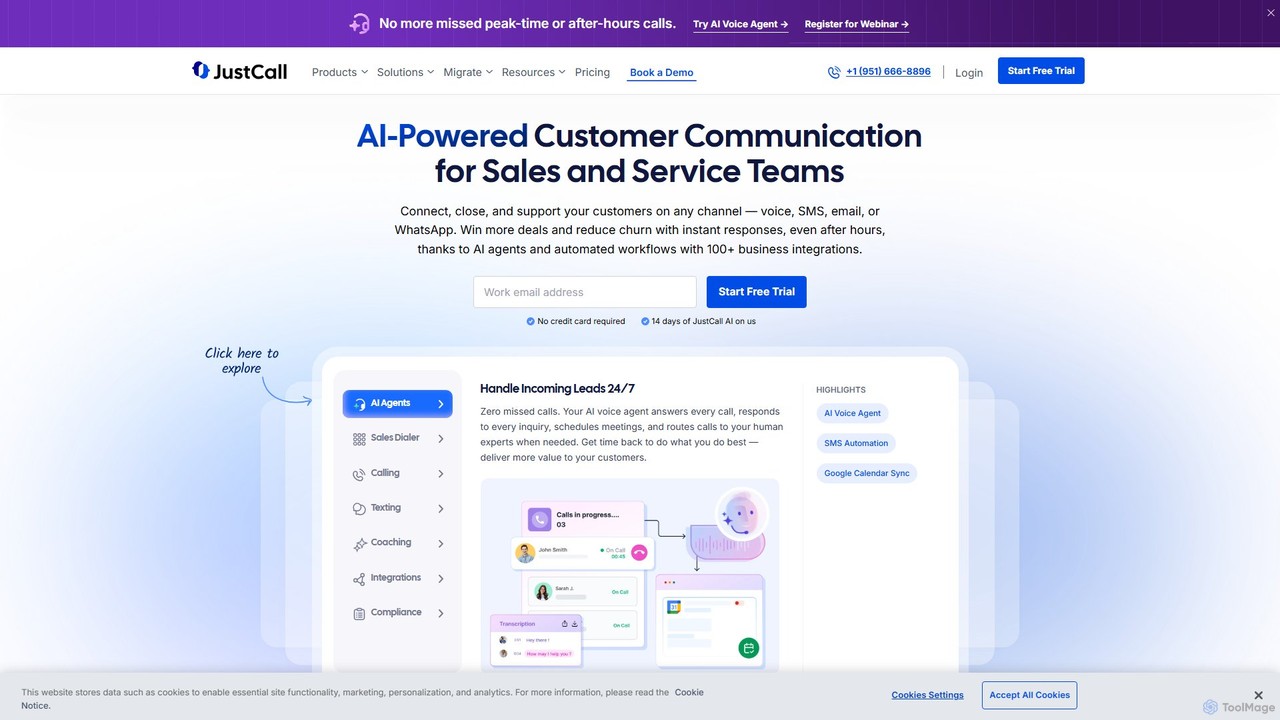
JustCall is an AI-powered business communication platform designed for sales and support teams. It unifies voice, SMS, WhatsApp, and email into a single workspace, leveraging AI agents and automation to capture leads 24/7, enhance customer interactions, and boost team productivity. With over 100 integrations, it streamlines workflows and provides deep analytics.

Telephony
Visits 603.3KFavorites 114Likes 101
deepijatel
Paid

deepijatel

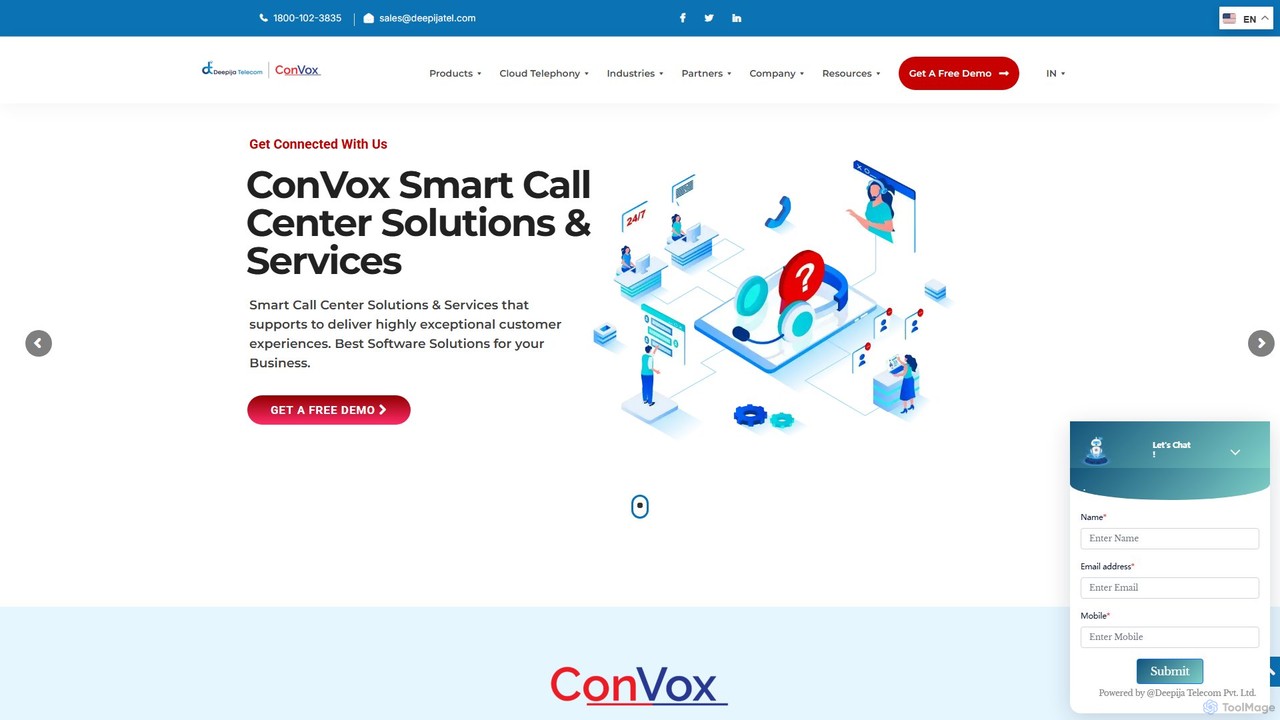
Deepijatel offers the ConVox suite, an AI-powered, omnichannel contact center solution designed to streamline customer communication. It integrates voice, chat, email, and social media into a single platform, featuring a predictive dialer, IVR, voice bots, CRM, and ticketing system to boost agent productivity and enhance customer experience.

Telephony
Visits 11.2KFavorites 140Likes 154

About Telephony

AI Telephony tools are AI-powered solutions designed to automate, enhance, and analyze voice-based communications. Leveraging advanced natural language processing (NLP) and speech recognition, these tools can understand, interpret, and respond to human speech, transforming traditional phone systems. They significantly improve customer service, streamline sales processes, and provide deep insights from voice interactions, making communication more efficient and intelligent.

Core Features

  • AI Call Agents: Automated virtual agents capable of handling routine inquiries, providing information, and performing transactions.
  • Speech-to-Text Transcription: Converts spoken words into accurate text, enabling easy search, analysis, and documentation of calls.
  • Sentiment Analysis: Identifies and analyzes emotional tones and attitudes in conversations to gauge customer satisfaction and agent performance.
  • Intelligent Call Routing: Uses AI to understand caller intent and route calls to the most appropriate department or agent, reducing wait times.
  • Real-time Agent Assist: Provides live suggestions, scripts, and information to human agents during calls, enhancing their effectiveness.

Use Cases

AI Telephony is widely adopted across various sectors, from automating customer support in e-commerce to qualifying leads in sales and monitoring compliance in finance. Businesses use these tools to manage high call volumes, personalize customer interactions, and extract actionable data from conversations, leading to improved operational efficiency and customer satisfaction.

How to Choose

When selecting an AI Telephony solution, consider its voice recognition accuracy, natural language understanding capabilities, integration with existing CRM/ERP systems, scalability to handle call volumes, and robust security features. Evaluate the ease of customization for specific business needs and the availability of comprehensive analytics and reporting tools.

Featured tool rankings

Telephony use cases

1

Automated Customer Service Inquiries

For e-commerce businesses or service providers, AI Telephony tools can act as a virtual customer service agent, handling common questions about order status, product information, or service appointments 24/7. This frees up human agents for complex issues, reduces wait times, and ensures consistent, immediate support, significantly improving customer satisfaction and operational efficiency.

2

Sales Lead Qualification and Nurturing

Sales teams can deploy AI Telephony to automatically call and qualify inbound leads, gather initial information, and even schedule follow-up appointments. The AI can identify high-potential leads based on responses and sentiment, passing only the most promising prospects to human sales representatives, thereby optimizing sales funnel efficiency and increasing conversion rates.

3

Call Center Agent Performance Enhancement

In busy call centers, AI Telephony provides real-time assistance to human agents. It can transcribe conversations, suggest relevant knowledge base articles, or even prompt agents with appropriate responses based on customer queries and sentiment. This reduces training time, improves agent confidence, and ensures consistent service quality across all interactions.

4

Market Research and Feedback Collection

Companies can use AI Telephony to conduct automated surveys or gather feedback from customers post-interaction. The AI can ask open-ended questions, transcribe responses, and perform sentiment analysis to identify trends and insights into customer preferences, product satisfaction, or service quality, providing valuable data for strategic decision-making.

5

Compliance Monitoring and Risk Management

Financial institutions and regulated industries can leverage AI Telephony to automatically monitor and analyze recorded calls for compliance with industry regulations and internal policies. The AI can flag specific keywords, phrases, or emotional cues that indicate potential risks or non-compliance, ensuring adherence to legal requirements and mitigating potential liabilities.

6

Virtual Receptionist for Small Businesses

Small to medium-sized businesses can utilize AI Telephony as an intelligent virtual receptionist. It can greet callers, answer frequently asked questions, direct calls to the correct department or individual, and even take messages. This professionalizes the caller experience, ensures no calls are missed, and allows staff to focus on core tasks without constant interruption.

Telephony FAQ

What is AI Telephony?

AI Telephony refers to the integration of artificial intelligence into traditional telephone systems to automate, enhance, and analyze voice communications. It utilizes technologies like natural language processing (NLP), speech recognition, and machine learning to understand human speech, perform tasks, and extract insights from phone calls, moving beyond basic interactive voice response (IVR) systems.

How does AI Telephony differ from traditional IVR systems?

Traditional IVR systems rely on pre-recorded menus and touch-tone inputs, following rigid, rule-based scripts. AI Telephony, conversely, uses advanced AI to understand natural language, allowing callers to speak freely and express their needs in their own words. This enables more dynamic, personalized, and efficient interactions, often resolving issues without human intervention, unlike the limited capabilities of IVR.

What are the main benefits of implementing AI Telephony?

Implementing AI Telephony offers several key benefits, including significant cost reduction through automation of routine tasks, improved customer satisfaction due to faster and more consistent service, and enhanced operational efficiency by freeing up human agents. It also provides valuable data insights from call analytics, enabling better decision-making and personalized customer experiences.

What should I consider when choosing an AI Telephony provider?

When selecting an AI Telephony provider, prioritize solutions with high accuracy in speech recognition and natural language understanding, robust integration capabilities with your existing CRM and communication platforms, and strong data security and privacy protocols. Also, consider scalability, customization options for your specific industry, and the quality of customer support and implementation services offered.

Can AI Telephony integrate with existing communication platforms?

Yes, most modern AI Telephony solutions are designed for seamless integration with a wide range of existing communication platforms, including CRM systems (e.g., Salesforce, HubSpot), helpdesk software (e.g., Zendesk, Freshdesk), and unified communications platforms. This integration allows for a holistic view of customer interactions, streamlined workflows, and consistent data across all channels, maximizing the value of your AI investment.