ToolMage
Sign in

Best 2 Voice Ai AI tools for Communication

Popular Voice Ai AI tools in Communication include Vex AI and Eldspark, helping you work more efficiently.

Eldspark
Freemium

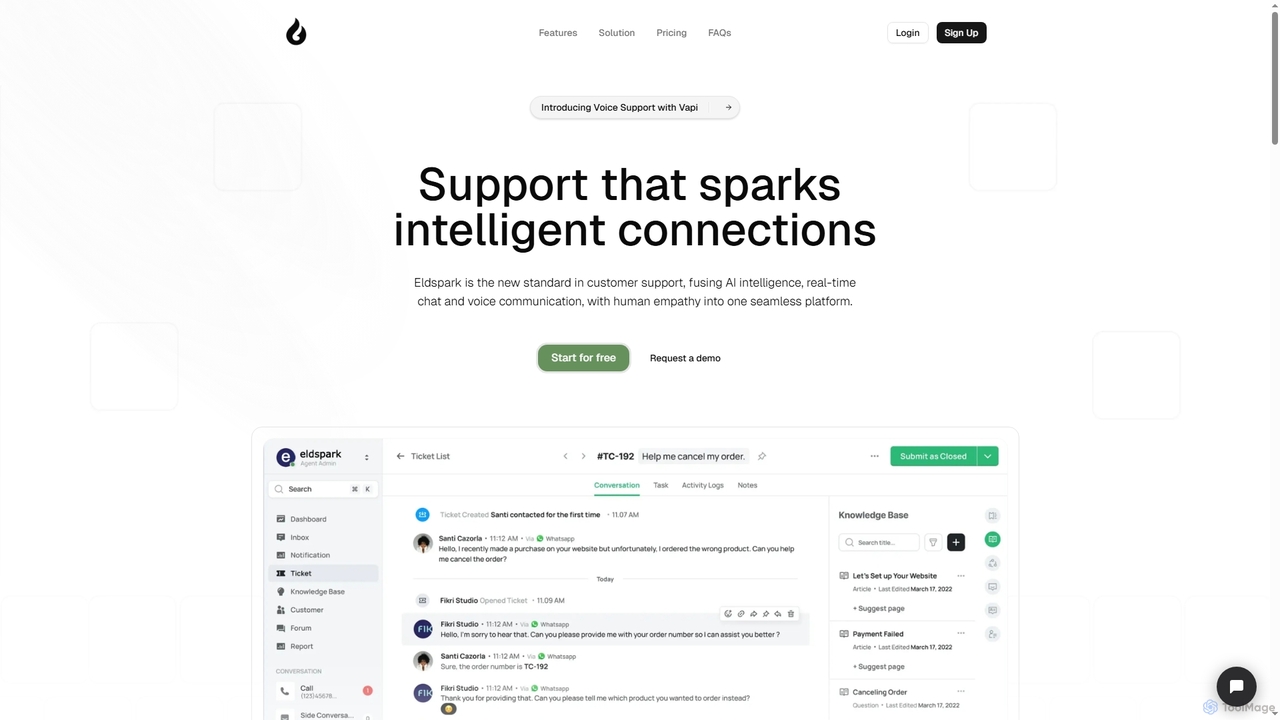
Eldspark

Eldspark is an AI-powered customer support platform that integrates intelligent AI chat, real-time voice communication, and human empathy to deliver a seamless customer experience. It helps modern businesses scale support, reduce costs, and provide context-aware responses from their knowledge base.

Voice Ai
Visits 5.5KFavorites 150Likes 143
Vex AI
Freemium

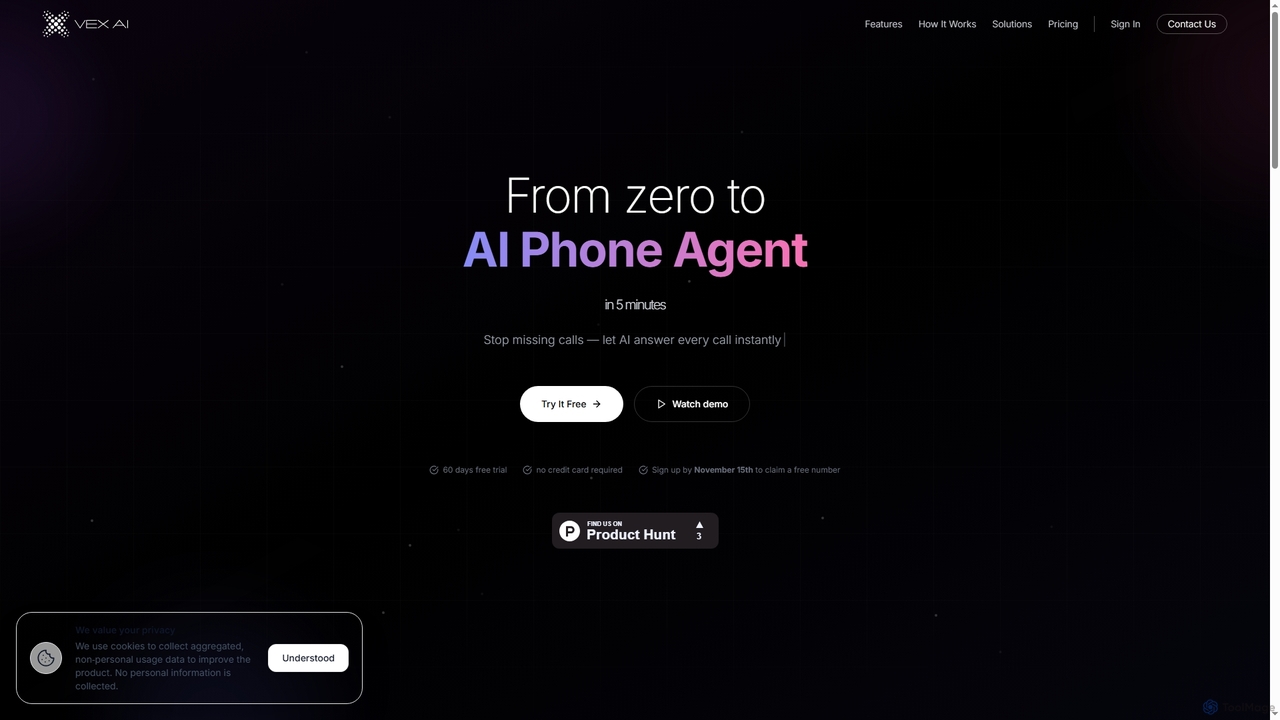
Vex AI

Vex AI is an advanced AI phone agent that automates customer calls, answers FAQs, and schedules appointments 24/7. It provides human-like conversational support, helping businesses streamline communication, reduce wait times, and scale customer service effortlessly. Start with a 60-day free trial.

Voice Ai
Visits 6.8KFavorites 124Likes 141

About Voice Ai

Voice AI refers to a sophisticated category of artificial intelligence tools designed to process, understand, and generate human speech with remarkable accuracy and naturalness. Leveraging advanced natural language processing (NLP), machine learning algorithms, and deep learning models, these technologies enable seamless and intuitive interaction between humans and machines through spoken language. They are instrumental in automating communication workflows, enhancing digital accessibility, and creating highly dynamic and personalized audio content across a multitude of digital platforms and devices.

Core Features

  • Speech-to-Text (STT): Converts spoken language from audio inputs into written text with high accuracy, supporting a wide array of languages, dialects, and accents for transcription and analysis.
  • Text-to-Speech (TTS): Transforms written text into natural-sounding human speech, offering a diverse range of voices, tones, speaking styles, and emotional nuances to create engaging audio experiences.
  • Voice Cloning/Synthesis: Replicates or creates unique voice profiles from minimal audio samples, allowing for the generation of new speech in a consistent, distinct vocal characteristic for branding or personalization.
  • Natural Language Understanding (NLU) for Voice: Interprets the underlying intent, context, and entities within spoken commands and queries, facilitating intelligent and context-aware responses from voice assistants and chatbots.
  • Emotion Detection: Analyzes vocal patterns, pitch, and cadence to identify and respond to human emotions, enabling more empathetic and nuanced AI interactions in customer service or mental health applications.

Applicable Scenarios

Voice AI tools are extensively adopted in diverse fields requiring efficient audio processing and interactive voice experiences. They empower businesses to automate and personalize customer support via intelligent voicebots, significantly reducing call center loads and improving service availability. Content creators leverage these tools for generating natural-sounding audio versions of articles, podcasts, and audiobooks, expanding their reach. Furthermore, Voice AI provides crucial accessibility solutions for individuals with visual impairments or reading difficulties, offering auditory access to digital information. Developers also utilize Voice AI for building sophisticated voice-controlled applications, smart home devices, and interactive educational platforms.

How to Choose

When selecting a Voice AI tool, prioritize the accuracy of its speech recognition and the naturalness and expressiveness of its synthesized voices, especially for your specific target languages and dialects. Evaluate the breadth of advanced features, such as robust voice cloning capabilities, real-time processing, or emotion detection, that align with your project's needs. Consider its integration capabilities with your existing software ecosystem and API accessibility. Finally, assess the scalability of the solution, its pricing model based on usage, and the level of customization offered for voice profiles to ensure it meets both current and future requirements.

Voice Ai use cases

1

Automating Customer Service Calls

For businesses with high call volumes, Voice AI tools can power intelligent voicebots to handle routine inquiries, provide instant answers, and guide customers through processes. This reduces wait times, frees up human agents for complex issues, and ensures 24/7 support, significantly improving customer satisfaction and operational efficiency.

2

Generating Audio Content for Podcasts & Audiobooks

Content creators, podcasters, and publishers can use Text-to-Speech Voice AI to convert written scripts, articles, or books into natural-sounding audio. This accelerates content production, allows for multilingual audio versions without hiring voice actors, and expands audience reach to those who prefer listening over reading.

3

Real-time Meeting Transcription & Summarization

Professionals in corporate settings or researchers conducting interviews can leverage Speech-to-Text AI to automatically transcribe spoken conversations during meetings, lectures, or interviews. These tools can also identify speakers and summarize key discussion points, saving hours of manual note-taking and ensuring accurate record-keeping.

4

Creating Personalized Voice Assistants & Smart Devices

Developers and product designers can integrate Voice AI for creating custom voice assistants for smart homes, cars, or enterprise applications. This enables intuitive voice control for various functions, offers personalized user experiences, and enhances accessibility for users who prefer or require hands-free interaction with technology.

5

Developing Accessible Educational Materials

Educators and e-learning platforms can utilize Voice AI to convert textbooks, learning modules, and online articles into audio formats. This provides crucial support for students with visual impairments, dyslexia, or other reading difficulties, making educational content more inclusive and accessible to a broader range of learners.

6

Voice Branding and Marketing Personalization

Marketing teams and brands can employ Voice Cloning AI to create a consistent brand voice for all their audio communications, from advertisements to interactive voice response (IVR) systems. This allows for personalized voice messages at scale, enhancing brand recognition and creating a more engaging and memorable customer experience.

Voice Ai FAQ

What is Voice AI?

Voice AI, or Artificial Intelligence for Voice, refers to a branch of AI that enables machines to understand, process, and generate human speech. It encompasses technologies like speech recognition (converting voice to text), natural language understanding (interpreting meaning), and speech synthesis (generating human-like voice from text). Its core purpose is to facilitate natural spoken communication between humans and digital systems, automating tasks and enhancing interactive experiences.

How do Voice AI tools differ from traditional voice recording software?

Traditional voice recording software primarily captures and stores audio, often with basic editing capabilities. Voice AI tools, however, go far beyond simple recording by applying advanced algorithms to the audio. They can transcribe speech, understand its meaning, synthesize new speech, and even clone voices. This allows for intelligent interaction, automation, and content generation that traditional recording software cannot achieve, transforming raw audio into actionable data or new creative outputs.

What are the main capabilities of Voice AI tools?

Voice AI tools offer a range of powerful capabilities. Key among them are Speech-to-Text (STT) for accurate transcription of spoken words into text, and Text-to-Speech (TTS) for converting written text into natural-sounding human voices. Additionally, many tools include Natural Language Understanding (NLU) to interpret user intent from voice commands, and advanced features like voice cloning for creating custom voice profiles, and emotion detection to gauge sentiment from vocal cues.

Who benefits most from using Voice AI tools?

A wide array of users and industries benefit significantly from Voice AI tools. Businesses leverage them for automating customer service, improving call center efficiency, and personalizing user interactions. Content creators utilize them for generating audio versions of their work, expanding accessibility. Healthcare providers use them for dictation and patient interaction. Individuals with disabilities find them invaluable for accessibility, while developers integrate them to build innovative voice-controlled applications and smart devices.

How do I choose the right Voice AI tool for my needs?

Choosing the right Voice AI tool involves evaluating several factors. First, assess the accuracy of its speech recognition and the naturalness of its Text-to-Speech voices for your specific language and use case. Consider the range of features offered, such as voice cloning, real-time processing, or API integration capabilities. Evaluate the tool's scalability, pricing structure, and the level of customization available for voices. Finally, check for robust security measures and compliance with data privacy regulations, especially for sensitive applications.