ToolMage
Sign in

Best 1 Voice Tools for Communication

Popular Voice Tools in Communication include Idict, helping you work more efficiently.

Idict
Freemium

Idict

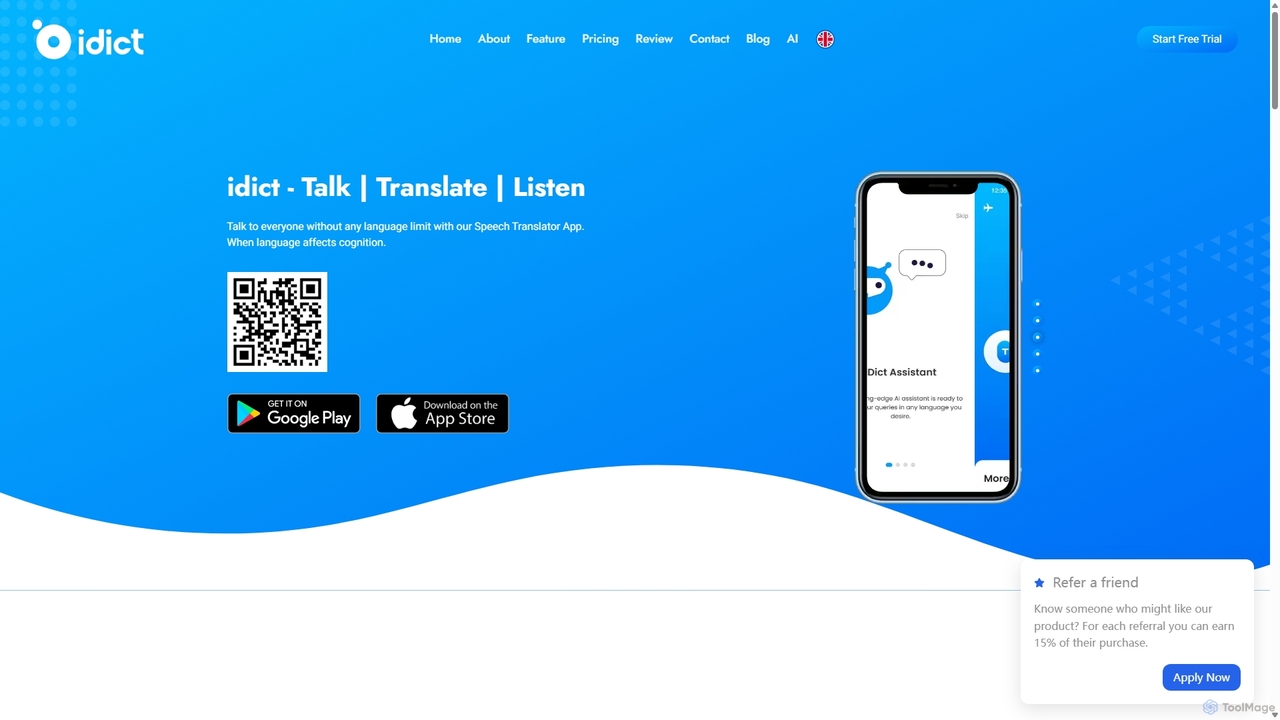
Idict is an AI-powered voice cloning translation app that allows you to speak in any language using your own voice. It offers real-time translation, an AI assistant, and a comprehensive phrase guide, making it perfect for travelers, professionals, and content creators to communicate naturally across language barriers.

Voice Tools
Visits 6KFavorites 102Likes 110

About Voice Tools

Voice Tools are AI-powered applications designed to process, generate, analyze, and transform human speech. Leveraging advanced natural language processing and machine learning, these tools enable seamless interaction with audio, enhancing various aspects of digital communication. They provide innovative solutions for content creation, accessibility, and automation, making voice technology more versatile and accessible across industries.

Core Features

  • Speech-to-Text (STT): Converts spoken language into written text with high accuracy, facilitating transcription and analysis.
  • Text-to-Speech (TTS): Synthesizes natural-sounding human voices from written text, ideal for audio content and accessibility.
  • Voice Cloning: Replicates specific vocal characteristics to generate new speech in a desired voice, maintaining brand consistency or personal touch.
  • Voice Analysis: Identifies emotions, speaker attributes, and linguistic patterns within audio, useful for customer insights and security.
  • Noise Reduction & Enhancement: Cleans up audio recordings by removing background noise and improving clarity for professional output.

Applicable Scenarios

Voice Tools are widely adopted in media production for generating voiceovers and podcasts, in customer service for transcribing calls and powering voicebots, and in education for creating accessible learning materials. They also assist professionals in transcribing meetings and interviews, significantly boosting productivity and record-keeping.

How to Choose

When selecting Voice Tools, consider the accuracy of speech recognition or synthesis, the range of supported languages and accents, and the naturalness of generated voices. Evaluate customization options for voice parameters, integration capabilities with existing workflows, and real-time processing needs. Also, assess data privacy policies and pricing models to ensure they align with your project requirements and budget.

Voice Tools use cases

1

Automated Meeting Transcription

Business professionals and researchers can utilize Voice Tools to automatically transcribe live meetings, interviews, or lectures. This eliminates the need for manual note-taking, ensuring accurate records of discussions, decisions, and action items. The transcribed text can then be easily searched, shared, and integrated into project management systems, saving significant time and improving collaboration.

2

Generating Voiceovers for Video Content

Content creators, marketers, and educators can leverage Text-to-Speech (TTS) Voice Tools to produce high-quality voiceovers for videos, presentations, and e-learning modules. By simply inputting script text, users can select from various AI voices, adjust tone and pace, and generate professional audio tracks without hiring voice actors or setting up recording studios, accelerating production timelines.

3

Developing Personalized Voice Assistants

Developers and businesses can integrate Voice Tools to create custom voice assistants or interactive voice response (IVR) systems. These tools enable natural language understanding and voice synthesis, allowing for personalized customer interactions, automated support, and hands-free control of applications. This enhances user experience and streamlines service delivery across various platforms.

4

Creating Accessible Audiobooks and Podcasts

Authors, publishers, and content producers can transform written manuscripts into engaging audiobooks or podcasts using advanced Text-to-Speech technology. Voice Tools offer a range of expressive AI voices, enabling the creation of diverse audio content that is accessible to a wider audience, including those with visual impairments, and expanding content distribution channels efficiently.

5

Real-time Voice Translation for Global Communication

Individuals and organizations engaged in international communication can use Voice Tools for real-time voice-to-voice translation. This facilitates seamless conversations across language barriers in virtual meetings, conferences, or personal interactions. The tools capture spoken language, translate it instantly, and output it in the target language, fostering better understanding and global collaboration.

6

Brand Voice Consistency with Voice Cloning

Marketing teams and brands can employ Voice Cloning tools to maintain a consistent brand voice across all audio touchpoints, from advertisements and product demos to customer service messages. By cloning a specific voice, companies can generate new audio content that sounds identical to their established brand persona, reinforcing identity and building stronger customer recognition and trust.

Voice Tools FAQ

What are AI Voice Tools?

AI Voice Tools are software applications that use artificial intelligence, particularly natural language processing (NLP) and machine learning, to understand, generate, and manipulate human speech. They convert spoken words to text (Speech-to-Text), synthesize text into natural-sounding speech (Text-to-Speech), and can even clone voices or analyze vocal characteristics. They are essential for enhancing digital communication and automating voice-related tasks.

How do I choose the right Voice Tool for my needs?

To choose the right Voice Tool, consider several factors: first, evaluate the accuracy and naturalness of its speech recognition or synthesis for your specific language and accent requirements. Second, assess its feature set, such as real-time processing, voice customization, and noise reduction. Third, check integration capabilities with your existing software. Finally, compare pricing models and data privacy policies to ensure they meet your budget and security standards.

What are the main types of AI Voice Tools?

The main types of AI Voice Tools include Speech-to-Text (STT) tools, which transcribe audio into text; Text-to-Speech (TTS) tools, which convert text into spoken audio; Voice Cloning tools, which replicate specific voices; and Voice Analysis tools, which detect emotions, speaker identities, or linguistic patterns. Some tools also offer voice enhancement features like noise reduction and audio clean-up.

How do Voice Tools enhance communication?

Voice Tools significantly enhance communication by improving accessibility, efficiency, and reach. Text-to-Speech helps visually impaired individuals access written content, while Speech-to-Text facilitates quick transcription of conversations, making information more searchable and shareable. Real-time translation tools break down language barriers, and voice cloning ensures consistent brand messaging, ultimately making communication more inclusive, productive, and globally connected.

Can AI Voice Tools replace human voice actors or translators?

While AI Voice Tools have made remarkable progress in generating natural-sounding speech and performing real-time translation, they generally complement rather than fully replace human voice actors or translators. For highly nuanced performances, emotional depth, or complex cultural contexts, human professionals often provide superior quality. However, for routine tasks, large-scale content generation, or situations requiring speed and cost-effectiveness, AI tools offer an excellent and increasingly sophisticated alternative.