ToolMage
Sign in

Best 3 Audio Production AI tools for Content Creation

Popular Audio Production AI tools in Content Creation include Jamit, Superlore, and TranscribeAndSplit, helping you work more efficiently.

Superlore
Freemium

Superlore

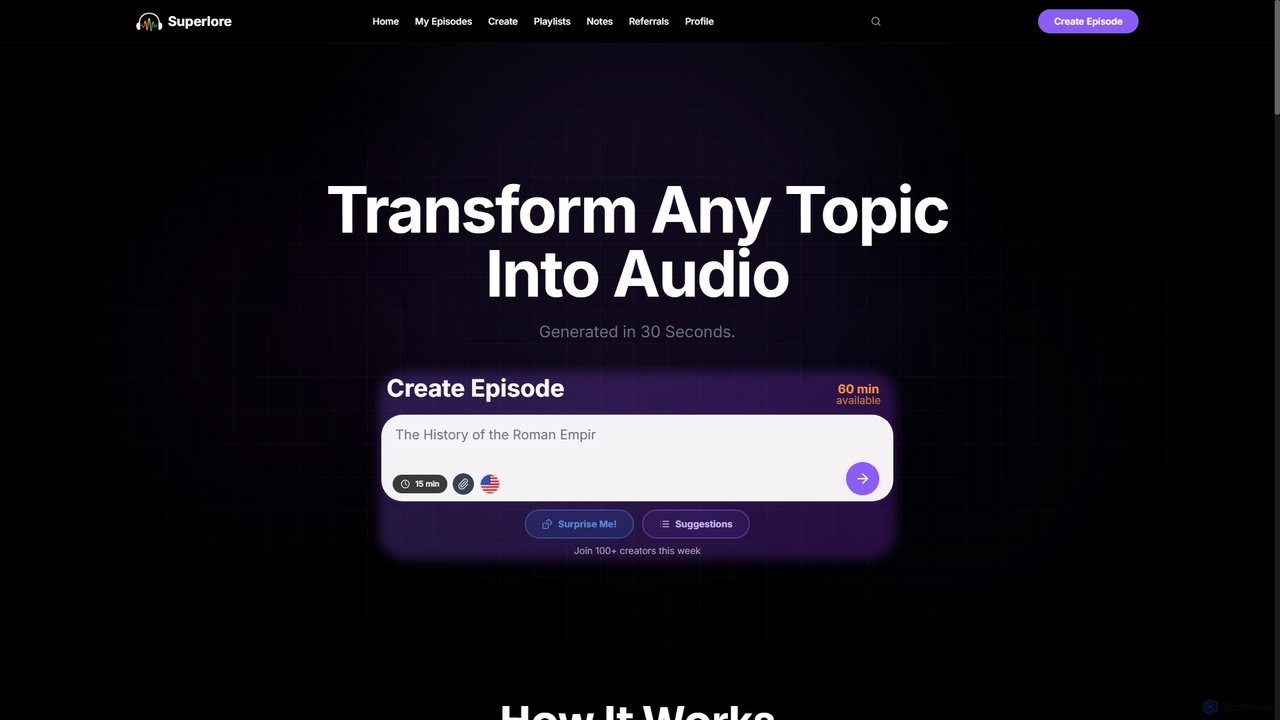
Superlore is an AI-powered platform that transforms any topic or personal notes into professional, documentary-style audio episodes with narration and sound design. It enables users to learn anything, anywhere, by generating high-quality educational audio content in seconds, complete with live transcripts and offline access.

Audio Production
Visits 10KFavorites 63Likes 67
TranscribeAndSplit
Freemium

TranscribeAndSplit

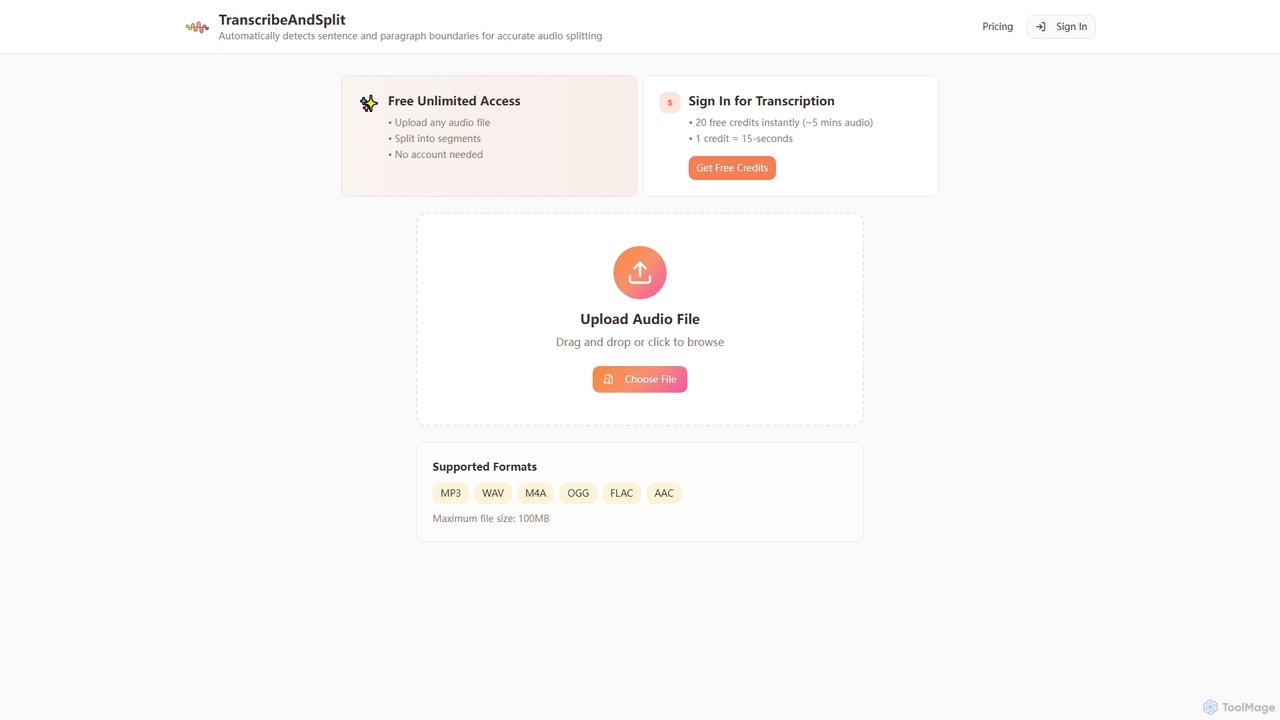
TranscribeAndSplit is an AI-powered online tool designed to effortlessly split audio files by sentence or paragraph boundaries and provide transcription services. It offers free unlimited access for audio splitting and generous free credits for transcription, supporting various popular audio formats for efficient content management.

Splitting
Visits 5.5KFavorites 149Likes 146
Jamit
Freemium

Jamit

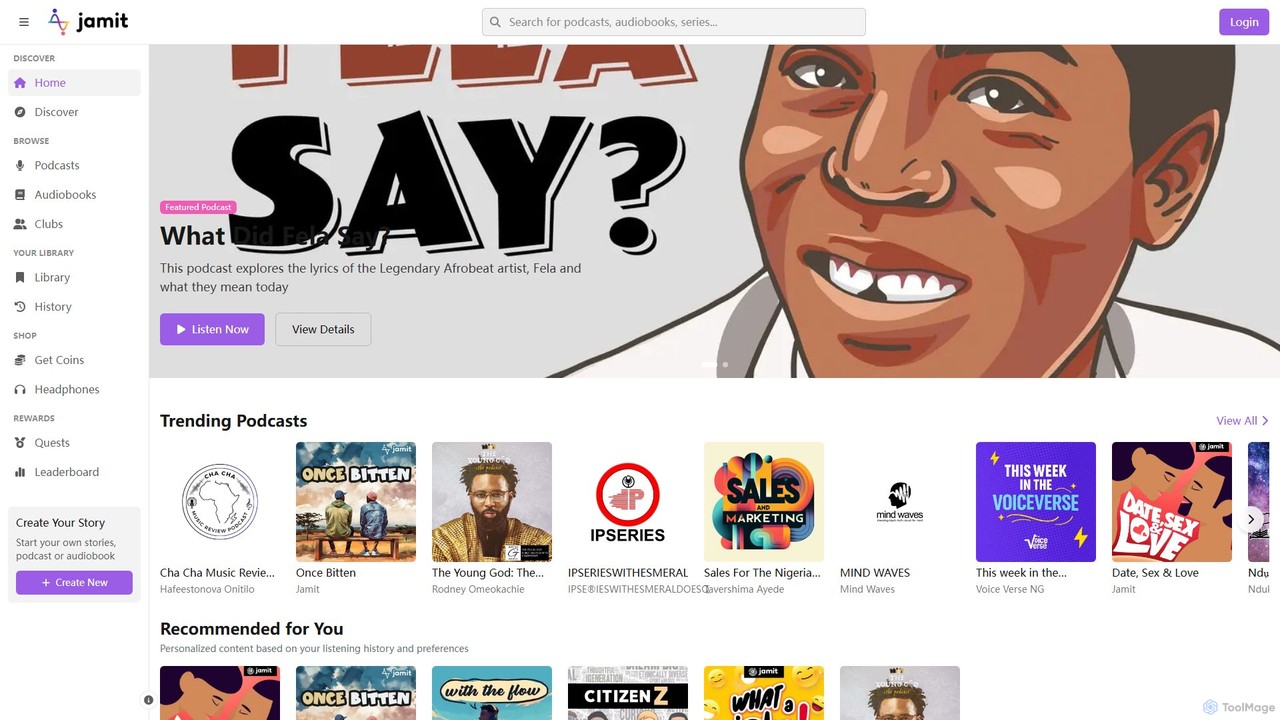
Jamit is an AI-powered audio platform where users can discover, create, and share podcasts and audiobooks. It focuses on empowering creators with the slogan "Own Your Voice, Own Your Story," offering integrated creation tools, AI-driven personalized recommendations, and a gamified community experience to foster engagement and highlight diverse voices, particularly from African creators.

Podcasting
Visits 14.8KFavorites 124Likes 131

About Audio Production

AI Audio Production tools are a category of artificial intelligence applications designed to create, enhance, and manipulate audio content. These tools leverage machine learning algorithms to automate complex sound engineering tasks, generate original audio, and synthesize voices. They empower content creators, musicians, and developers to produce high-quality audio efficiently, transforming raw ideas into polished soundscapes or spoken narratives.

Core Features

  • AI Music Generation: Composes original melodies, harmonies, and rhythms based on user input or style preferences.
  • Voice Synthesis & Cloning: Converts text into natural-sounding speech, generates voiceovers, or replicates specific vocal characteristics.
  • Audio Restoration & Enhancement: Automatically removes noise, reverb, or hum, and improves clarity and fidelity of recordings.
  • Sound Effect Design: Creates custom sound effects for games, films, or multimedia projects from textual descriptions.
  • Audio Separation (Stemming): Isolates individual components like vocals, drums, or instruments from a mixed audio track.

Applicable Scenarios

AI Audio Production tools are invaluable for podcasters needing clean audio, video editors requiring custom background music, and game developers generating unique soundscapes. They streamline workflows for musicians seeking new compositional ideas and marketers producing multilingual voiceovers for advertisements.

How to Choose

When selecting AI audio production tools, consider the primary function you need (e.g., music generation, voice synthesis, or audio cleanup). Evaluate the output quality, customization options, and ease of integration with your existing digital audio workstations (DAWs) or video editing software. Also, assess the pricing model and the learning curve to ensure it aligns with your budget and technical proficiency.

Audio Production use cases

1

Generate Background Music for Video Content

Video content creators can use AI audio production tools to quickly generate unique, royalty-free background music tailored to the mood and length of their videos. By inputting parameters like genre, tempo, and emotional tone, they can receive multiple musical variations, saving significant time and cost compared to licensing stock music or hiring a composer. This ensures a consistent audio aesthetic across their productions.

2

Enhance Podcast Audio Quality

Podcasters can utilize AI audio tools to automatically clean up recordings, removing background noise, echoes, and inconsistent volume levels. This significantly improves the listening experience for their audience without requiring extensive manual editing or specialized audio engineering skills. The AI can also apply intelligent equalization and compression, making voices sound clearer and more professional, ensuring a polished final product.

3

Create Unique Sound Effects for Game Development

Game developers can leverage AI audio production tools to generate a vast array of unique sound effects (SFX) from simple text descriptions. Instead of relying on limited sound libraries or complex manual design, they can quickly iterate on ideas for creature sounds, environmental ambiences, weapon impacts, or UI feedback. This accelerates the game development process and allows for highly customized, immersive audio experiences that perfectly match the game's aesthetic.

4

Synthesize Multilingual Voiceovers for Marketing Videos

Marketing professionals can use AI voice synthesis tools to create high-quality, natural-sounding voiceovers for their promotional videos in multiple languages. This eliminates the need to hire numerous voice actors or manage complex recording sessions, significantly reducing production time and costs. The AI can maintain a consistent brand voice across different languages, making global marketing campaigns more accessible and impactful to diverse audiences.

5

Assist Musicians with Composition and Arrangement

Musicians and composers can utilize AI audio production tools to generate musical ideas, explore different arrangements, or create backing tracks for practice. AI can suggest chord progressions, melodies, or rhythmic patterns based on a desired style or existing musical input. This serves as a powerful creative assistant, helping artists overcome creative blocks, experiment with new genres, and accelerate the songwriting and production process without replacing human artistry.

6

Automate Audio Mixing and Mastering for Demos

Independent artists and small studios can use AI audio production tools to automate parts of the mixing and mastering process for their demo tracks. By analyzing the audio, AI can apply intelligent equalization, compression, and spatial effects to achieve a balanced and professional sound. This allows creators to quickly get their music to a release-ready quality without needing extensive technical expertise or expensive studio time, making professional-sounding demos more accessible.

Audio Production FAQ

What are AI Audio Production tools?

AI Audio Production tools are software applications that use artificial intelligence, particularly machine learning, to assist in or automate various stages of audio creation and manipulation. They can generate music, synthesize speech, enhance sound quality, and perform complex audio editing tasks. These tools aim to streamline workflows for musicians, podcasters, video creators, and game developers, making high-quality audio production more accessible and efficient.

How do AI Audio Production tools work?

AI Audio Production tools typically work by employing advanced machine learning models, such as neural networks and deep learning, trained on vast datasets of audio. For music generation, they learn patterns in melodies, harmonies, and rhythms. For voice synthesis, they analyze human speech to replicate intonation and timbre. For audio enhancement, they identify and isolate unwanted noise or apply optimal processing based on learned audio characteristics. This allows them to generate, modify, or restore audio intelligently.

What are the main benefits of using AI for audio production?

The main benefits of using AI for audio production include significant time and cost savings by automating repetitive tasks like noise reduction or basic mixing. AI tools enhance creative possibilities by generating new musical ideas or unique sound effects that might be difficult for humans to conceive. They also democratize audio production, making professional-quality results accessible to users without extensive technical expertise, ultimately boosting efficiency and output quality for various content creators.

Can AI Audio Production tools replace human musicians or audio engineers?

No, AI Audio Production tools are designed to augment, not replace, human creativity and expertise. While AI can automate repetitive tasks, generate ideas, and perform technical enhancements, the nuanced artistic decisions, emotional depth, and unique human touch in composition, performance, and final mixing/mastering remain the domain of human musicians and audio engineers. AI serves as a powerful assistant, freeing up time for more creative endeavors and making professional tools more accessible.

How to choose the right AI Audio Production tool for my needs?

To choose the right AI Audio Production tool, first identify your primary use case: are you generating music, synthesizing voices, cleaning up audio, or designing sound effects? Look for tools with high-quality output for your specific need. Consider the ease of use and integration with your existing workflow (e.g., DAW compatibility). Evaluate the customization options, pricing model (subscription vs. pay-per-use), and the community support available. A free trial can help you assess if the tool meets your expectations.