ToolMage
Sign in

Best 4 Generator for Content Creation

Popular Generator in Content Creation include Porosheets, Generor, cogiX, and SoloSphere.ai, helping you work more efficiently.

SoloSphere.ai
Paid

SoloSphere.ai

SoloSphere.ai is an all-in-one, AI-powered marketing platform designed for solopreneurs, creators, and small businesses. It integrates AEO (Answer Engine Optimization), funnel building, content creation, and automation tools into a single dashboard, enabling users to build, launch, and scale their online presence faster and more efficiently without needing technical skills.

Generator
Visits 3.4KFavorites 122Likes 104
Porosheets
Freemium

Porosheets

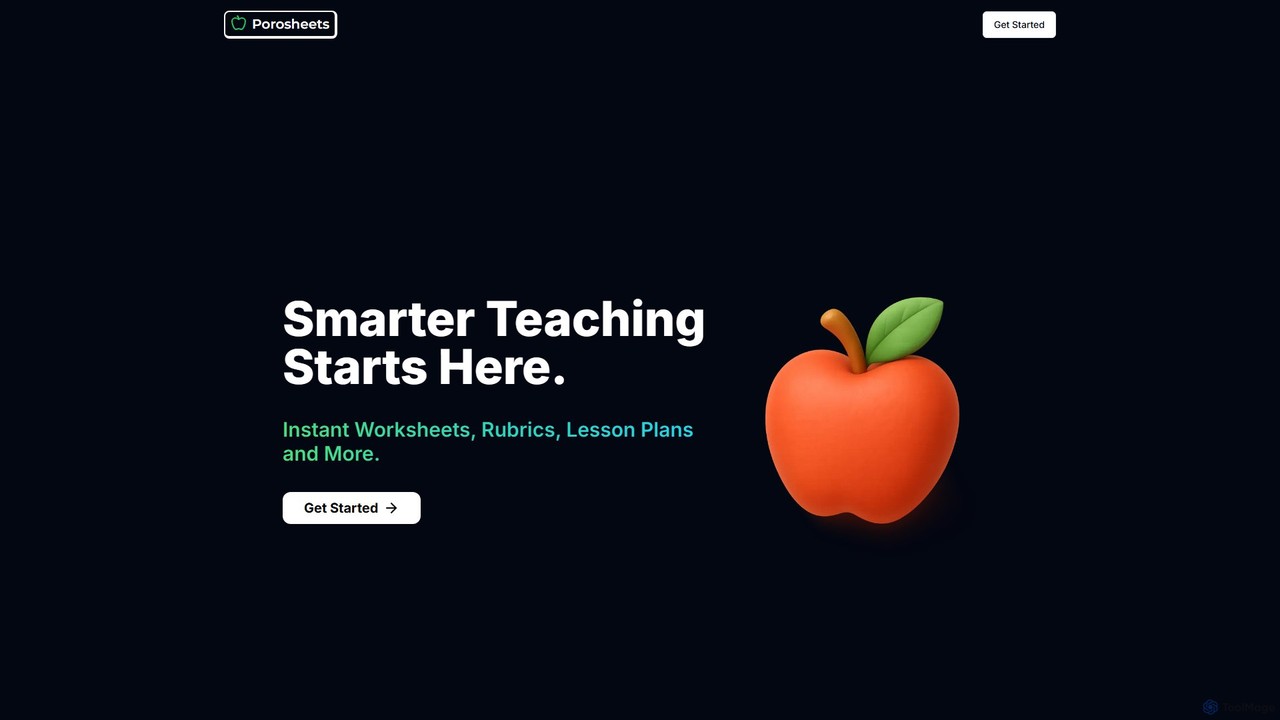
Porosheets is an AI-powered educational platform designed for teachers, parents, and students. It instantly generates high-quality worksheets, rubrics, and lesson plans, saving hours of preparation time. With multilingual support and an interactive blackboard, it aims to transform the learning experience and make education more efficient and engaging for everyone involved.

Generator
Visits 6.2KFavorites 130Likes 130
cogiX
Freemium

cogiX

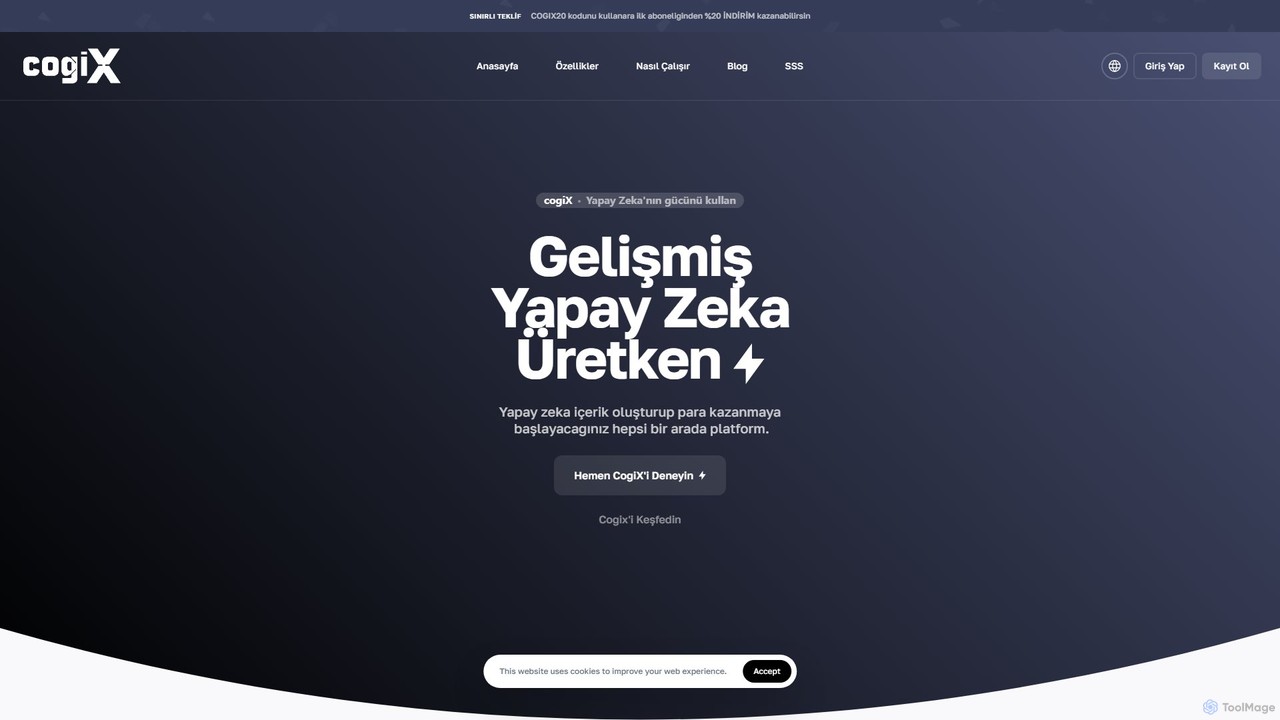
cogiX is a comprehensive, all-in-one AI platform designed to streamline content creation, business management, and development. It offers a vast suite of tools for generating articles, social media content, ad copy, code, images, voiceovers, and more, empowering professionals across various industries to enhance productivity and creativity.

Generator
Visits 4KFavorites 134Likes 128
Generor
Freemium

Generor

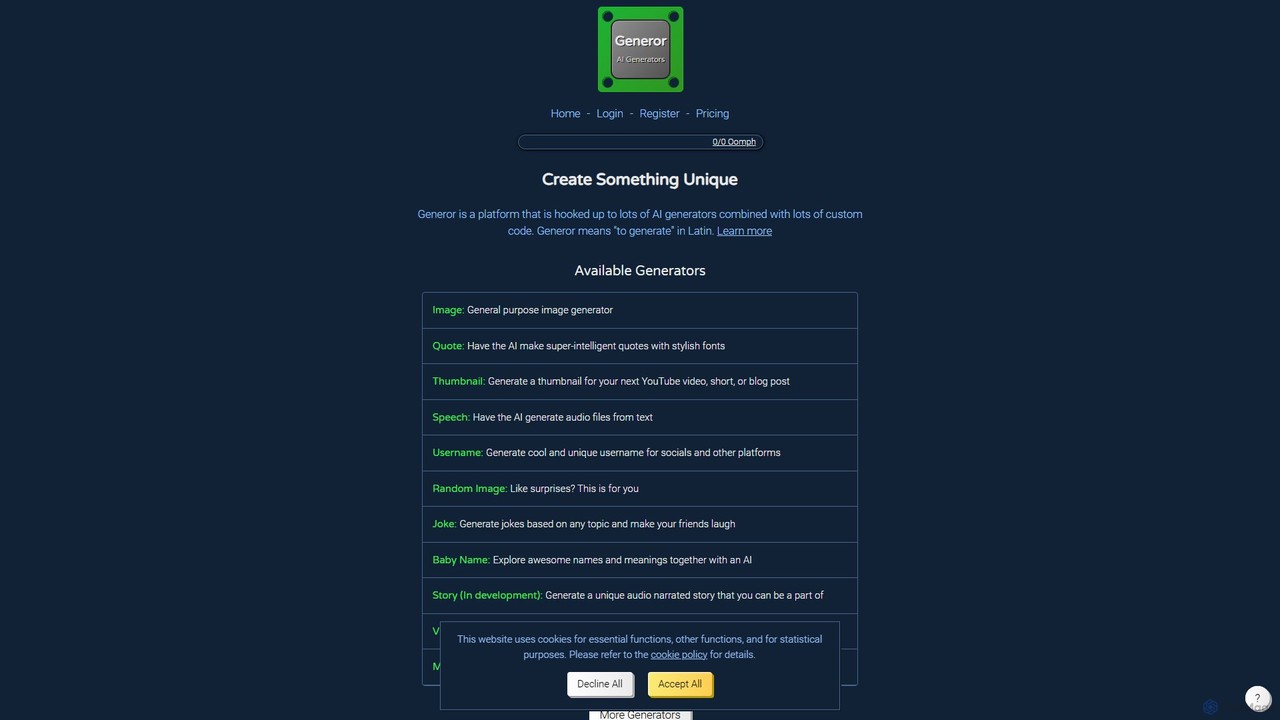
Generor is a versatile, web-based AI platform offering a suite of creative tools. It combines multiple AI generators to produce unique content, including images, quotes, YouTube thumbnails, text-to-speech audio, usernames, jokes, and more. With a user-friendly interface and a freemium model, it caters to both casual users and content creators without requiring any software installation.

Text To Speech
Visits 4.9KFavorites 129Likes 122

About Generator

AI Generators are tools that create new, original content such as text, images, code, or audio from user prompts. These tools leverage large-scale models like LLMs and GANs to synthesize information and produce unique outputs. Their primary value lies in automating the initial stages of content creation, providing inspiration, and generating multiple variations quickly. This capability significantly accelerates workflows for creators, marketers, and developers.

Core Features

  • Prompt-Based Generation: Creates diverse content based on natural language instructions or keywords.
  • Multi-Modal Output: Capable of producing various formats, including text, images, audio, and code.
  • Style and Parameter Control: Allows users to define specific attributes like tone, artistic style, or technical constraints.
  • Iterative Refinement: Generates multiple options and allows for adjustments to fine-tune the final result.
  • Template Integration: Utilizes pre-built templates for structured outputs like emails, reports, or social media posts.

Use Cases

AI Generators are widely used across various industries. Marketers use them to draft ad copy and social media content. Developers leverage them to generate boilerplate code, unit tests, and documentation. Content creators and artists use them for brainstorming story ideas, designing characters, and producing concept art.

How to Choose

When selecting an AI Generator, consider the specific type of content you need to create (e.g., text vs. image). Evaluate the quality and coherence of the generated output. Assess the level of customization and control offered. Also, consider its integration capabilities with your existing tools and the pricing model's suitability for your usage volume.

Featured tool rankings

Generator use cases

1

Generate Marketing Campaign Copy

A marketing specialist needs to launch a new product campaign across multiple channels, including social media, email newsletters, and blog posts. Using an AI Generator, they input key product features, target audience demographics, and desired tone of voice. The tool generates dozens of variations for ad headlines, social media captions, and email subject lines in minutes. This allows the specialist to A/B test different messages efficiently, saving hours of manual copywriting and improving campaign engagement rates.

2

Accelerate Software Development with Code Generation

A software developer is building a new feature that requires repetitive boilerplate code, such as API endpoints or data models. Instead of writing it all manually, they use an AI Code Generator. By providing a schema or a natural language description of the required logic, the tool generates clean, syntactically correct code in the desired programming language. This not only speeds up the initial development process but also helps in generating unit tests and documentation, reducing tedious tasks and allowing the developer to focus on complex problem-solving.

3

Brainstorming Creative Story Concepts

A fiction writer is experiencing writer's block while trying to come up with a new story plot. They turn to an AI Generator for inspiration. By inputting a few core themes like 'a detective in a futuristic city' and 'a mysterious energy source,' the generator produces several unique plot outlines, character descriptions, and key scene ideas. While the writer doesn't use the content verbatim, it serves as a powerful catalyst, sparking new ideas and helping them overcome the creative hurdle to begin outlining their next novel.

4

Create Personalized Email Outreach Campaigns

An email marketer wants to improve the open and reply rates of their cold outreach campaigns. Instead of using a single generic template, they use an AI Generator integrated with their CRM. The tool analyzes each prospect's data (industry, job title, company news) and generates a highly personalized opening paragraph for each email. This creates a unique, relevant message for hundreds of contacts automatically, significantly increasing the chances of engagement compared to a one-size-fits-all approach.

5

Generate Data-Driven Business Reports

A business analyst needs to create a weekly performance report from a large dataset in a spreadsheet. They connect the data source to an AI Generator. The tool automatically analyzes the data, identifies key trends and anomalies, and generates a narrative summary in plain language. It can also create charts and tables to visualize the findings. This transforms a time-consuming manual process of data interpretation and writing into an automated task, allowing the analyst to deliver insightful reports faster and more consistently.

6

Produce Educational Materials and Quizzes

An educator is preparing a course on a complex topic and needs to create supplementary materials like study guides, summaries, and practice quizzes. They provide the core lecture notes or a textbook chapter to an AI Generator. The tool processes the information and generates concise summaries, key takeaway points, and a set of multiple-choice questions with correct answers and explanations. This allows the educator to quickly produce a rich set of learning resources, freeing up time to focus on teaching and student interaction.

Generator FAQ

What is an AI Generator?

An AI Generator is a type of artificial intelligence tool designed to create new, original content from scratch based on user input. Unlike tools that edit or analyze existing content, generators synthesize information to produce outputs like articles, images, music, or code. They typically use complex models, such as Large Language Models (LLMs) for text or Generative Adversarial Networks (GANs) for images, to understand prompts and generate coherent and relevant results.

How to choose the right AI Generator?

Choosing the right AI Generator depends on your specific needs. Consider the following factors:

  • Content Type: Determine if you need a generator for text, images, code, audio, or another format. Specialization often leads to better quality.
  • Output Quality: Evaluate the coherence, accuracy, and creativity of the generated content. Look for examples or use a trial period.
  • Customization and Control: Check how much control you have over the output, such as setting the tone, style, length, or other specific parameters.
  • Integration: Consider if the tool needs to integrate with your existing workflow or software, like a CMS, CRM, or IDE.
  • Cost: Compare pricing models (e.g., subscription, pay-per-use) and ensure it aligns with your budget and expected usage.
What's the difference between an AI Generator and an AI Assistant?

The primary difference lies in their core function. An AI Generator is focused on creating new content. You provide a prompt, and it produces an original piece of text, art, or code. Its goal is synthesis and creation. In contrast, an AI Assistant (like a chatbot or virtual assistant) is focused on performing tasks and providing information. It helps you schedule meetings, answer questions, or control devices. While some assistants can generate text, their main purpose is interactive task completion, not open-ended content creation.

What types of content can AI Generators create?

AI Generators are versatile and can create a wide range of content types, depending on their underlying model and training data. Common examples include:

  • Text: Articles, blog posts, emails, ad copy, social media updates, poetry, and fiction.
  • Code: Functions, scripts, unit tests, and boilerplate code in various programming languages.
  • Images: Photorealistic images, digital art, illustrations, logos, and 3D models from text descriptions.
  • Audio: Music in various genres, voiceovers, sound effects, and podcasts.
  • Video: Short video clips, animations, and presentations from text or image inputs.
Who can benefit from using AI Generators?

A wide range of professionals and creators can benefit from AI Generators. Marketers use them to quickly create ad copy and social media content. Writers and bloggers leverage them to overcome writer's block and draft articles. Developers accelerate their workflow by generating boilerplate code and tests. Artists and designers find inspiration and create concept art. Even students and educators can use them to generate study guides and quiz questions. Essentially, anyone involved in content creation can use these tools to enhance productivity and creativity.