ToolMage
Sign in

Best 3 Research AI tools for Content Creation

Popular Research AI tools in Content Creation include Bookshelf, Podmod, and Sumlyze, helping you work more efficiently.

Sumlyze
Paid

Sumlyze

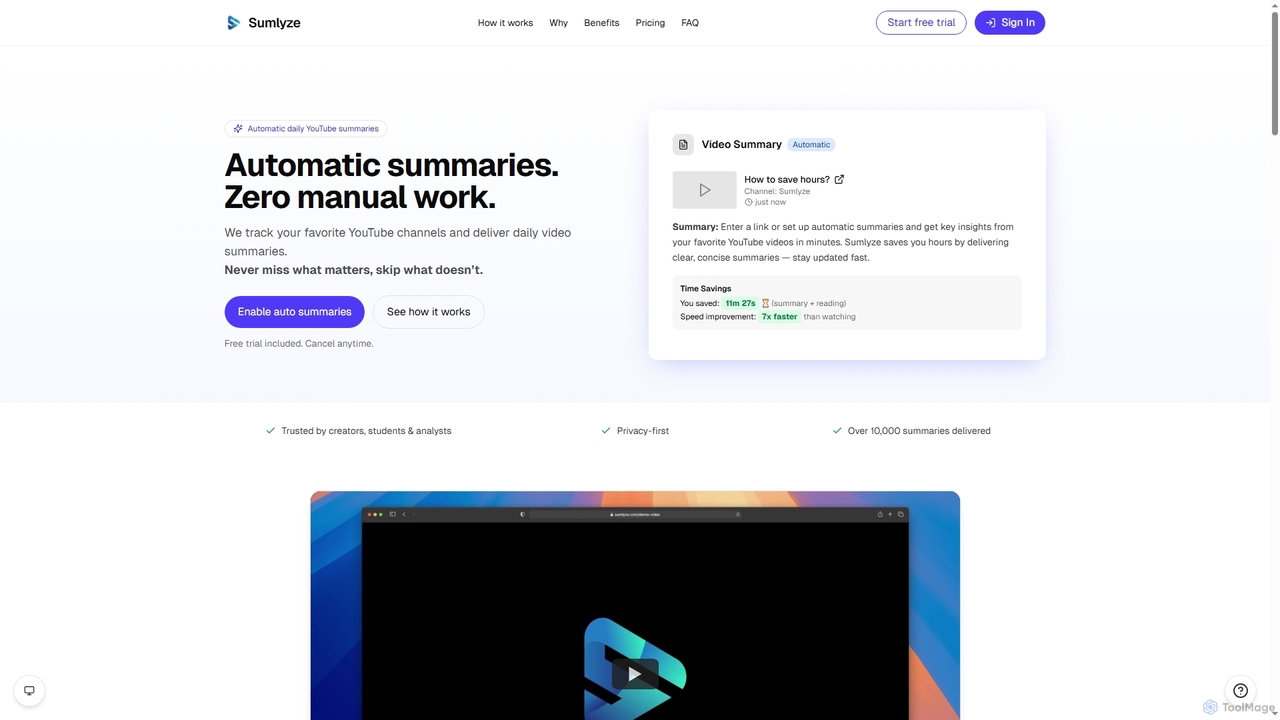
Sumlyze is an AI-powered tool that automatically generates daily summaries of YouTube videos from your favorite channels, saving you significant time. It offers both automated channel tracking and manual video link summarization, supporting 16 output languages and Notion integration for enhanced productivity.

Research
Visits 7.3KFavorites 159Likes 171
Podmod
Paid

Podmod

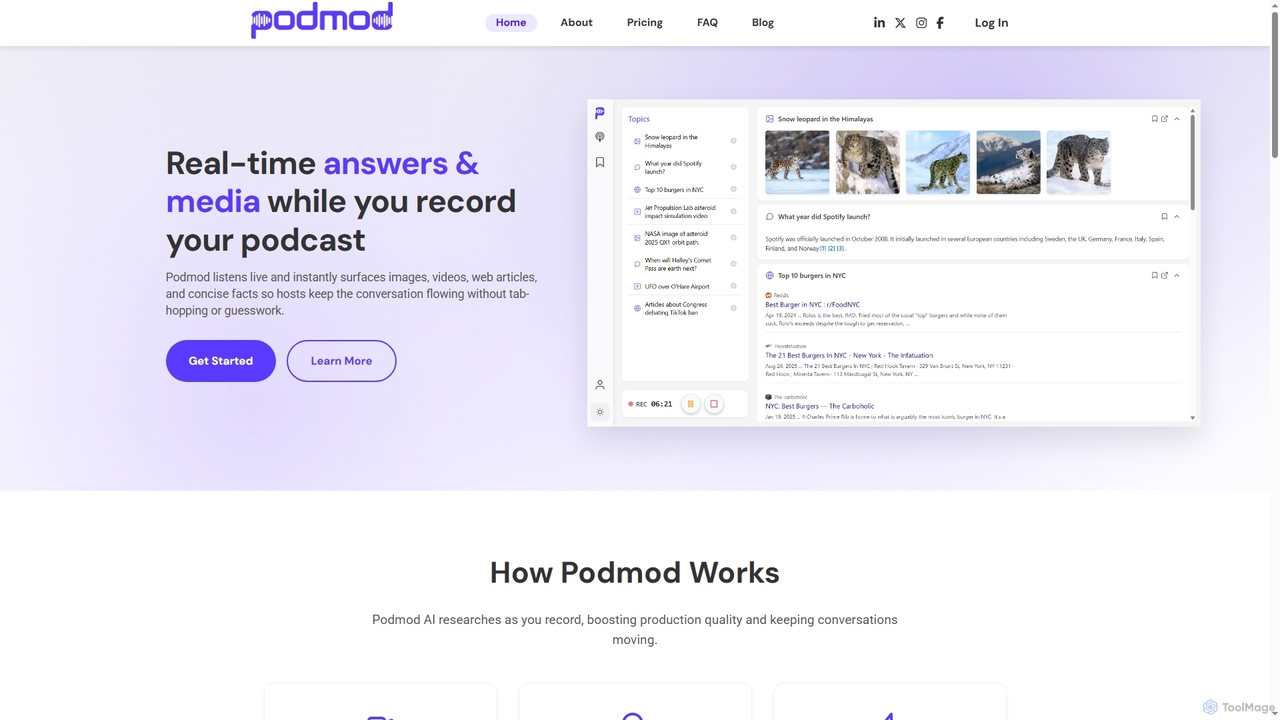
Podmod is an AI-powered podcast assistant that provides real-time research, fact-checking, and content retrieval during live recording sessions. It helps podcasters lead conversations with confidence, surfacing context, sources, media, and on-the-spot answers without breaking the flow. Podmod also automates show notes generation and offers full transcripts, streamlining the entire podcast production workflow.

Transcription
Visits 7.7KFavorites 136Likes 145
Bookshelf
Freemium

Bookshelf

Bookshelf is an AI-powered learning platform that provides concise, 15-minute summaries of over 10,000 non-fiction books, podcasts, and articles. It transforms complex ideas into clear, actionable insights, offering expert-distilled knowledge in audio, PDF, and EPUB formats. Designed for busy individuals, Bookshelf enables efficient learning on the go and fosters deeper understanding through practical exercises and community engagement.

Professional Development
Visits 12.8KFavorites 134Likes 147

About Research

AI Research tools are a class of software designed to automate and accelerate the information gathering and analysis process. They leverage natural language processing (NLP) and machine learning to scan vast digital sources, extract key insights, and synthesize complex information into structured summaries. These tools are essential for content creators, academics, and analysts to quickly build a foundation of credible knowledge for their work. By handling the heavy lifting of data collection and initial analysis, they allow users to focus on higher-level thinking and creative tasks.

Core Features

  • Automated Data Aggregation: Gathers information from diverse sources like web pages, academic papers, and reports.
  • AI-Powered Summarization: Condenses lengthy documents or multiple sources into concise, coherent summaries.
  • Semantic Search: Understands the context and intent of a query to find conceptually relevant results, not just keyword matches.
  • Insight Extraction: Identifies key themes, statistics, entities, and trends from unstructured text.
  • Source Tracking & Citation: Automatically generates citations and maintains links to original source materials for verification.

Use Cases

These tools are widely used by academic researchers for literature reviews, market analysts for competitive intelligence, and content marketers for identifying trending topics and data points. Journalists also use them for rapid fact-finding and background checks before publishing stories.

How to Choose

When selecting an AI Research tool, consider the scope of its data sources (web, academic, proprietary), the depth of its analytical capabilities (summarization vs. trend analysis), its integration with other platforms like writing or citation managers, and the accuracy of its outputs and source tracking.

Research use cases

1

Accelerate Academic Literature Reviews

For graduate students or researchers, AI research tools can scan thousands of academic papers on a specific topic. Instead of manually reading each abstract, the tool can group papers by theme, summarize key findings, and identify seminal works. This significantly reduces the literature review process from weeks to days, ensuring no critical studies are missed and providing a comprehensive overview of the existing research landscape.

2

Conduct Market & Competitor Analysis

A market analyst uses an AI research tool to monitor industry news, competitor press releases, and customer reviews in real-time. The tool automatically synthesizes this data into a weekly intelligence report, highlighting shifts in market sentiment, new competitor features, and emerging customer pain points. This enables faster, data-informed strategic responses and helps maintain a competitive edge.

3

Create Data-Driven Content

A content marketer planning a blog post on a complex topic uses an AI tool to find recent statistics, expert quotes, and relevant case studies. The tool provides a curated list of credible sources with summaries, allowing the marketer to quickly incorporate data-backed evidence into their article. This enhances the content's authority and credibility, making it more valuable to the reader and improving its SEO performance.

4

Streamline Legal & Due Diligence Research

Legal professionals can use AI research tools to sift through vast legal databases and document repositories. When preparing for a case, the tool can identify relevant case law, contracts with specific clauses, and historical precedents far more efficiently than manual keyword searches. This uncovers critical information that could influence case strategy and saves hundreds of hours of paralegal work.

5

Verify Facts for Journalistic Reporting

Before publishing a breaking story, a journalist employs an AI research tool to rapidly verify claims and gather background information. The tool cross-references names, dates, and events across multiple trusted news archives and official sources. It can provide a confidence score for each fact, helping to ensure journalistic accuracy and integrity under tight deadlines.

6

Inform Product Development Ideation

A product manager explores a new feature idea by feeding an AI research tool with user feedback from forums, support tickets, and app store reviews. The AI analyzes this unstructured text to identify the most requested functionalities, common frustrations, and unmet needs. This provides a solid, data-backed foundation for the new feature's requirements document, ensuring development efforts are aligned with actual user demand.

Research FAQ

What are AI Research tools?

AI Research tools are applications that use artificial intelligence to automate finding, synthesizing, and analyzing information. They go beyond simple keyword searches by understanding context, summarizing long texts, and identifying patterns across multiple documents. Their primary goal is to accelerate the discovery of insights from vast amounts of data for tasks like writing, analysis, or decision-making.

How to choose the right AI Research tool?

To choose the right tool, evaluate these factors:

  • Source Coverage: Ensure it can access the types of sources you need, such as academic journals, news sites, or internal documents.
  • Analytical Features: Determine if you need basic summarization or more advanced capabilities like trend analysis or sentiment analysis.
  • Accuracy and Citations: Check if the tool provides clear, verifiable links to its original sources to ensure credibility.
  • Usability and Integration: Consider how easily it fits into your existing workflow and if it integrates with other software you use.
What's the difference between AI Research tools and standard search engines?

The key difference is analysis versus retrieval. Standard search engines like Google are designed for information retrieval—they find and rank web pages based on relevance to your keywords. AI Research tools are designed for information analysis—they not only find information but also read, understand, summarize, and connect insights from the content of those sources, providing a synthesized answer rather than just a list of links.

As part of Content Creation, how do AI Research tools help?

Within the content creation workflow, AI Research tools serve as a powerful starting point. They automate the initial, often time-consuming, phase of gathering background information, statistics, and supporting evidence. This allows creators to quickly build a strong, fact-based foundation for their articles, videos, or reports, freeing up more time for the creative aspects of writing and production.

Are the insights from AI Research tools reliable?

The reliability of insights depends on the quality of the tool and its underlying data sources. Reputable AI Research tools prioritize transparency by providing direct links and citations to the original sources for every piece of information they present. This allows users to easily verify the facts and context. It is always a best practice to cross-reference critical data points before publishing or making key decisions.