ToolMage
Sign in

Best 3 Summarization AI tools for Content Creation

Popular Summarization AI tools in Content Creation include NoteGPT, NoteSpark, and EZMind AI, helping you work more efficiently.

NoteGPT
Freemium

NoteGPT

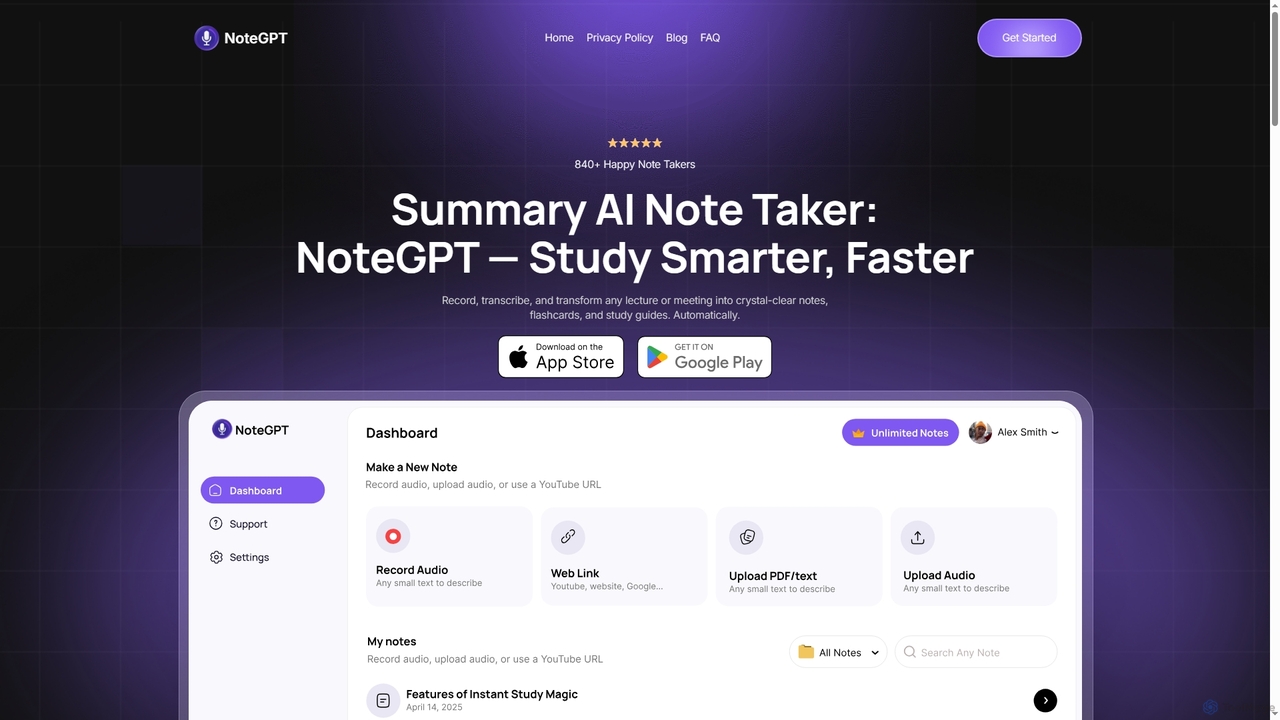
NoteGPT is an AI-powered note-taking and study tool that records, transcribes, and transforms lectures, meetings, videos, and PDFs into crystal-clear notes, summaries, flashcards, and quizzes. It supports over 100 languages, helping students and professionals study smarter and faster.

Summarization
Visits 121.3KFavorites 31Likes 29
NoteSpark

NoteSpark

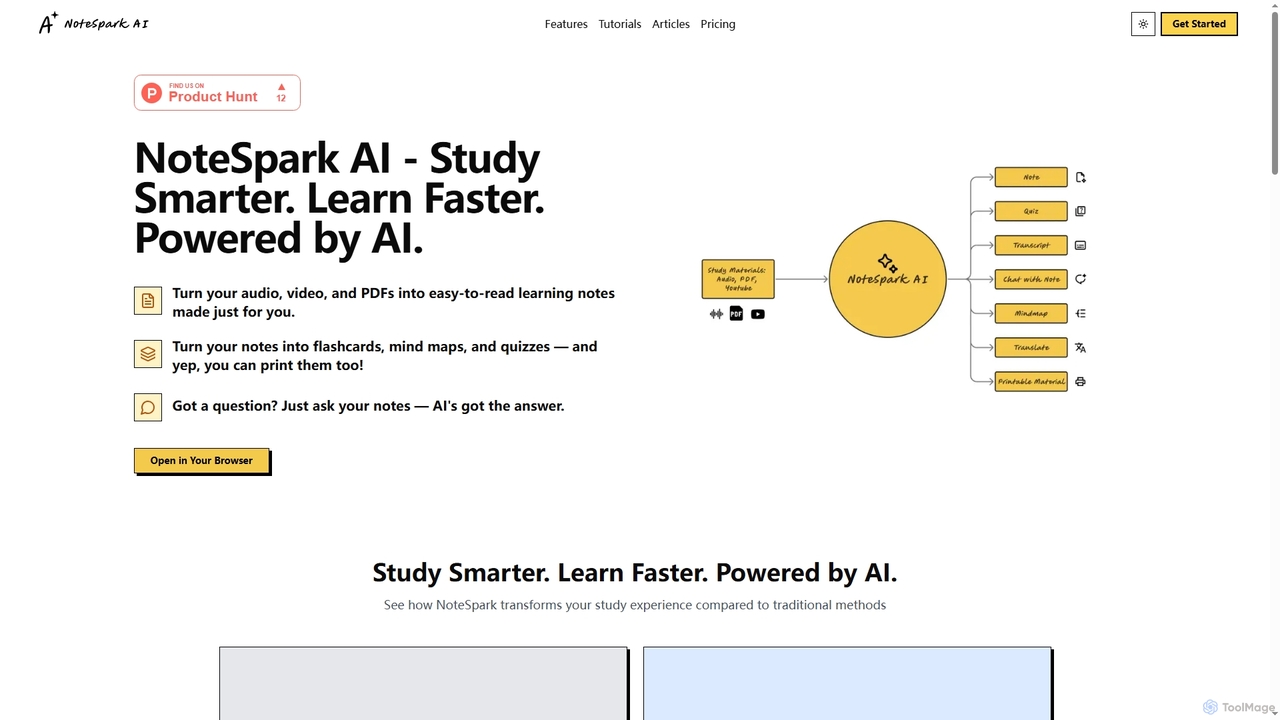
NoteSpark is an AI-powered study companion designed to transform various learning materials into comprehensive study notes and interactive learning tools. It processes recorded lectures, audio files, PDFs, YouTube videos, and Google Drive documents, generating personalized notes, flashcards, quizzes, and mind maps to enhance understanding and retention through active recall methods.

Learning Assistant
Visits 6KFavorites 112Likes 119
EZMind AI
Freemium

EZMind AI

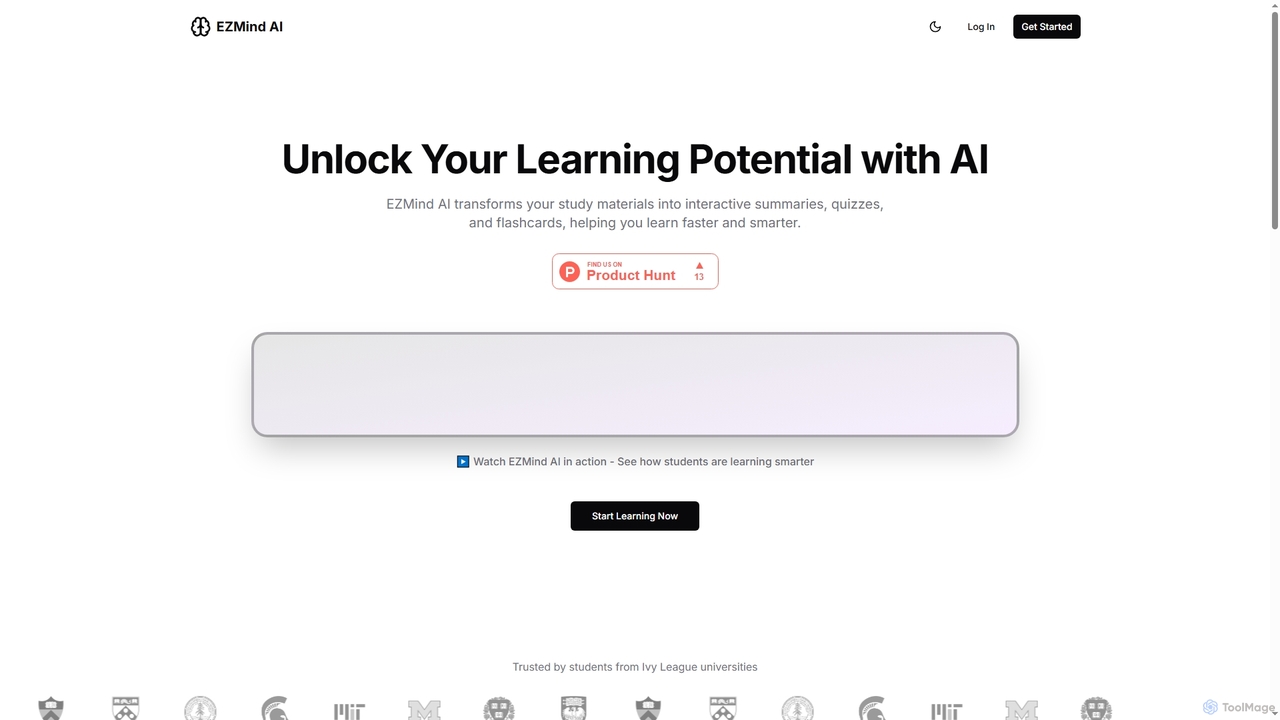
EZMind AI is an innovative AI-powered learning platform designed to transform study materials into interactive summaries, quizzes, and flashcards. It helps students learn faster and smarter by providing personalized tools like an AI tutor, content uploads from various sources, and progress tracking. Ideal for enhancing comprehension and exam preparation.

Learning Assistant
Visits 3.5KFavorites 114Likes 103

About Summarization

AI Summarization tools are applications that use natural language processing (NLP) to automatically condense long texts into shorter, coherent summaries. These tools analyze the source material to identify key ideas and concepts, generating a concise version that retains the core message. This capability is invaluable for quickly understanding dense documents, research papers, or articles without reading them in their entirety. As a key component of content creation, summarization helps in research, repurposing content, and information discovery.

Core Features

  • Extractive vs. Abstractive Methods: Tools may use extractive summarization (pulling key sentences) or abstractive summarization (generating new sentences) to create summaries.
  • Customizable Length: Users can typically specify the desired length of the summary, either as a percentage of the original text or a specific word count.
  • Key Point Extraction: Many tools can identify and list the main points or arguments of a text in a bulleted format for quick review.
  • Multi-Format Input: They support various input methods, including direct text paste, document uploads (PDF, DOCX), and web page URLs.
  • Language Support: Advanced summarizers can process and summarize texts from multiple languages, breaking down language barriers in research.

Use Cases

AI summarizers are widely used by students and researchers for literature reviews, business analysts for market intelligence reports, and content marketers for curating news and articles. Legal professionals also use them to quickly review case files and contracts, saving significant time.

How to Choose

When selecting an AI summarizer, consider the accuracy and readability of the output. Evaluate the types of summarization offered (extractive vs. abstractive), the range of supported input formats and languages, and whether it offers API access or browser extensions for workflow integration. Also, consider the tool's privacy policy for handling sensitive documents.

Featured tool rankings

Summarization use cases

1

Accelerate Academic Literature Reviews

For graduate students and researchers, reviewing dozens of academic papers is a time-consuming but essential task. An AI Summarization tool can drastically reduce this workload. By inputting the URLs or uploading PDFs of research papers, a student can generate concise summaries of each paper's abstract, methodology, and findings in minutes. This allows them to quickly identify the most relevant papers for their study, understand the key arguments without reading every page, and build a comprehensive literature map more efficiently, saving hours of reading time per project.

2

Streamline Market Intelligence Reporting

A business analyst needs to stay updated on industry trends, competitor activities, and market reports. This involves processing a vast amount of information daily. Using an AI summarizer, the analyst can feed it URLs of news articles, press releases, and lengthy market research reports. The tool generates bullet-point summaries highlighting key statistics, strategic moves, and market forecasts. This condensed information can be quickly compiled into daily or weekly intelligence briefings for management, ensuring decision-makers are informed without the analyst spending hours on manual reading and summarization.

3

Generate Meeting Minutes Automatically

Project managers and team leads often spend valuable time after meetings drafting and distributing minutes. By feeding a meeting transcript (generated by a transcription tool) into an AI summarizer, they can instantly create a concise summary. The tool can be configured to extract key decisions, action items, and deadlines. This automated summary serves as a reliable draft for the official meeting minutes, reducing administrative overhead by over 80% and ensuring that important outcomes are communicated to all stakeholders promptly and accurately.

4

Curate Content for Newsletters and Social Media

A content marketer responsible for a weekly industry newsletter needs to sift through numerous articles to find shareable content. An AI summarizer streamlines this process. The marketer can quickly summarize ten long-form articles in the time it would take to read one. They can then use these concise, AI-generated summaries as blurbs in the newsletter or as captions for social media posts linking to the original articles. This not only saves hours of curation time but also ensures the content shared is dense with value and easy for the audience to digest.

5

Expedite Legal Document Review

Legal professionals, such as lawyers and paralegals, frequently deal with voluminous documents like contracts, case law, and depositions. Manually reviewing these documents for key information is a core but labor-intensive part of their job. An AI summarizer designed for legal texts can quickly process a 100-page contract and extract key clauses, obligations, and potential risks. This allows a legal team to rapidly assess documents, prioritize their review queue, and prepare for cases more effectively, significantly reducing non-billable hours spent on preliminary reading.

6

Analyze Customer Feedback at Scale

Product managers and customer support leads need to understand user sentiment from thousands of reviews, survey responses, and support tickets. Manually reading through this data is impractical. By feeding this unstructured text data into an AI summarizer, they can generate a high-level summary of common themes. The tool can identify frequently mentioned issues, feature requests, and points of praise. This provides actionable insights into the customer experience quickly, helping teams prioritize bug fixes, guide product roadmap decisions, and improve customer service strategies without manual data analysis.

Summarization FAQ

What are AI Summarization tools?

AI Summarization tools are software applications that use artificial intelligence, specifically natural language processing (NLP), to condense a long piece of text into a shorter version. They work by analyzing the text to understand its main points and context, then generating a summary that captures the essential information. These tools are designed to save time and help users quickly grasp the core message of articles, reports, documents, and other lengthy content without needing to read the entire text.

How to choose the right AI Summarizer?

Choosing the right AI summarizer depends on your specific needs. Consider the following factors:

  • Accuracy and Coherence: Test the tool with a sample text to see if the summary is accurate, readable, and makes logical sense.
  • Summarization Type: Decide if you need an extractive summarizer (which pulls direct quotes) for factual accuracy or an abstractive one (which rephrases ideas) for more natural-sounding text.
  • Input Formats: Ensure the tool supports the formats you use, such as text paste, PDF/DOCX uploads, or web page URLs.
  • Integration: Look for browser extensions or API access if you need to integrate the summarizer into your existing workflow.
  • Security: If you handle confidential information, choose a tool with a strong privacy policy and data protection measures.
What's the difference between Extractive and Abstractive summarization?

Extractive and Abstractive summarization are two different techniques used by AI tools. Extractive summarization works by identifying and selecting the most important sentences or phrases from the original text and combining them to form a summary. It's like using a highlighter to pick out key points. This method ensures factual accuracy as it uses the exact wording from the source. Abstractive summarization, on the other hand, involves the AI understanding the source text and then generating new sentences in its own words to convey the core message. This can result in more fluent and human-like summaries but carries a small risk of misinterpreting the original content.

Can AI summarizers handle different document types like PDFs and web pages?

Yes, many modern AI summarization tools are designed to be versatile and can handle a wide range of input types beyond simple text. Common supported formats include:

  • Document Uploads: Users can often upload files directly, such as PDFs, Microsoft Word documents (.docx), and plain text files (.txt).
  • Web Page URLs: Many tools allow you to simply paste the URL of an article or web page, and the tool will automatically fetch and summarize the content.
  • Direct Text Input: All summarizers support pasting text directly into an input box.
  • Audio/Video Files: Some advanced tools can even summarize the content of audio or video files by first transcribing them into text and then summarizing the transcript.

It's important to check the specifications of a particular tool to see which formats it supports.

Who benefits most from using AI Summarization tools?

AI Summarization tools offer significant benefits to a wide range of users who need to process large volumes of text efficiently. Key beneficiaries include:

  • Students and Researchers: They can quickly review vast amounts of literature, research papers, and articles to find relevant information for their studies.
  • Business Professionals: Analysts, managers, and marketers can stay informed about industry news, competitor reports, and market trends without spending hours reading.
  • Legal Professionals: Lawyers and paralegals can expedite the review of long legal documents, contracts, and case files to identify crucial information.
  • Content Creators and Curators: They can quickly digest source material to create newsletters, social media updates, and blog posts.
  • Anyone with Information Overload: In general, anyone who feels overwhelmed by the amount of text they need to read daily can benefit from the time-saving capabilities of these tools.