ToolMage
Sign in

Best 2 Songwriting AI tools for Creative

Popular Songwriting AI tools in Creative include Suno AI and SongGuru, helping you work more efficiently.

SongGuru
Freemium

SongGuru

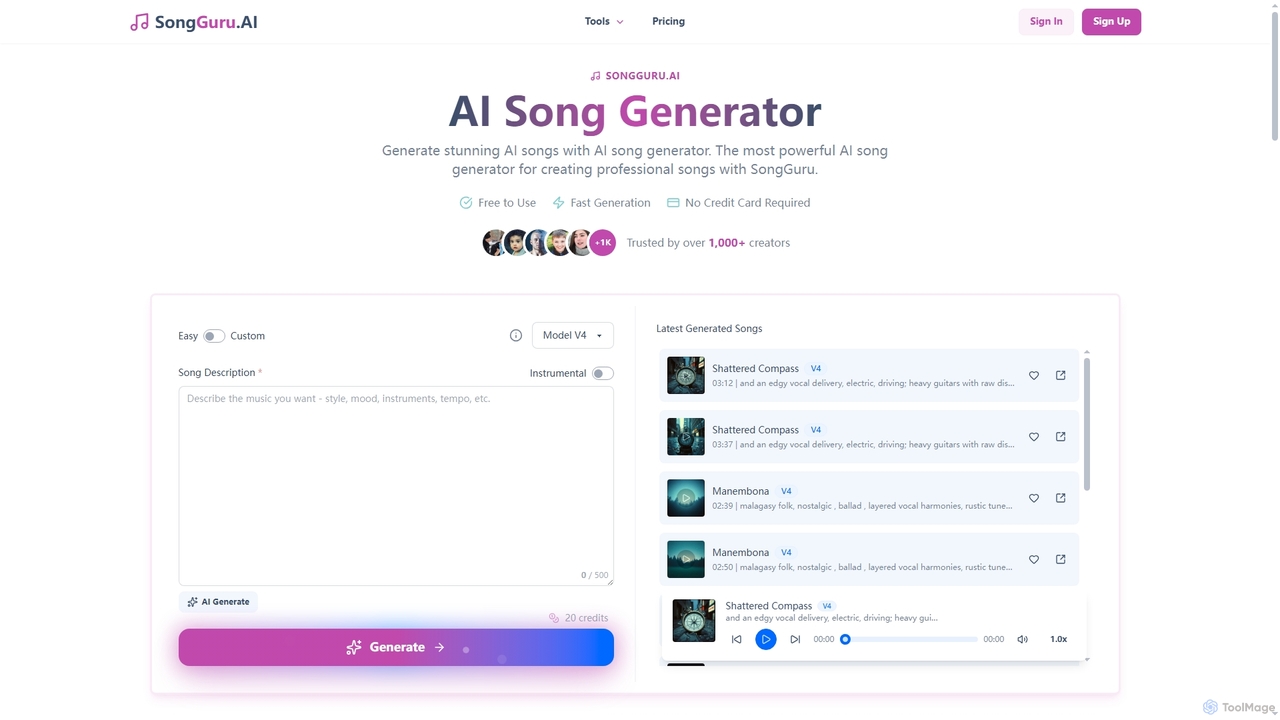
SongGuru is an AI-powered platform that enables users to generate complete songs, including music, vocals, and lyrics, from simple text descriptions or custom lyrics. It offers fast, high-quality output across various genres, making music creation accessible for everyone from hobbyists to professionals.

Composition
Visits 5.3KFavorites 125Likes 121
Suno AI
Freemium

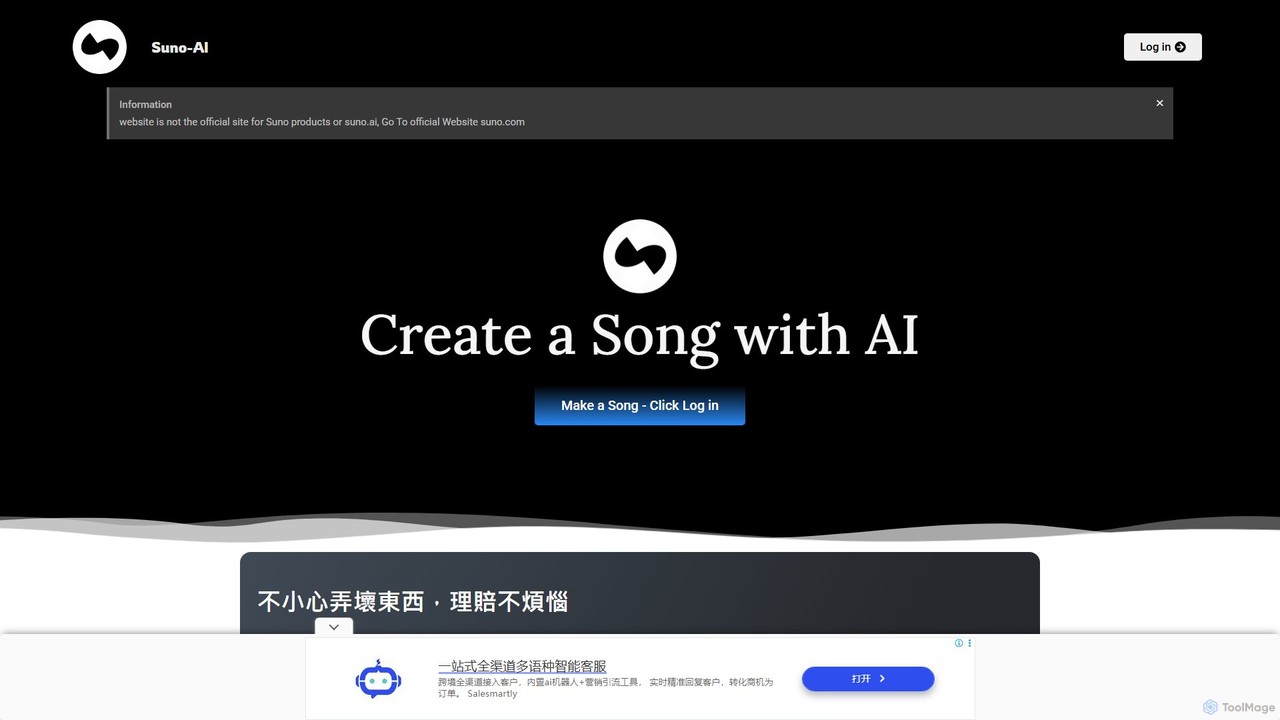
Suno AI

Suno AI is a revolutionary AI music generator that creates complete songs—including vocals, lyrics, and instrumentation—from simple text prompts. Ideal for musicians, content creators, and hobbyists, it allows anyone to produce high-quality, original music in a wide range of genres and styles within seconds.

Music Generation
Visits 193.5KFavorites 124Likes 124

About Songwriting

AI Songwriting tools are a specialized category of creative software that assists in generating original musical compositions. These tools utilize generative AI models to create lyrics, melodies, chord progressions, and even basic instrumental arrangements from simple text prompts or musical inputs. They serve as powerful creative partners, enabling musicians and producers to rapidly brainstorm ideas, overcome writer's block, and develop foundational song structures. This technology streamlines the initial, often challenging, phase of music creation.

Core Features

  • Lyric Generation: Creates verses, choruses, and bridges based on specified themes, keywords, or genres.
  • Melody & Harmony Creation: Generates catchy melodic lines and harmonically compatible chord progressions.
  • Genre Adaptation: Styles the musical output to fit various genres such as Pop, Rock, Hip-Hop, or Electronic.
  • Vocal Synthesis: Produces a synthesized vocal performance of the generated lyrics and melody for quick previews.
  • MIDI & Audio Export: Allows exporting generated musical elements for further refinement in a Digital Audio Workstation (DAW).

Applicable Scenarios

These tools are widely used by solo artists seeking inspiration, music producers needing to create quick demos for clients, and content creators requiring unique, royalty-free music for their projects. They are also valuable in educational settings, helping students understand song structure, music theory, and harmonic principles by experimenting with AI-generated examples.

Selection Criteria

When choosing an AI Songwriting tool, consider the scope of its generative capabilities (lyrics, melody, chords, or all-in-one). Evaluate the quality and diversity of its genre models, the level of user control over the output, and its export options (MIDI, WAV, MP3). An intuitive user interface and flexible pricing models are also important factors for a smooth workflow.

Songwriting use cases

1

Overcoming Writer's Block for Solo Artists

A singer-songwriter is struggling to complete the second verse of a new pop song. They input their existing chorus lyrics and melody into an AI songwriting tool. The tool generates five different lyrical and melodic variations for the verse, each exploring a slightly different emotional angle or rhyming scheme. This process provides fresh perspectives, breaking the creative stalemate and allowing the artist to select and refine a new section that perfectly complements their original idea, finishing the song in under an hour.

2

Rapid Prototyping for Music Producers

A music producer needs to present three distinct song concepts to a client by the end of the day. Instead of composing each from scratch, they use an AI tool to generate foundational ideas. For the first, they prompt '80s synth-pop love song,' for the second, 'modern hip-hop track about ambition,' and for the third, 'acoustic folk ballad.' The AI provides a complete structure with lyrics, chords, and melody for each. The producer then exports the MIDI files to their DAW, replaces the basic sounds with high-quality virtual instruments, and makes minor tweaks, creating three professional-sounding demos in a fraction of the usual time.

3

Creating Custom Music for Social Media Content

A content creator wants a unique, 30-second theme song for their YouTube video intros to avoid copyright strikes. They use an AI songwriting tool and input the prompt: 'upbeat, motivational, electronic pop with a simple catchy synth melody.' The tool generates several options. The creator selects one, slightly adjusts the tempo, and exports the audio file directly. This provides them with a custom, royalty-free piece of music that strengthens their brand identity, all completed in less than 15 minutes without any prior music production knowledge.

4

Educational Tool for Music Students

A music theory student is learning about different chord progressions common in jazz music. Using an AI songwriting tool, they input a simple melody and ask the AI to harmonize it in the style of 'Bebop Jazz' and then 'Cool Jazz.' The tool generates two distinct versions with appropriate chord voicings and progressions. By comparing the AI's outputs and analyzing the MIDI data, the student gains a practical, interactive understanding of how harmonic choices define a genre, supplementing their traditional textbook learning with immediate, audible examples.

5

Generating Lyrics for Instrumental Producers

An electronic music producer excels at creating complex beats and soundscapes but struggles with writing lyrics. They have a finished instrumental track with a dark, moody atmosphere. They upload the track to an AI songwriting tool that can analyze audio. They add text prompts like 'lyrics about a lonely city at night, cyberpunk theme.' The AI generates several sets of lyrics that match the song's structure (verse, chorus) and rhythmic feel. The producer can then use these lyrics as a foundation to record a vocalist or synthesize a vocal line, adding a new dimension to their music.

6

Collaborative Idea Generation for Bands

A band is in a brainstorming session but can't agree on a direction for a new song. The guitarist plays a short riff, which they record and feed into an AI songwriting tool. They set the genre to 'Indie Rock' and ask for chorus ideas. The AI generates three distinct chorus options, each with a different melody and chord progression built around the original riff. Hearing these concrete possibilities helps the band break their deadlock. They combine elements from two of the AI suggestions to create a unique chorus that serves as the starting point for the rest of the song, making their session more productive.

Songwriting FAQ

What are AI Songwriting tools?

AI Songwriting tools are applications that use artificial intelligence to generate musical elements like lyrics, melodies, and chord progressions. Unlike simple lyric generators or melody makers, these tools often integrate multiple functions to create a more complete song structure. They act as a creative assistant, helping users brainstorm ideas, overcome writer's block, or quickly produce demos by providing musically coherent suggestions based on user inputs such as genre, mood, or keywords.

How to choose the right AI Songwriting tool?

Choosing the right tool depends on your specific needs. Consider the following factors:

  • Scope of Generation: Do you need help with lyrics, melody, chords, or a full song structure? Some tools specialize in one area, while others are all-in-one solutions.
  • Genre Versatility: Check if the tool supports the musical genres you work with. A good tool will offer a wide range of styles with high-quality output for each.
  • User Control: Look for tools that allow you to edit and refine the AI's suggestions. The ability to tweak melodies, change chords, or regenerate specific lines is crucial for maintaining creative control.
  • Export Options: Ensure the tool can export files in formats compatible with your workflow, such as MIDI for editing in a DAW or WAV/MP3 for direct use.
What's the difference between AI Songwriting tools and a DAW?

The primary difference lies in their core function: generation versus production. AI Songwriting tools are designed to generate initial musical ideas—lyrics, melodies, and harmonies. They are idea starters. A Digital Audio Workstation (DAW), like Ableton Live or Logic Pro, is a comprehensive software environment for producing music. This includes recording audio, arranging MIDI, mixing tracks, adding effects, and mastering the final song. The two are complementary; a common workflow is to generate ideas in an AI tool and then export them to a DAW for full production and refinement.

Can I copyright songs made with AI?

The copyright status of AI-generated music is a complex and evolving legal area that varies by country. In many jurisdictions, copyright protection requires significant human authorship. A work generated entirely by AI with minimal human input may not be eligible for copyright. However, if you use an AI tool as a starting point and significantly modify, arrange, and add your own creative elements to the output, your final composition is more likely to be protectable. Always check the terms of service of the specific tool, as they often have clauses regarding ownership and commercial use of the generated content.

Who can benefit from using AI Songwriting tools?

A wide range of creators can benefit from these tools. This includes:

  • Solo Musicians & Singer-Songwriters: For overcoming writer's block, exploring new melodic or harmonic ideas, and quickly sketching out songs.
  • Music Producers: To rapidly create demos and prototypes for clients or to generate foundational ideas for new tracks.
  • Content Creators & Filmmakers: For generating custom, royalty-free background music or theme songs for their projects.
  • Hobbyists & Beginners: As an accessible way to start creating music and learn about song structure without needing extensive music theory knowledge.