ToolMage
Sign in

Best 1 Composition AI tools for Audio

Popular Composition AI tools in Audio include SongGuru, helping you work more efficiently.

Freemium

SongGuru

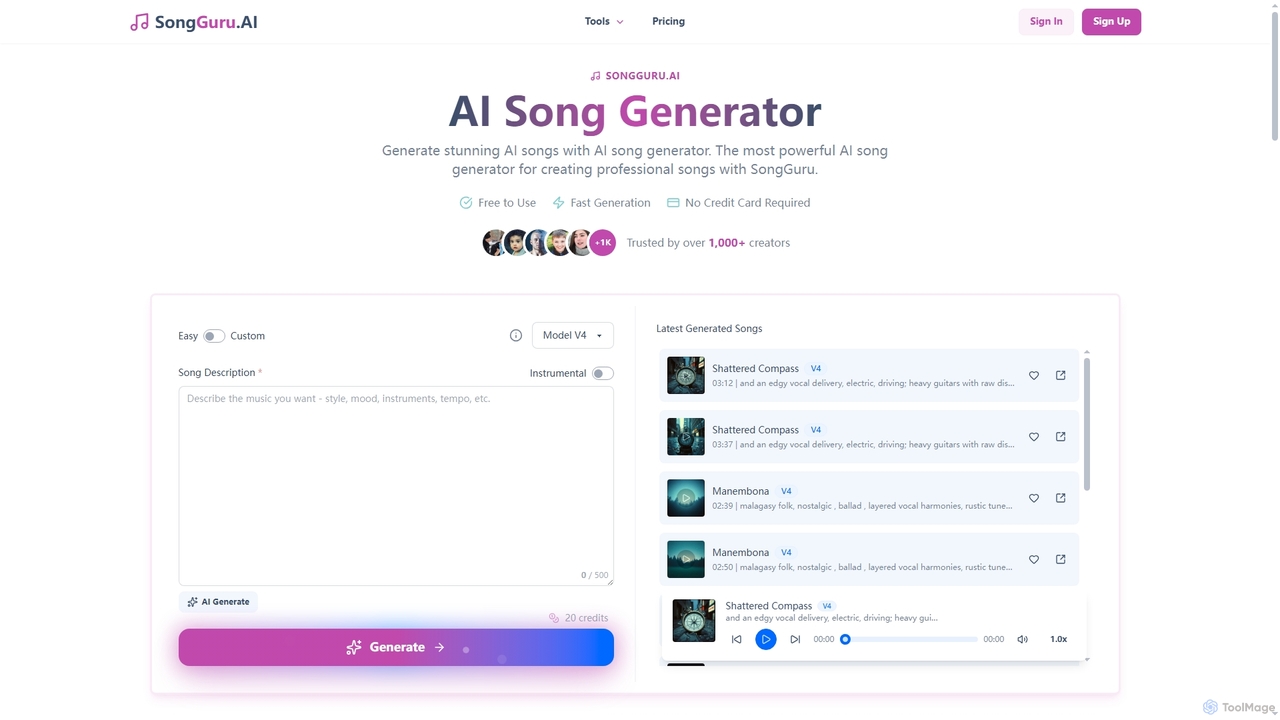
SongGuru is an AI-powered platform that enables users to generate complete songs, including music, vocals, and lyrics, from simple text descriptions or custom lyrics. It offers fast, high-quality output across various genres, making music creation accessible for everyone from hobbyists to professionals.

Composition
Visits 3.4KFavorites 108Likes 101

About Composition

AI Composition tools are a class of software that uses artificial intelligence to generate original musical pieces. These tools analyze patterns from vast music datasets to create new melodies, harmonies, rhythms, and even full arrangements in various styles. They provide a powerful solution for creators who need custom, royalty-free music quickly without extensive music theory knowledge. The primary value lies in automating the creative process, offering endless inspiration and production-ready tracks.

Core Features

  • Melody & Chord Generation: Creates original melodic lines and corresponding harmonic progressions based on user inputs like genre or mood.
  • Style Emulation: Generates music that mimics specific genres (e.g., cinematic, lo-fi, electronic) or the style of certain composers.
  • Instrument Arrangement: Automatically assigns musical parts to a variety of virtual instruments to create a full-sounding composition.
  • Stem & MIDI Export: Allows users to download individual instrument tracks (stems) or MIDI data for further editing in a Digital Audio Workstation (DAW).

Use Cases

These tools are widely used by content creators for YouTube videos, podcasters for intro/outro music, and indie game developers for prototyping soundtracks. Musicians also use them as a source of inspiration to overcome creative blocks, while marketing agencies leverage them for creating unique jingles for ad campaigns.

How to Choose

When selecting an AI Composition tool, consider the variety of available genres and styles. Evaluate the level of user control over parameters like tempo, key, and instrumentation. Check the output formats (e.g., MP3, WAV, MIDI) and, most importantly, review the licensing terms to ensure you have the rights for commercial use if needed.

Featured tool rankings

Composition use cases

1

Creating Background Music for Video Content

A content creator needs unique, royalty-free background music for their weekly YouTube videos. Instead of spending hours searching stock music sites, they use an AI Composition tool. By inputting prompts like 'upbeat, lo-fi hip hop, 5 minutes long, no vocals,' the tool generates several suitable tracks within minutes. The creator can then select the best fit, adjust the instrumentation slightly, and download a high-quality audio file, ensuring their content has a fresh and consistent sound without copyright concerns.

2

Generating Song Ideas for Musicians

A musician is experiencing writer's block and needs inspiration for a new song. They use an AI Composition tool to generate chord progressions and melody ideas in their preferred genre, such as 'indie pop' or 'ambient electronic'. The AI provides dozens of unique starting points. The musician can then export the most promising idea as a MIDI file, import it into their Digital Audio Workstation (DAW), and use it as a foundation to build upon with their own instruments and creative touch, significantly speeding up the initial songwriting phase.

3

Prototyping Soundtracks for Games and Apps

An indie game developer needs to establish the musical mood for a new level but doesn't have the budget to hire a composer for the early prototype. Using an AI Composition tool, they can generate multiple 'cinematic, orchestral, tense' tracks to test in-game. This allows the development team to iterate on the game's atmosphere and pacing with placeholder music that closely matches their vision. Once the direction is finalized, these AI-generated tracks can serve as a detailed brief for a human composer.

4

Creating Custom Podcast Intros and Outros

A podcaster wants a unique and professional-sounding theme music to build brand recognition. Instead of using generic stock music that thousands of others might use, they turn to an AI composer. They specify a mood ('inspirational, corporate'), a genre ('light electronic'), and a duration (30 seconds). The AI generates several options for an intro, outro, and transition sounds. This provides a cohesive audio branding package that is exclusive to their podcast, enhancing its production value and making it more memorable for listeners.

5

Generating Music for Guided Meditations

A wellness app developer needs long, non-distracting ambient music for guided meditation sessions. The music must be calming and loop seamlessly. Using an AI Composition tool, they can generate 20-minute tracks with parameters like 'ambient, peaceful, slow tempo, pads and nature sounds only'. The AI ensures the music evolves subtly without any jarring changes, making it ideal for maintaining a meditative state. This process is far more cost-effective and faster than commissioning custom-length tracks from a composer.

6

Creating Jingles for Ad Campaigns

A marketing team is developing a social media ad campaign and needs a short, catchy jingle that aligns with the brand's identity. Time is limited, and they need to explore many options quickly. They use an AI Composition tool to generate dozens of 15-second musical snippets based on keywords like 'energetic, fun, pop'. The team can then A/B test different jingles with target audiences to see which one performs best, all without the lengthy and expensive process of working with a traditional music production house.

Composition FAQ

What are AI Composition tools?

AI Composition tools are applications that use artificial intelligence, specifically generative models, to create original music. They learn musical patterns, structures, and styles from vast amounts of existing music data. Based on user prompts (like genre, mood, or tempo), they can generate new melodies, harmonies, and full instrumental tracks. Their primary purpose is to automate and accelerate music creation for non-musicians or to provide inspiration for professional artists.

How to choose the right AI Composition tool?

Choosing the right tool depends on your needs. Consider these factors:

  • Genre Variety: Does the tool offer the musical styles you need (e.g., cinematic, electronic, classical)?
  • Customization Level: How much control do you have over the output? Can you adjust tempo, key, instruments, and structure?
  • Output Quality & Formats: Does it generate high-quality audio (WAV, MP3)? Does it offer MIDI export for further editing in a DAW?
  • Licensing Terms: Check if the license allows for commercial use, especially for content creation or marketing. Most platforms offer different tiers for personal and commercial projects.
AI Composition vs. Stock Music Libraries: What's the difference?

The main difference is uniqueness and customization. AI Composition tools generate new, original music on demand based on your specific inputs, meaning the track is likely unique to you. Stock music libraries offer a large catalog of pre-made tracks that anyone can license, so the same song could be used in many different projects by other people. While stock music can be faster to browse, AI offers deeper customization and originality.

Can I legally use AI-generated music for commercial projects?

This depends entirely on the terms of service of the specific AI tool you use. Most reputable AI Composition platforms offer clear licensing tiers. Free or personal plans usually restrict commercial use, while paid or pro plans often grant a full commercial license, allowing you to use the music in monetized videos, ads, or products. Always read the licensing agreement carefully before using generated music for any commercial purpose to ensure you are compliant.

Who are AI Composition tools for?

AI Composition tools serve a wide range of users:

  • Content Creators: YouTubers, podcasters, and social media managers who need a constant supply of royalty-free background music.
  • Musicians & Producers: Artists looking for inspiration, new chord progressions, or melodic ideas to overcome writer's block.
  • Game & App Developers: Teams that need to quickly prototype soundtracks and ambient sounds for their projects.
  • Marketers & Agencies: Professionals creating unique jingles and music for advertisements and brand campaigns.
  • Hobbyists: Individuals without formal music training who want to experiment with creating their own music.