ToolMage
Sign in

Best 4 Ai Chatbot AI tools for Customer Service

Popular Ai Chatbot AI tools in Customer Service include Weinc, Faqally, Gostex, and BlizzardBerry, helping you work more efficiently.

BlizzardBerry
Freemium

BlizzardBerry

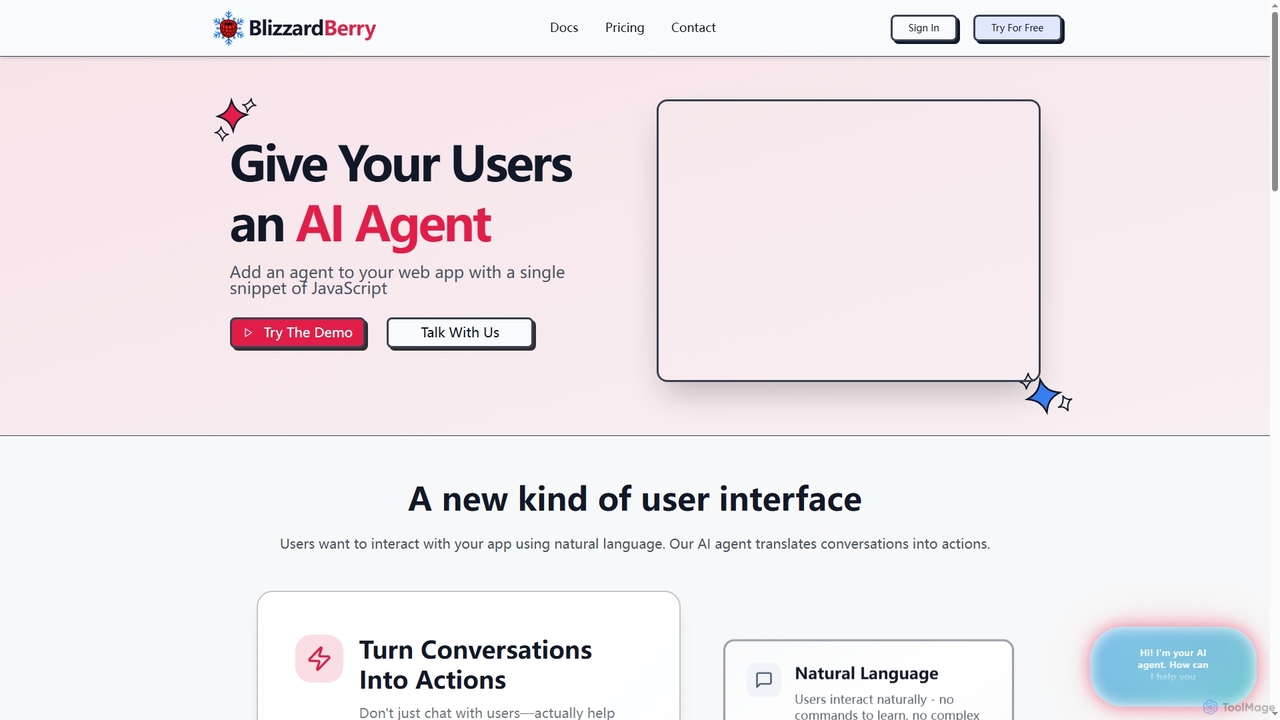
BlizzardBerry integrates AI agents into your web application with a single JavaScript snippet, enabling natural language interaction and automating tasks. It transforms user experience by allowing conversations to translate directly into actions, from upgrading accounts to processing orders, providing instant, personalized support 24/7.

Ai Chatbot
Visits 5.9KFavorites 117Likes 117
Faqally

Faqally

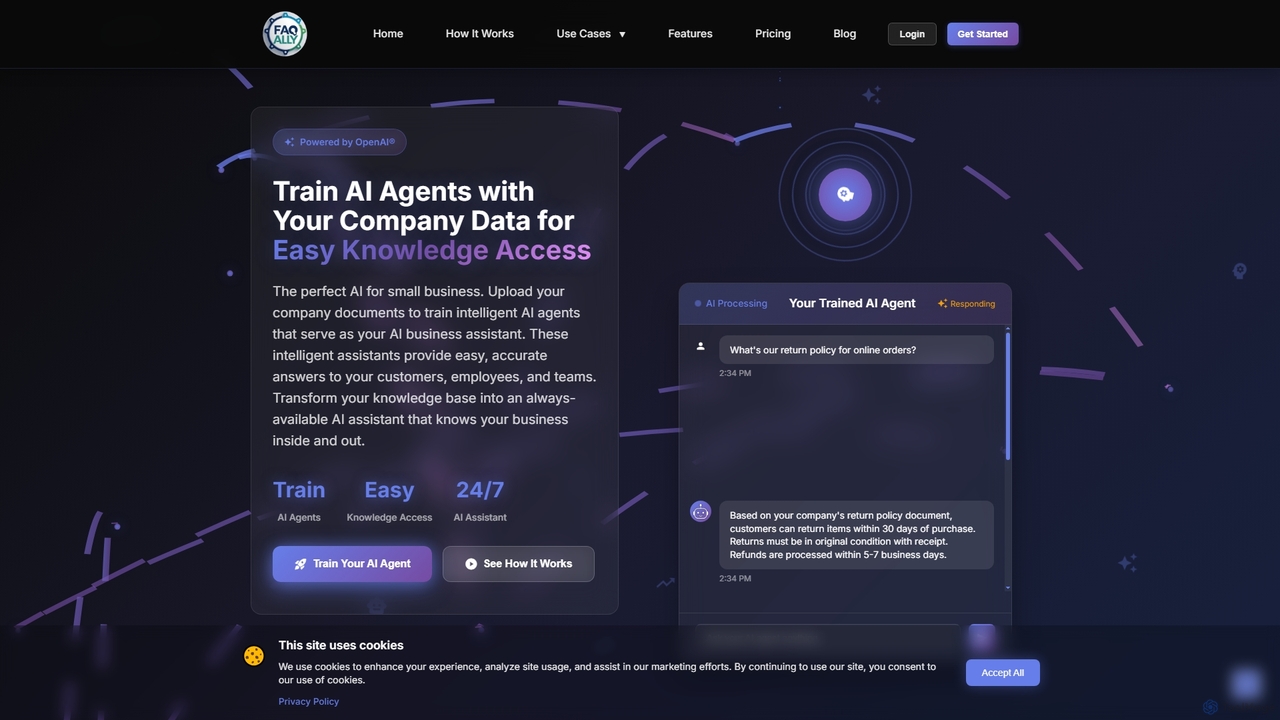
Faqally is an AI-powered knowledge platform designed for small businesses to transform their company data into intelligent AI agents. These agents provide easy, accurate answers to customers, employees, and teams through natural conversation, enhancing knowledge management and support efficiency.

Ai Chatbot
Visits 7.4KFavorites 135Likes 127
Gostex

Gostex

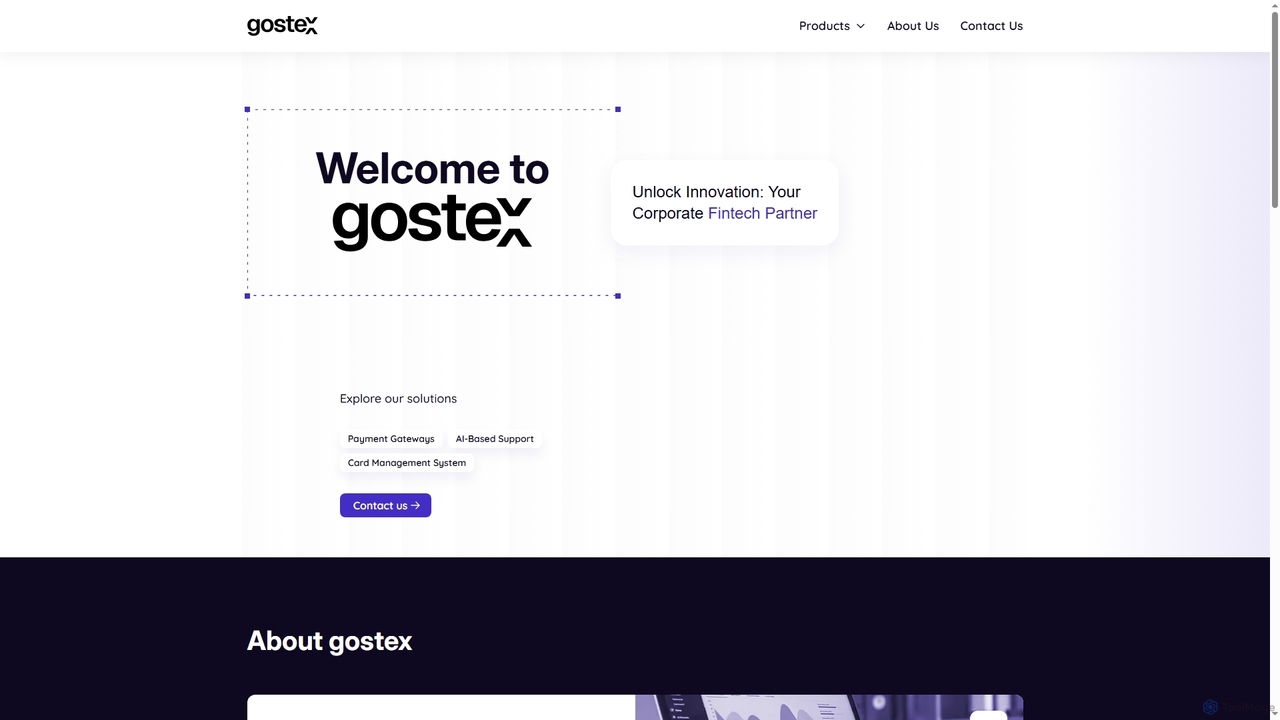
Gostex offers white-label fintech solutions, empowering businesses with customizable payment gateways, AI-based customer support, and robust card management systems. It focuses on enhancing customer experiences, streamlining operations, and ensuring high security and compliance for financial services.

White Label
Visits 5.9KFavorites 145Likes 133
Weinc
Paid

Weinc

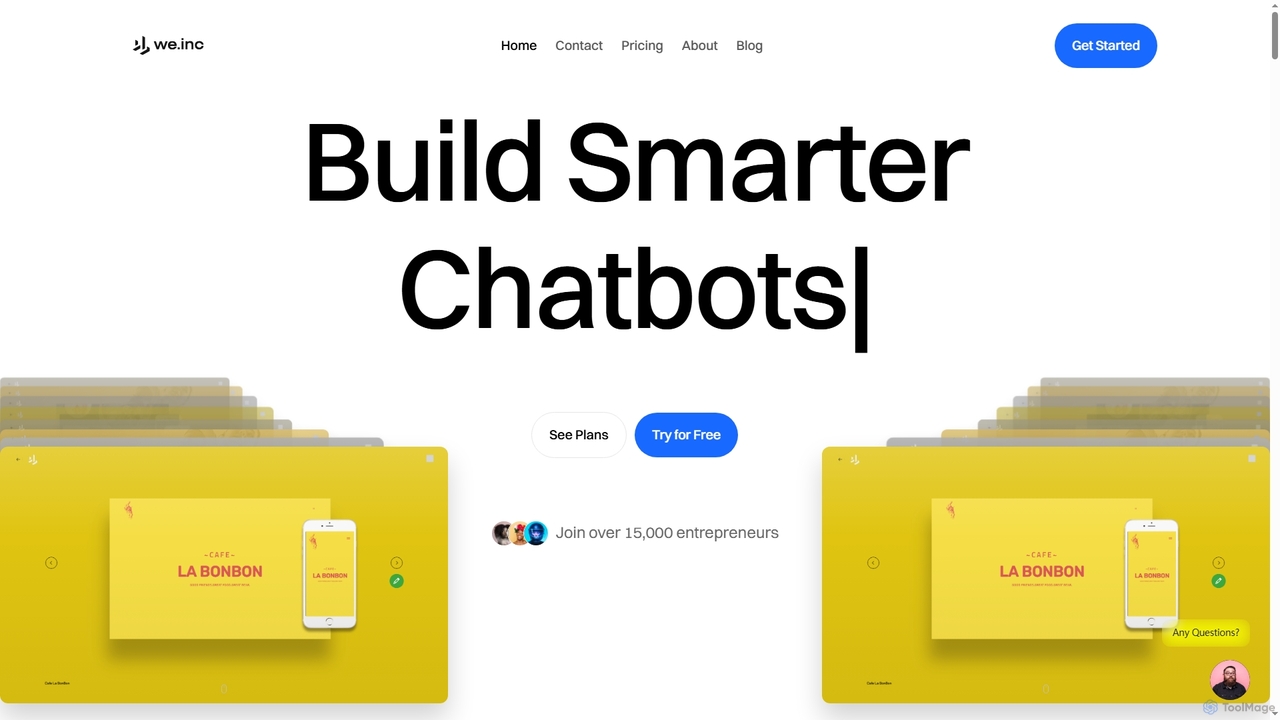
Weinc is an all-in-one 5-in-1 software suite designed to supercharge businesses by integrating no-code website building, AI chatbots, social media management, creative tools, and automation. It helps entrepreneurs and agencies streamline operations, generate leads, and manage multiple brands efficiently from a single platform.

3D
Visits 13.6KFavorites 146Likes 135

About Ai Chatbot

AI Chatbots are AI-powered tools designed to simulate human conversation, enabling automated interactions with users. Leveraging natural language processing (NLP) and machine learning, these chatbots can understand user intent, provide relevant responses, and perform tasks without human intervention. They serve as a crucial component in modern customer service strategies, offering 24/7 support, enhancing user experience, and streamlining communication across various platforms.

Core Features

  • Natural Language Understanding (NLU): Interprets and understands user queries in natural language.
  • Automated Responses: Provides instant, pre-programmed, or dynamically generated answers to common questions.
  • Contextual Memory: Retains information from previous interactions to maintain coherent conversations.
  • Integration Capabilities: Connects with CRM, helpdesk, and other business systems for seamless data flow.
  • Personalization: Tailors interactions and recommendations based on user data and past behavior.

Use Cases

AI Chatbots are widely adopted across industries to automate routine tasks and improve engagement. They excel in scenarios requiring rapid, consistent responses, such as handling frequently asked questions, guiding users through processes, or collecting initial information before escalating to human agents.

How to Choose

When selecting an AI Chatbot, consider its NLU accuracy and language support, integration capabilities with your existing tech stack, scalability to handle varying user volumes, and customization options for branding and specific workflows. Evaluate the ease of training and maintenance, as well as the vendor's support and pricing model.

Ai Chatbot use cases

1

Automated Customer Support & FAQs

Customer service departments utilize AI chatbots to handle a high volume of routine inquiries, such as tracking orders, checking account balances, or answering frequently asked questions. This frees up human agents to focus on complex issues, significantly reducing response times and improving overall customer satisfaction by providing instant, accurate information 24/7.

2

Lead Qualification and Nurturing

Marketing and sales teams deploy AI chatbots on websites to engage visitors, ask qualifying questions, and gather essential contact information. The chatbot can then guide potential leads through the sales funnel by providing relevant product information, scheduling demos, or connecting them with the appropriate sales representative, streamlining the lead generation process.

3

Internal HR and IT Helpdesk

Organizations use AI chatbots to provide instant support to employees for HR-related queries (e.g., leave policies, benefits, payroll) or IT issues (e.g., password resets, software troubleshooting). This reduces the workload on HR and IT departments, ensures quick resolution for common problems, and improves employee productivity by offering immediate assistance.

4

E-commerce Product Discovery & Recommendations

Online retailers integrate AI chatbots to assist shoppers in finding products, answering questions about features or availability, and offering personalized recommendations based on browsing history or preferences. This enhances the shopping experience, reduces cart abandonment, and can lead to increased sales by guiding customers efficiently to desired items.

5

Appointment Scheduling and Booking

Businesses in service industries, such as healthcare, beauty salons, or consulting firms, leverage AI chatbots to automate the appointment booking process. Users can interact with the chatbot to check availability, select preferred times, and confirm appointments, reducing administrative overhead and providing a convenient, self-service option for clients.

6

Information Retrieval and Knowledge Base Access

Companies use AI chatbots to provide quick access to vast amounts of information stored in internal knowledge bases or public documentation. Employees or customers can ask specific questions and receive precise answers instantly, eliminating the need to manually search through documents and improving efficiency in information access.

Ai Chatbot FAQ

What are AI Chatbots?

AI Chatbots are software applications powered by artificial intelligence, specifically natural language processing (NLP) and machine learning, designed to simulate human conversation. They can understand user intent, process natural language inputs, and provide intelligent, automated responses. Their primary purpose is to automate interactions, offer 24/7 support, and streamline communication across various digital channels, often serving as a first point of contact in customer service.

How to choose the right AI Chatbot for your business?

Choosing the right AI Chatbot involves evaluating several key factors. First, assess its Natural Language Understanding (NLU) capabilities and the languages it supports to ensure it can accurately interpret your target audience's queries. Second, consider its integration potential with your existing CRM, helpdesk, and other business systems for seamless data flow. Third, look at scalability, customization options for branding and workflow, and the ease of training and maintenance. Finally, compare pricing models and the level of vendor support offered.

What's the difference between AI Chatbots and traditional rule-based chatbots?

The fundamental difference lies in their intelligence and flexibility. Traditional rule-based chatbots operate on predefined rules, keywords, and decision trees; they can only respond to specific, pre-programmed questions. AI Chatbots, however, use NLP and machine learning to understand context, intent, and even sentiment, allowing them to handle more complex, varied, and open-ended conversations. While rule-based bots are good for simple FAQs, AI Chatbots excel in dynamic, personalized, and evolving customer service interactions.

What are the key capabilities of AI Chatbots?

AI Chatbots offer a range of powerful capabilities. These include advanced Natural Language Understanding (NLU) to interpret complex queries, contextual memory to maintain conversation flow, and the ability to learn and improve over time through machine learning. They can also integrate with various backend systems (CRM, databases), personalize interactions based on user data, and handle multiple languages, providing a versatile tool for automated communication and task execution.

How do AI Chatbots benefit businesses?

AI Chatbots provide significant benefits to businesses by enhancing operational efficiency and customer experience. They offer 24/7 availability, ensuring customers receive instant support anytime, anywhere. This leads to reduced response times, lower customer service costs, and improved customer satisfaction. Additionally, chatbots can automate repetitive tasks, qualify leads, and gather valuable customer data, allowing human employees to focus on more strategic and complex work, ultimately boosting productivity and revenue.