Avoma
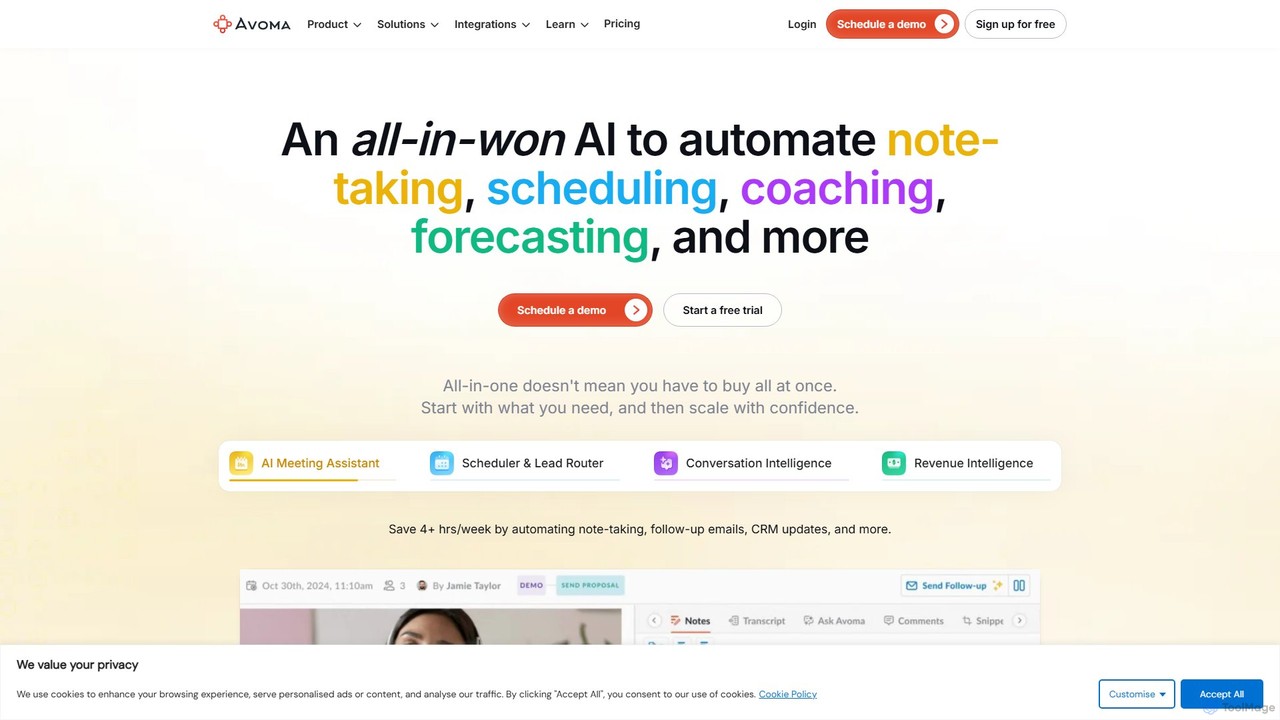
Avoma is an all-in-one AI meeting assistant and conversation intelligence platform. It automates the entire meeting lifecycle, from …
Avoma is an all-in-one AI meeting assistant and conversation intelligence platform. It automates the entire meeting lifecycle, from scheduling and agenda setting to AI-powered note-taking, transcription, and analysis. It helps sales, customer success, and marketing teams turn conversations into actionable insights, improve coaching, and accelerate revenue growth.
Versational
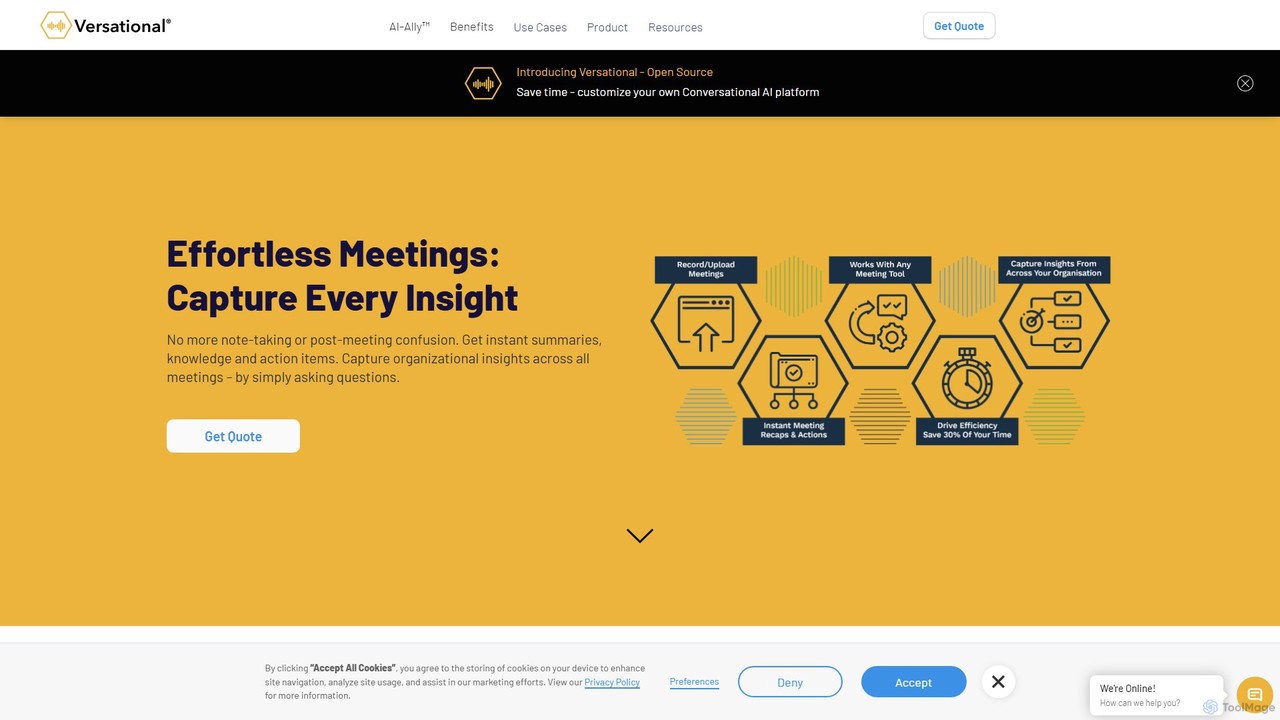
Versational is an AI-powered productivity platform that records, transcribes, and analyzes work conversations. It automates meeting summaries, extracts …
Versational is an AI-powered productivity platform that records, transcribes, and analyzes work conversations. It automates meeting summaries, extracts key insights like action items and sales signals, and integrates with tools like Zoom, Teams, and Salesforce to streamline workflows for sales, project management, and team collaboration.
VOMO
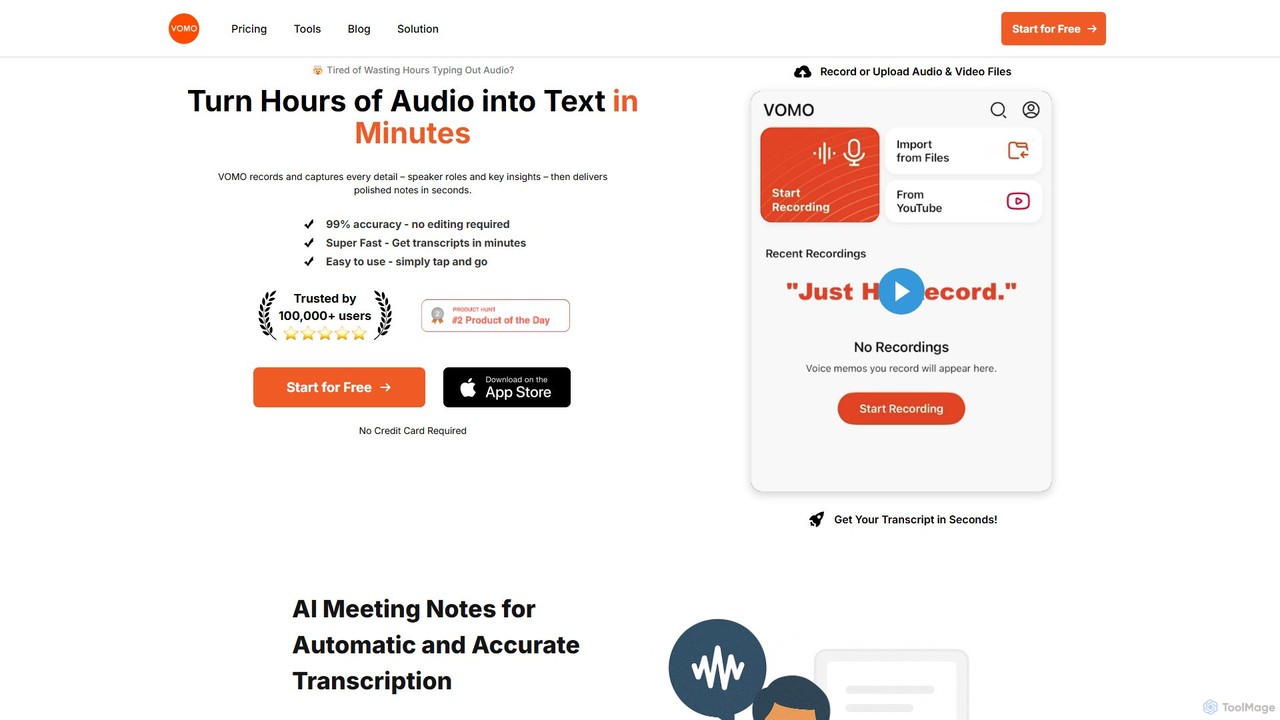
VOMO is an AI-powered tool that transcribes audio and video into text in minutes with 99% accuracy. It …
VOMO is an AI-powered tool that transcribes audio and video into text in minutes with 99% accuracy. It automatically generates meeting notes, summaries, and identifies speakers, helping users save time and boost productivity. It supports various file uploads, including YouTube links, and offers features like AI-powered Q&A and smart templates.
About Call Analysis
Call Analysis tools are AI-powered solutions that automatically process and extract insights from voice interactions. Leveraging speech-to-text, natural language processing, and sentiment analysis, these tools transform raw call data into actionable intelligence. They are crucial for enhancing customer service quality, optimizing sales strategies, and ensuring compliance within the broader Customer Support ecosystem.
Core Features
- Sentiment Analysis: Automatically detects and quantifies the emotional tone and sentiment expressed during calls.
- Topic Identification: Identifies recurring themes, issues, and product mentions across numerous conversations.
- Agent Performance Monitoring: Evaluates agent adherence to scripts, empathy, and effectiveness in resolving customer queries.
- Keyword Spotting: Pinpoints specific words or phrases for compliance checks, sales opportunities, or problem detection.
- Compliance Monitoring: Flags calls that may contain sensitive information or deviate from regulatory guidelines.
Applicable Scenarios
Customer service centers utilize call analysis to improve agent training and identify common customer pain points. Sales teams leverage it to refine pitches and understand successful conversion tactics. Quality assurance departments use it to ensure service standards and compliance across all interactions.
How to Choose
When selecting a Call Analysis tool, prioritize transcription accuracy and the depth of its natural language processing capabilities. Consider its integration with existing CRM or contact center platforms, scalability to handle call volumes, and the robustness of its reporting and dashboard features for actionable insights.
Call AnalysisUse Cases
Improve Customer Service Agent Training
Quality assurance managers in customer support centers use call analysis tools to identify common customer pain points and effective resolution strategies. By analyzing agent performance across hundreds of calls, they can pinpoint specific areas where agents excel or need coaching, leading to targeted training programs that enhance service quality and reduce average handling time by up to 20%.
Identify Product/Service Issues
Product development teams leverage call analysis to detect recurring complaints, feature requests, or technical issues reported by customers. By automatically categorizing call topics and sentiment, they can quickly identify emerging trends or critical bugs, enabling faster product iterations and improvements that directly address customer feedback, potentially reducing support tickets by 15%.
Enhance Sales Conversion Rates
Sales managers utilize call analysis to review successful and unsuccessful sales calls. By identifying key phrases, objection handling techniques, and closing strategies used by top performers, they can develop targeted training for the entire sales team. This data-driven approach helps refine sales pitches and improve conversion rates, leading to a measurable increase in revenue, often exceeding 10%.
Ensure Regulatory Compliance
Compliance officers in regulated industries (e.g., finance, healthcare) use call analysis to automatically monitor conversations for adherence to legal and industry regulations. The tools can flag specific keywords, phrases, or disclosures that indicate potential non-compliance, allowing for proactive intervention and reducing the risk of costly fines or legal repercussions by ensuring 100% call review for critical terms.
Personalize Customer Experience
Marketing and customer experience teams use insights from call analysis to understand individual customer preferences, past issues, and product interests. By identifying patterns in customer language and sentiment, they can tailor future communications, product recommendations, or service offers. This personalization leads to higher customer satisfaction and loyalty, potentially increasing customer retention rates by 5-10%.
Automate Call Summarization
Customer support agents can utilize call analysis tools to automatically generate concise summaries of each interaction. After a call, the AI processes the conversation, extracts key details like customer intent, issues discussed, and resolutions provided. This saves agents significant time on post-call documentation, ensuring accurate records and allowing them to focus more on customer engagement, reducing documentation time by up to 70%.