ToolMage
Sign in

Best 1 Voice Modulation AI tools for Customer Support

Popular Voice Modulation AI tools in Customer Support include Tomato.ai, helping you work more efficiently.

Tomato.ai
Paid

Tomato.ai

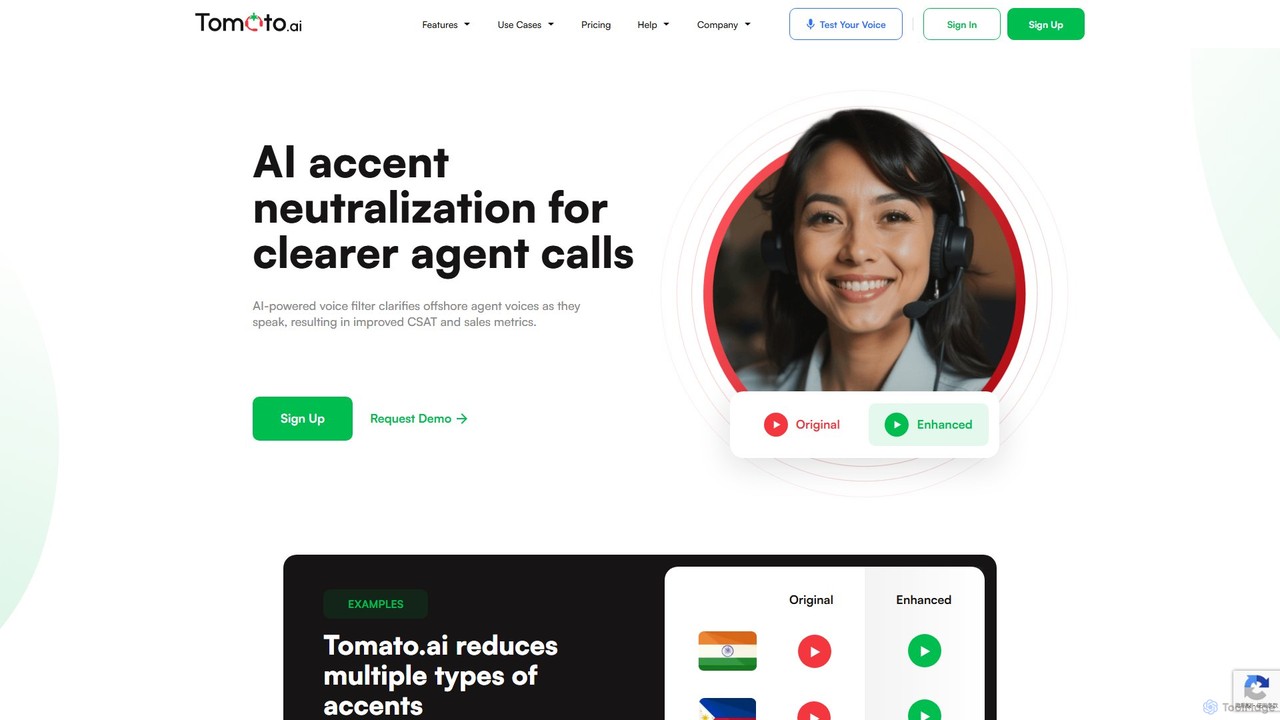
Tomato.ai is an AI-powered voice filtering solution designed for call centers. It neutralizes and reduces the accents of offshore agents in real-time, making their speech clearer to customers. This enhances communication, improves customer satisfaction (CSAT), and boosts sales metrics by reducing misunderstandings and frustration.

Voice Modulation
Visits 11.3KFavorites 142Likes 131

About Voice Modulation

Voice Modulation tools are AI-powered applications that alter the characteristics of a human voice in real-time. These tools utilize advanced speech-to-speech synthesis to modify pitch, tone, accent, and emotion without significant delay. Within the customer support context, they enable contact centers to standardize agent communication, reduce accent-related barriers, and ensure a consistent brand voice. This technology helps improve call clarity, de-escalate tense situations, and protect agent identity.

Core Features

  • Real-time Voice Transformation: Instantly change vocal attributes like pitch, gender, and age during live conversations.
  • Accent Standardization: Neutralize regional accents or adopt a target accent for clearer global communication.
  • Emotional Tone Adjustment: Modulate the voice to convey specific emotions like empathy, confidence, or calmness.
  • Voice Masking & Anonymization: Obscure the speaker's true voice to protect agent privacy and safety.
  • Cross-lingual Voice Cloning: Translate speech into another language while retaining the original speaker's vocal identity.

Use Cases

Voice Modulation is primarily used in global customer support centers, BPOs, and sales teams. It is valuable for organizations aiming to create a uniform brand sound, improve communication effectiveness for agents with diverse backgrounds, and enhance agent well-being in high-stress roles.

How to Choose

When selecting a Voice Modulation tool, evaluate its real-time latency, as low delay is critical for natural conversation. Consider the quality and variety of available voices, integration capabilities with your existing CRM and contact center software, and its compliance with data privacy regulations like GDPR and CCPA.

Featured tool rankings

Voice Modulation use cases

1

Standardize Agent Voice for Brand Consistency

A global financial services company uses AI Voice Modulation to ensure all their customer support agents present a uniform, professional, and trustworthy vocal identity. Regardless of an agent's location or native accent, the tool applies a consistent, on-brand voice profile to every call. This helps build customer trust and reinforces the company's brand image across all touchpoints, ensuring a predictable and high-quality customer experience.

2

De-escalate Tense Customer Interactions

In a telecommunications call center, agents handling billing disputes use Voice Modulation to manage difficult conversations. The AI analyzes the agent's speech and subtly adjusts it to maintain a calm, empathetic, and steady tone, even if the agent is feeling stressed. This helps prevent the escalation of conflicts, soothes frustrated customers, and leads to more constructive resolutions, improving first-call resolution rates.

3

Improve Clarity and Reduce Accent Bias

A multinational tech company with a diverse support team in various countries implements accent standardization. The tool neutralizes strong regional accents in real-time, making agents easier for all customers to understand. This not only improves communication clarity and reduces call times but also mitigates unconscious bias from customers, ensuring agents are judged on their skills, not their accent.

4

Protect Agent Anonymity in Sensitive Roles

Agents working in content moderation or financial collections face a high risk of personal harassment. A BPO firm provides these agents with voice modulation tools to completely mask their real voices. This creates a layer of anonymity, protecting their personal identity and safety while allowing them to perform their duties effectively without fear of being identified or targeted outside of work.

5

Enable Multilingual Support with Voice Cloning

An e-commerce platform expanding into new markets uses cross-lingual voice modulation for its top support specialists. An expert agent can speak in their native language, and the tool translates their speech into the customer's language in real-time, while preserving the agent's unique vocal characteristics and tone. This allows a small team of experts to serve a global customer base without needing to be fluent in every language.

6

Onboard and Train New Call Center Agents

A large insurance company uses Voice Modulation software as a training tool for new hires. The system provides real-time feedback on an agent's tone, pace, and emotional expression during mock calls. It guides them to adopt the company's desired communication style, such as sounding more empathetic or confident. This accelerates the learning curve and ensures new agents meet quality standards faster.

Voice Modulation FAQ

What is AI Voice Modulation for customer support?

AI Voice Modulation is a technology that alters a speaker's voice in real-time during a live conversation. In customer support, it's used to modify an agent's vocal characteristics—such as accent, tone, and pitch—to achieve specific goals. Key applications include standardizing brand voice, improving communication clarity, de-escalating tense calls by conveying calmness, and protecting agent anonymity.

How do I choose the right Voice Modulation tool for a call center?

When selecting a tool, consider these factors:

  • Latency: The delay must be minimal (ideally under 100ms) to ensure natural, real-time conversation.
  • Integration: Ensure it integrates smoothly with your existing CCaaS, UCaaS, or CRM platforms.
  • Voice Quality & Variety: Evaluate the naturalness of the synthesized voices and the range of options available.
  • Security & Compliance: Verify that the tool complies with data privacy regulations like GDPR and HIPAA, especially if handling sensitive customer information.
What is the difference between Voice Modulation and Text-to-Speech (TTS)?

The key difference is the input. Voice Modulation takes a live human voice as input and modifies it in real-time (speech-to-speech). Text-to-Speech (TTS) takes written text as input and generates an artificial voice from scratch. Voice Modulation is used for live agent conversations, while TTS is typically used for IVR systems, automated announcements, or virtual assistants.

Can these tools completely remove a support agent's accent?

Yes, a primary function of many Voice Modulation tools is accent standardization or neutralization. The technology can transform an agent's speech to sound like a native speaker of a target language or adopt a neutral, universally understood accent. This is particularly useful for global support teams to ensure clear communication and reduce potential misunderstandings or customer bias.

Is it ethical to change an agent's voice during a customer call?

The ethics of voice modulation depend on its purpose. When used to improve clarity, ensure brand consistency, or protect agents from harassment, it is generally considered an ethical application of technology. It becomes ethically questionable if used to deceive customers or misrepresent an agent's identity or location fundamentally. Most companies using this technology focus on enhancement and protection rather than deception.