twitterbookmarks
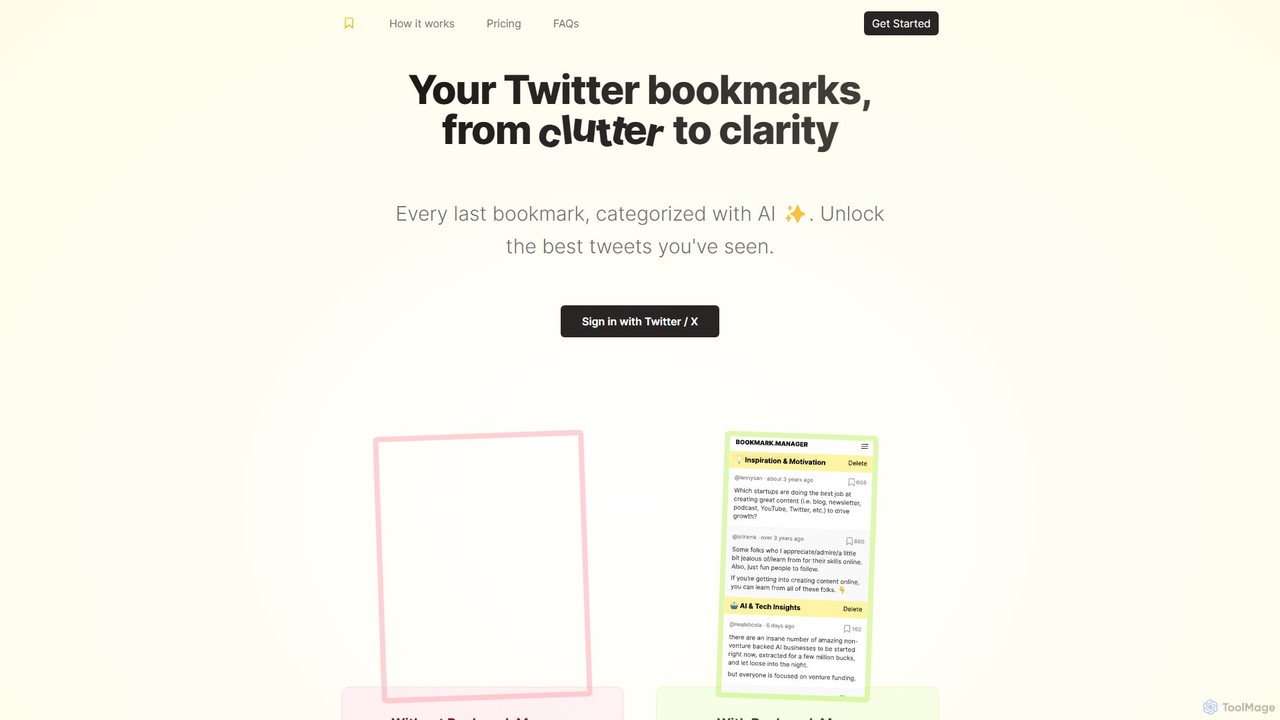
An AI-powered tool that uses GPT-4 to automatically categorize your Twitter/X bookmarks. It transforms your cluttered collection of …
An AI-powered tool that uses GPT-4 to automatically categorize your Twitter/X bookmarks. It transforms your cluttered collection of saved tweets into a clear, organized, and searchable knowledge base, allowing you to export your data to CSV or JSON.
About Curation
AI Curation tools are a specialized category of data management software that automates the process of discovering, organizing, and presenting relevant content from vast digital sources. They leverage machine learning algorithms, particularly Natural Language Processing (NLP), to analyze and score information for quality and relevance. This enables users to build valuable, themed collections for newsletters, market intelligence, or knowledge bases with minimal manual effort. These tools transform raw data streams into structured, contextualized insights.
Core Features
- Automated Content Sourcing: Connects to sources like RSS feeds, APIs, and social media to continuously pull in new information.
- Relevance Scoring & Filtering: Uses AI to rank content based on keywords, topics, and quality metrics, removing irrelevant noise.
- Thematic Categorization: Automatically groups discovered content into logical topics or user-defined folders.
- Content Summarization: Generates concise summaries or key takeaways from long articles or documents.
- Publishing & Distribution: Integrates with platforms like email marketing services or social media to share curated collections.
Use Cases
AI Curation is widely used by content marketers, market analysts, researchers, and community managers. For instance, a marketing team can create a weekly industry newsletter by automatically curating top blog posts and news. Similarly, a financial analyst can monitor competitor activities and market sentiment by aggregating real-time updates from various financial news outlets and social platforms.
How to Choose
When selecting an AI Curation tool, evaluate the breadth and type of content sources it supports. Consider the sophistication of its AI filtering and categorization capabilities—can it understand nuance and context? Also, assess its integration options for seamless publishing to your existing channels (e.g., Mailchimp, Slack, WordPress). Finally, review the pricing model, which often depends on the number of sources or topics tracked.

CurationUse Cases
Create Automated Market Intelligence Briefings
A business intelligence analyst configures a curation tool to monitor specific competitors, industry keywords, and regulatory news sources. The AI automatically gathers relevant articles, press releases, and social media mentions daily. It then scores, categorizes, and summarizes the key findings. The analyst receives a consolidated email digest each morning, saving hours of manual research and allowing them to quickly identify emerging trends and competitive threats for strategic reports.
Power a Niche Content Newsletter
A solo creator or a brand's content team aims to become a thought leader in a specific niche, like sustainable technology. They use an AI curation tool to scan hundreds of tech blogs, academic journals, and news sites. The tool filters for the most insightful and original content, generates brief summaries, and queues them for review. The creator then adds their own commentary and schedules the curated content into a weekly newsletter, providing immense value to subscribers with minimal sourcing time.
Build a Dynamic Internal Knowledge Base
A fast-growing company's HR and operations team needs to centralize internal knowledge. They deploy a curation tool that connects to their internal platforms like Confluence, Google Drive, and Slack. The AI indexes all documents, conversations, and guides. When an employee searches for a topic like 'expense policy,' the tool curates and presents the most relevant official document, related Slack discussions, and a quick summary, creating a self-updating and highly accessible knowledge hub.
Aggregate Academic Research for Literature Reviews
A PhD student or academic researcher is working on a literature review. They set up an AI curation tool to track keywords, specific authors, and top journals in their field across Google Scholar, PubMed, and ArXiv. The platform automatically fetches new publications, filters out duplicates, and groups papers by sub-theme. This creates a living library of relevant research, helping the academic stay on top of the latest findings and identify key papers for their review without constant manual searches.
Source Third-Party Content for Social Media
A social media manager needs to maintain an active and engaging feed without solely promoting their own brand. They use a curation tool to discover high-quality articles, infographics, and videos relevant to their audience's interests. The AI suggests content that has high engagement potential. The manager can quickly review, approve, and schedule these curated posts directly to their social media channels, filling their content calendar and establishing their brand as a helpful resource in the industry.
Compile Supplementary Materials for E-Learning
An instructional designer is developing an online course on digital marketing. To enrich the learning experience, they use an AI curation tool to find up-to-date case studies, expert interviews, and practical guides from across the web. The tool organizes these resources by course module (e.g., 'SEO,' 'Content Marketing'). The designer can then embed these curated content feeds directly into the learning management system (LMS), providing students with fresh, real-world examples that complement the core curriculum.