Database Tools are AI-powered solutions designed to streamline and enhance every aspect of database management, from design and development to operation and optimization. These tools leverage artificial intelligence and machine learning algorithms to automate complex tasks, improve data quality, and provide intelligent insights into database performance and security. They empower developers, data professionals, and administrators to manage vast datasets more efficiently, ensuring data integrity and accessibility across various platforms.
Core Features
- Intelligent Schema Design: AI assists in optimizing database schemas, suggesting indexing strategies, and identifying normalization opportunities for improved performance.
- Automated Query Optimization: Machine learning algorithms analyze query patterns and execution plans to recommend or automatically apply optimizations, significantly speeding up data retrieval.
- Data Quality & Anomaly Detection: AI identifies inconsistencies, duplicates, and anomalies within datasets, helping maintain high data integrity and flagging potential issues proactively.
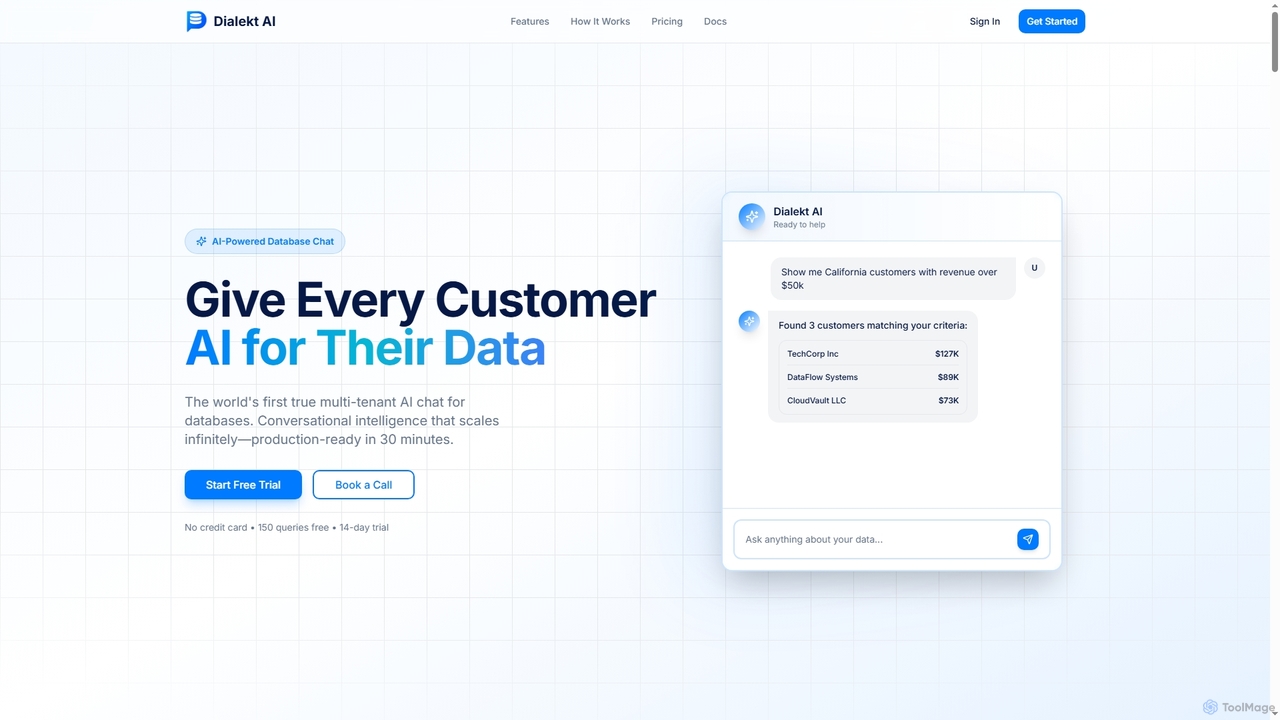
- Natural Language Interaction: Users can query databases using natural language, allowing non-technical users to access and analyze data without writing complex SQL.
- Predictive Performance Monitoring: AI predicts potential performance bottlenecks or resource exhaustion before they occur, enabling proactive adjustments and preventing downtime.
Applicable Scenarios
Database Tools are essential for organizations managing large, complex datasets, including e-commerce platforms optimizing product catalogs, financial institutions ensuring transactional integrity, and healthcare providers managing patient records. They are also vital for data scientists and analysts who need efficient access to clean, optimized data for their models, and for developers building data-intensive applications requiring robust and performant backends.
How to Choose
When selecting Database Tools, consider the specific database systems you use (SQL, NoSQL, cloud-native), the scope of AI features offered (e.g., query optimization, data quality, natural language processing), and the tool's integration capabilities with existing data management ecosystems. Evaluate the ease of use, scalability for future data growth, and the vendor's support and security protocols to ensure it aligns with your organizational needs and technical expertise.