ToolMage
Sign in

Best 1 Data Masking AI tools for Data Management

Popular Data Masking AI tools in Data Management include GoMask, helping you work more efficiently.

GoMask
Freemium

GoMask

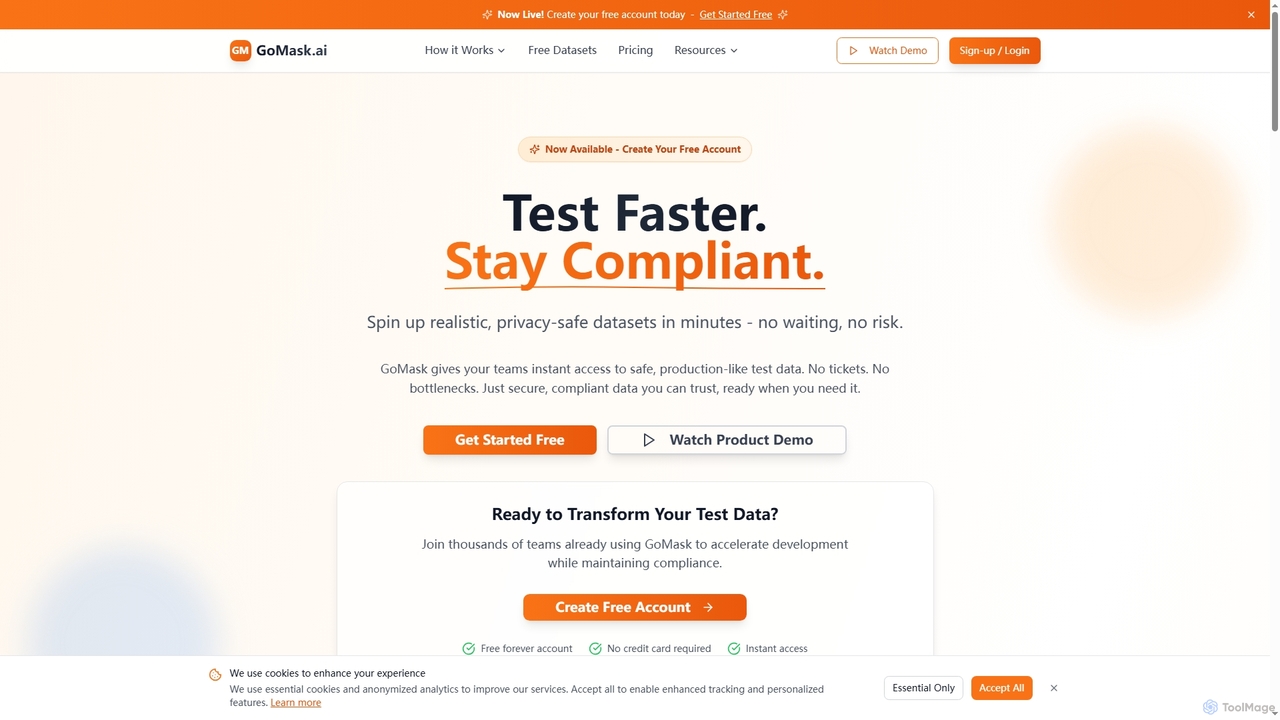
GoMask is an AI-powered platform that accelerates software development by providing instant, compliant, and realistic test data through advanced data masking and synthetic data generation. It eliminates bottlenecks, ensures regulatory compliance, and integrates seamlessly into modern CI/CD pipelines.

Data Masking
Visits 13.1KFavorites 149Likes 166

About Data Masking

Data Masking tools are AI-powered solutions designed to obscure sensitive information by replacing it with realistic, yet fictitious, data. These tools leverage advanced algorithms to create anonymized datasets that maintain structural integrity and referential consistency, making them suitable for various non-production environments. Their primary value lies in protecting privacy and ensuring compliance with data protection regulations, allowing organizations to safely utilize data for development, testing, analytics, and training without exposing actual sensitive details.

Core Features

  • Static Data Masking: Creates a masked copy of a database for non-production use.
  • Dynamic Data Masking: Masks data in real-time as it's accessed, without altering the original database.
  • Format-Preserving Masking: Replaces sensitive data with masked values that retain the original data type and format.
  • Referential Integrity: Ensures consistency of masked data across related tables and systems.
  • Data Subsetting: Extracts a smaller, representative subset of data and masks it for specific project needs.

Applicable Scenarios

Data Masking is crucial for organizations handling sensitive information, especially in sectors like finance, healthcare, and e-commerce. It's widely used by developers and testers to create secure test environments, by data analysts for privacy-compliant insights, and by compliance officers to meet regulatory requirements like GDPR and CCPA. These tools enable safe data utilization across the data lifecycle, from development to deployment.

How to Choose

When selecting a Data Masking tool, consider its masking techniques (static vs. dynamic), ability to preserve data format and referential integrity, and integration capabilities with your existing database systems. Evaluate its compliance features, performance impact on data operations, and ease of use for different user roles. Scalability and support for various data types are also critical factors for long-term effectiveness.

Data Masking use cases

1

Secure Development and Testing Environments

Developers and QA engineers frequently require realistic data to build and test applications. Data Masking allows them to work with production-like datasets where sensitive customer information (e.g., names, addresses, credit card numbers) has been replaced with fictitious, yet structurally valid, data. This prevents the exposure of real customer data in non-production environments, significantly reducing security risks and ensuring compliance during the software development lifecycle.

2

Achieving Data Privacy Compliance (GDPR, CCPA)

Organizations operating under strict data privacy regulations like GDPR, CCPA, or HIPAA must protect personal identifiable information (PII). Data Masking provides a robust method to anonymize sensitive data, making it impossible to link back to individuals. This enables businesses to share data internally for analytics or with external partners while adhering to legal requirements, avoiding hefty fines, and building customer trust.

3

Safe Data Sharing with Third-Party Vendors

When collaborating with external vendors, consultants, or partners, sharing data often becomes a challenge due to privacy concerns. Data Masking allows businesses to provide third parties with necessary datasets for specific projects (e.g., marketing campaigns, system integrations) without compromising sensitive customer or business information. The masked data retains its utility for analysis or testing, but without revealing any confidential details.

4

Training and Analytics with Realistic Datasets

For training new employees or conducting advanced data analytics, using real production data can pose significant privacy and security risks. Data Masking enables the creation of realistic, anonymized datasets that mimic the characteristics of live data. This allows data scientists to develop and refine models, and employees to undergo practical training, all within a secure environment where no actual sensitive information is exposed.

5

Protecting Customer Data in Non-Production Systems

Many organizations maintain multiple non-production environments, such as staging, UAT (User Acceptance Testing), or disaster recovery systems, which often contain copies of production data. Data Masking ensures that all sensitive customer information within these systems is consistently masked. This proactive measure prevents accidental data breaches or unauthorized access to PII, even if these non-production systems are compromised.

6

Facilitating Cloud Migration and Database Modernization

Migrating on-premise databases to cloud environments or modernizing legacy systems involves moving large volumes of data. Data Masking plays a critical role by anonymizing sensitive data before it is transferred or stored in new platforms. This minimizes the risk of data exposure during migration, ensures compliance with cloud security policies, and provides an additional layer of protection for sensitive information in new, potentially less controlled, environments.

Data Masking FAQ

What is Data Masking?

Data Masking is a data security technique that replaces sensitive, real data with fictitious, yet realistic and structurally similar, data. Its primary purpose is to protect confidential information while allowing data to be used safely in non-production environments like development, testing, and training. This process ensures that the masked data retains its usability for various operations without exposing actual sensitive details.

How to choose the right Data Masking tool?

Choosing the right Data Masking tool involves evaluating several factors. Consider the types of masking techniques offered (static, dynamic, on-the-fly), its ability to maintain referential integrity across databases, and support for various data types and formats. Assess its integration capabilities with your existing IT infrastructure, performance impact, compliance reporting features, and the ease of defining and managing masking rules. Scalability and vendor support are also crucial.

What's the difference between Data Masking and Data Encryption?

Data Masking replaces sensitive data with irreversible, fictitious data, making the original data unrecoverable from the masked version. It's primarily used for non-production environments. Data Encryption, conversely, transforms data into an unreadable format using an algorithm and a key, but the original data can be restored with the correct key. Encryption is typically used for protecting data in transit or at rest in production systems, where the original data needs to be accessed later.

What types of data can be masked?

Data Masking tools can mask a wide range of sensitive data types. This includes personally identifiable information (PII) such as names, addresses, social security numbers, and email addresses; financial data like credit card numbers and bank account details; healthcare information (PHI); and other confidential business data. Advanced tools can also handle complex structured and unstructured data, ensuring format preservation for masked values.

Why is Data Masking important for businesses?

Data Masking is crucial for businesses because it enables them to balance data utility with data privacy and security. It helps organizations comply with stringent data protection regulations (e.g., GDPR, CCPA), mitigate the risk of data breaches in non-production environments, and protect their reputation. By providing secure, realistic datasets, it accelerates development cycles, improves data quality for testing, and facilitates safe analytics and training, ultimately fostering innovation while safeguarding sensitive information.