Data Science Best in category 2 results Machine Learning Platform AI Tool

Popular AI tools in the Machine Learning Platform field of Data Science include Dataiku、H2O.ai, etc., helping you quickly improve efficiency.

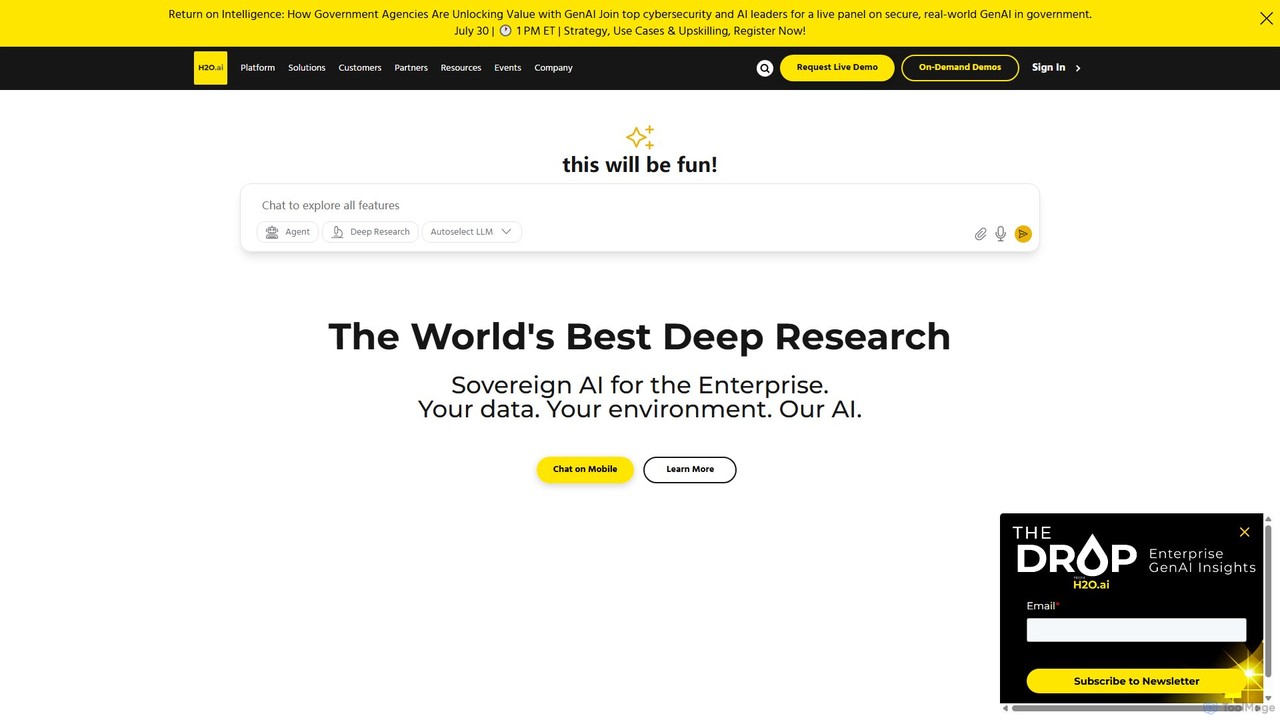
H2O.ai

H2O.ai

H2O.ai is an end-to-end AI Cloud platform for enterprises, combining predictive and generative AI. It enables businesses to …

178.5K
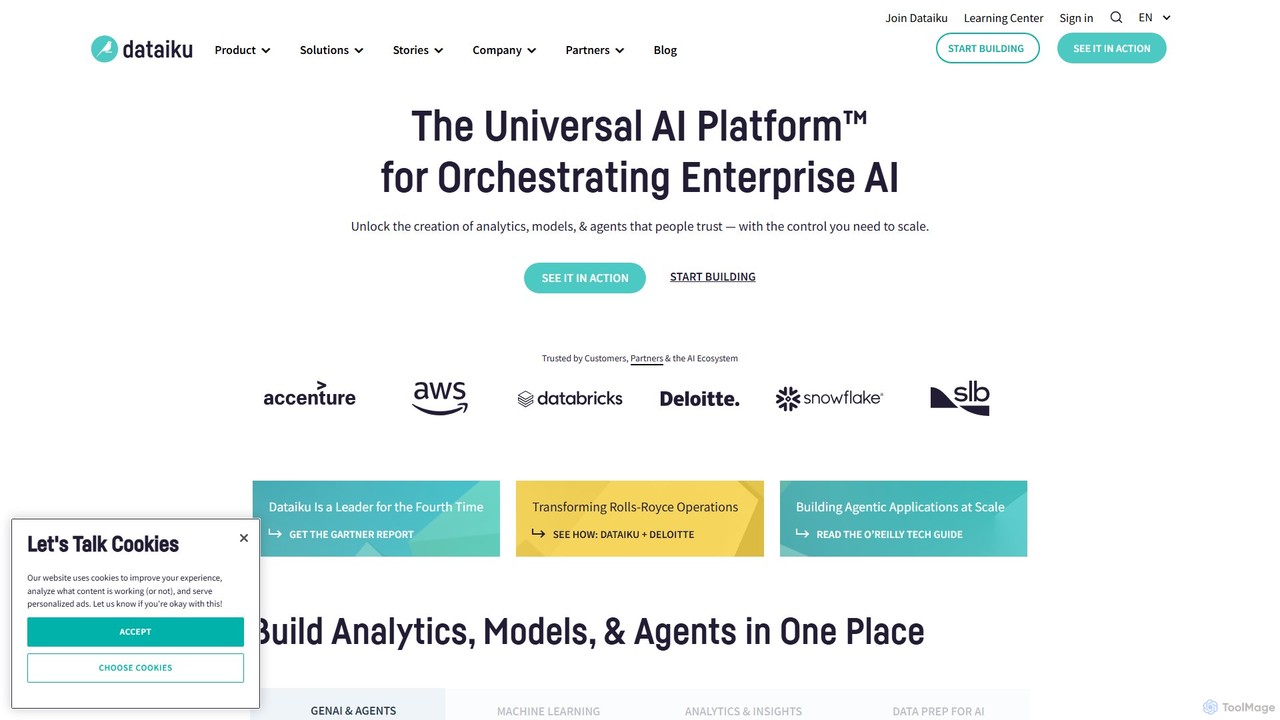
Dataiku

Dataiku

Dataiku is the Universal AI Platform™, enabling organizations to build, deploy, and manage AI and analytics applications. It …

316.4K

About Machine Learning Platform

Machine Learning Platform is a category of specialized tools designed to streamline the entire lifecycle of machine learning models. These platforms provide an integrated environment for data preparation, model training, deployment, and ongoing management. They empower data scientists and ML engineers to build, test, and operationalize AI solutions efficiently and at scale, accelerating innovation across various industries.

Core Features

  • Data Management & Preparation: Tools for ingesting, cleaning, transforming, and labeling data for ML.
  • Model Training & Experimentation: Environments for developing, training, and evaluating ML models, often with automated hyperparameter tuning.
  • Model Deployment & Serving: Capabilities to deploy trained models into production environments, making them accessible via APIs.
  • MLOps & Monitoring: Features for automating ML workflows, versioning models, and continuously monitoring their performance and drift.
  • Collaboration & Governance: Tools for team collaboration, access control, and ensuring compliance and reproducibility.

Applicable Scenarios

Machine Learning Platforms are crucial for organizations that need to operationalize AI at scale. Data science teams use them to manage complex model development pipelines, from initial experimentation to production deployment. Enterprises leverage these platforms to build and integrate predictive analytics into their core business processes, such as fraud detection, personalized recommendations, and demand forecasting.

How to Choose

When selecting a Machine Learning Platform, consider its scalability to handle growing data and model complexity, integration capabilities with existing data infrastructure and other tools, and the level of MLOps automation it provides. Evaluate its support for various ML frameworks, ease of use for your team, and the total cost of ownership, including compute and storage.

Machine Learning PlatformUse Cases

1

Automate Model Training and Hyperparameter Tuning

Data scientists can leverage a Machine Learning Platform to automate the iterative process of training multiple models and optimizing their hyperparameters. By defining experiment configurations, the platform automatically runs various training jobs, tracks performance metrics, and identifies the best-performing model, significantly reducing manual effort and accelerating the model development cycle from weeks to days.

2

Deploy and Manage Real-time Predictive Models

ML engineers in e-commerce can use a Machine Learning Platform to deploy trained recommendation models as real-time APIs. The platform handles the infrastructure, scaling, and versioning, allowing the model to serve personalized product suggestions to millions of users instantly. This ensures high availability and low latency for critical customer-facing AI applications, directly impacting user engagement and sales conversions.

3

Monitor Model Performance and Detect Data Drift

Operations teams utilize Machine Learning Platforms to continuously monitor the performance of deployed models in production. The platform automatically tracks key metrics like accuracy, precision, and recall, and alerts engineers to potential data drift or model degradation. This proactive monitoring ensures that AI systems remain effective and reliable over time, preventing costly errors and maintaining business value.

4

Facilitate Collaborative Model Development

Research and development teams in large organizations use Machine Learning Platforms to enable seamless collaboration on complex ML projects. The platform provides shared workspaces, version control for code and models, and experiment tracking, allowing multiple data scientists to work concurrently, share insights, and reproduce results. This fosters a more efficient and transparent development process, leading to faster innovation cycles.

5

Build and Deploy Custom AI Solutions for Healthcare

Healthcare providers and researchers leverage Machine Learning Platforms to build and deploy custom AI models for tasks like disease diagnosis, personalized treatment recommendations, and drug discovery. The platform provides secure data handling, compliance features, and scalable compute resources, enabling the development of sensitive and high-impact AI applications while adhering to strict regulatory requirements and ensuring patient data privacy.

6

Manage Model Versioning and Reproducibility

MLOps teams use Machine Learning Platforms to manage different versions of models and ensure the reproducibility of experimental results. The platform automatically logs model artifacts, training data, code, and hyperparameters for each experiment. This robust versioning system allows teams to easily revert to previous model states, audit model lineage, and ensure that any deployed model can be fully recreated, which is critical for compliance and debugging.

Machine Learning PlatformFrequently Asked Questions