ToolMage
Sign in

Best 1 Asset Library AI tools for Design

Popular Asset Library AI tools in Design include Items.Design, helping you work more efficiently.

Items.Design
Freemium

Items.Design

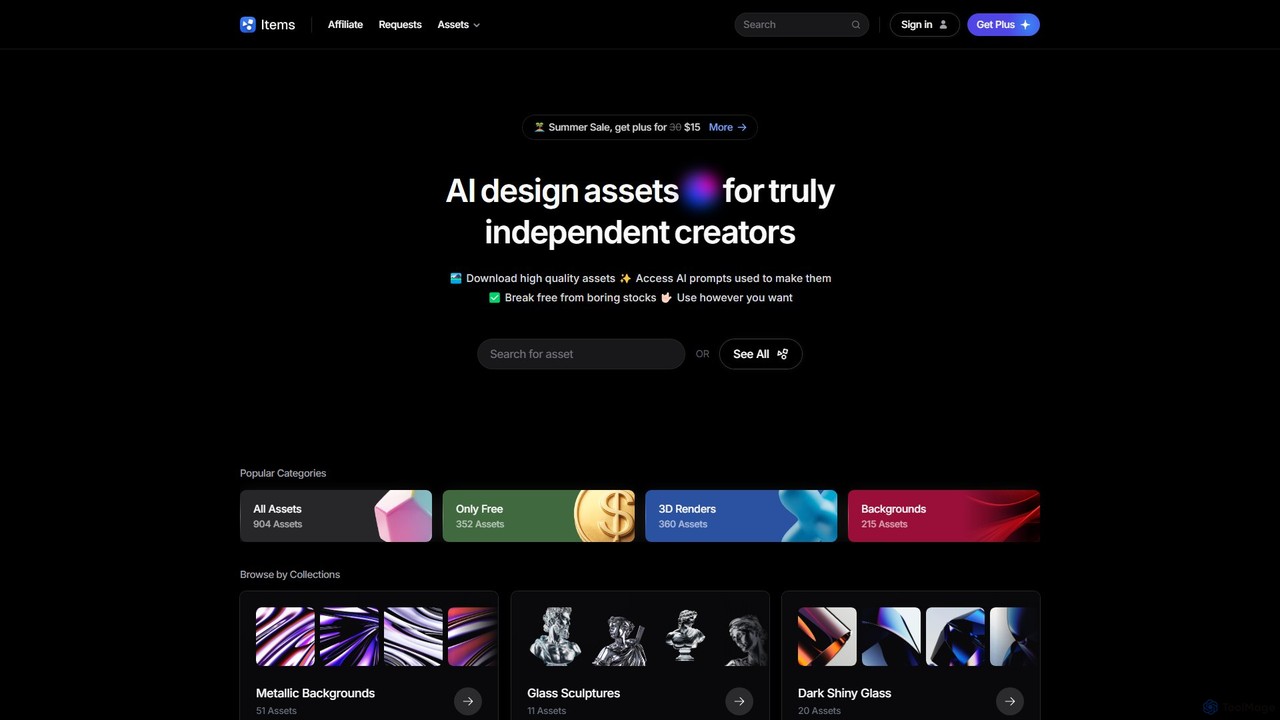
Items.Design is a curated library of high-quality, AI-generated design assets for independent creators. It offers a unique alternative to traditional stock photos, providing thousands of assets like 3D renders, backgrounds, and icons. Each asset includes the original AI prompt, empowering users to generate their own variations and maintain creative control.

Asset Library
Visits 5.3KFavorites 149Likes 146

About Asset Library

Asset Library AI tools are specialized platforms that leverage artificial intelligence to intelligently manage, organize, and enhance digital assets. These tools automate critical tasks such as tagging, categorization, and metadata generation, transforming static repositories into dynamic, searchable content hubs. They empower designers, marketers, and content creators to streamline workflows, maintain brand consistency, and accelerate content delivery by providing instant access to optimized assets.

Core Features

  • AI-Powered Tagging & Categorization: Automatically assigns relevant keywords, themes, and categories to assets, improving organization and searchability.
  • Intelligent Search & Retrieval: Utilizes natural language processing and visual recognition to enable rapid, precise searching for specific assets or concepts.
  • Version Control & Collaboration: Manages multiple iterations of assets, tracks changes, and facilitates seamless teamwork among creative professionals.
  • Usage Rights Management: Automates the tracking of licenses, permissions, and expiration dates for digital assets, ensuring legal compliance.
  • Asset Optimization & Transformation: AI can automatically resize, crop, or format assets for various platforms and uses, saving manual effort.

Applicable Scenarios

AI Asset Libraries are indispensable for organizations dealing with large volumes of digital content. Marketing teams use them to manage campaign visuals and videos, ensuring brand consistency. Design agencies rely on them for organizing client projects and design elements, while e-commerce businesses leverage them to efficiently handle product images and promotional materials across diverse channels.

How to Choose

When selecting an AI Asset Library, consider its integration capabilities with your existing design and marketing software, ensuring a smooth workflow. Evaluate the specific AI features offered, such as advanced auto-tagging, smart search, and content optimization. Scalability is crucial for handling growing asset volumes, and robust security features, alongside comprehensive usage rights management, are essential for compliance and data protection.

Asset Library use cases

1

Automated Content Tagging for Marketing Campaigns

Marketing teams upload diverse campaign assets, including images, videos, and documents. The AI automatically tags these with relevant keywords, themes, and product names, making them instantly searchable and reusable for future campaigns, significantly reducing manual organization time.

2

Efficient Brand Asset Management for Global Enterprises

Large corporations utilize AI asset libraries to centralize all brand logos, guidelines, templates, and approved imagery. This ensures consistent brand representation across all international departments and marketing channels, maintaining brand integrity and compliance.

3

Streamlined Digital Asset Workflow for Design Agencies

Design studios manage numerous client projects, design elements, and final deliverables. AI categorizes assets by client, project, and type, tracks version history, and facilitates quick access, enhancing collaboration and drastically cutting down asset search times.

4

Personalized Content Delivery for E-commerce Platforms

E-commerce businesses store vast collections of product images, videos, and descriptions. The AI can dynamically select, optimize, and deliver assets tailored to individual user preferences or specific platform requirements, thereby enriching the customer's shopping experience.

5

Legal Compliance and Usage Rights Tracking

Organizations with licensed content, such as stock photos or music, employ AI asset libraries to automatically monitor usage rights, expiration dates, and licensing agreements. This proactive management prevents copyright infringement and ensures adherence to legal and contractual obligations.

6

Rapid Asset Discovery for Media Production

Video editors and content creators working on media projects can quickly locate specific clips, sound effects, or graphics from extensive archives. AI-powered visual and semantic search capabilities accelerate the discovery process, significantly speeding up overall production timelines.

Asset Library FAQ

What are AI Asset Libraries?

AI Asset Libraries are advanced digital asset management (DAM) systems that integrate artificial intelligence to automate and enhance the organization, search, and optimization of digital content. Unlike traditional DAMs, they use AI for intelligent tagging, facial recognition, object detection, and semantic search, making assets more discoverable and manageable. They serve as central repositories for images, videos, audio, and documents, streamlining creative workflows.

How to choose the right AI Asset Library tool?

When selecting an AI Asset Library, prioritize tools with robust AI capabilities like advanced auto-tagging, smart search, and content optimization features. Consider its integration with your existing creative and marketing software, ensuring seamless data flow. Evaluate scalability to accommodate future growth in asset volume and user base. Finally, assess security protocols, compliance features, and comprehensive usage rights management to protect your digital assets.

What are the main benefits of using an AI Asset Library?

The primary benefits include significantly improved efficiency through automated organization and rapid asset retrieval, leading to faster content creation and deployment. They ensure brand consistency by centralizing approved assets and guidelines. Enhanced compliance is achieved through automated usage rights tracking. Furthermore, AI Asset Libraries reduce manual effort, minimize errors, and provide valuable insights into asset performance and usage.

How do AI Asset Libraries differ from traditional Digital Asset Management (DAM) systems?

While both manage digital assets, AI Asset Libraries go beyond traditional DAMs by integrating artificial intelligence. Traditional DAMs rely heavily on manual tagging and organization, whereas AI Asset Libraries automate these processes using machine learning for intelligent categorization, metadata generation, and advanced search. This results in more dynamic, proactive asset management, offering predictive insights and smarter content recommendations, rather than just storage and retrieval.

Who benefits most from AI Asset Library tools?

AI Asset Library tools are most beneficial for professionals and organizations that handle large volumes of digital content. This includes marketing teams, content creators, graphic designers, video producers, e-commerce businesses, and large enterprises. They help these users to efficiently manage, distribute, and optimize their creative assets, ensuring brand consistency, accelerating content workflows, and maintaining legal compliance across various platforms and campaigns.