carconceptsai
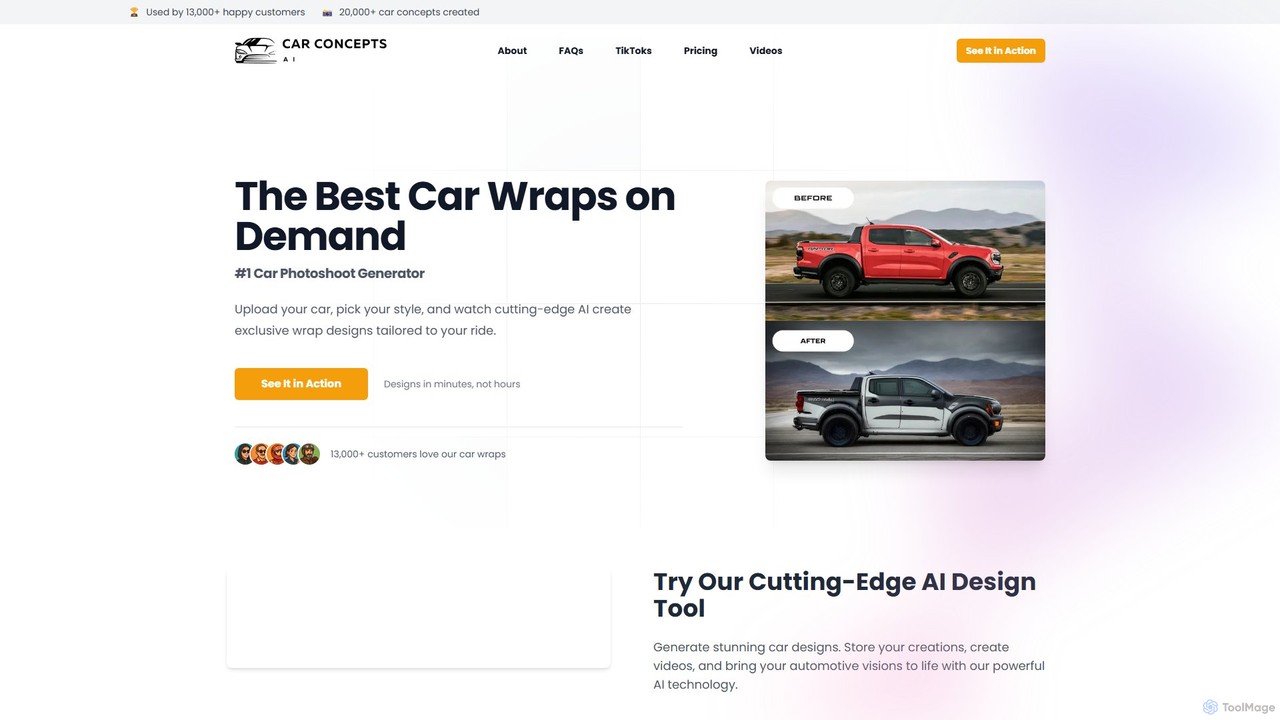
carconceptsai is an AI-powered platform for generating custom car wrap designs and virtual photoshoots. Simply upload a photo …
carconceptsai is an AI-powered platform for generating custom car wrap designs and virtual photoshoots. Simply upload a photo of your car, provide a text prompt with your desired style, and the AI will create unique, high-quality visual concepts in minutes. It also features an AI video generator to turn your designs into engaging social media content.
StyleMyRide.ai
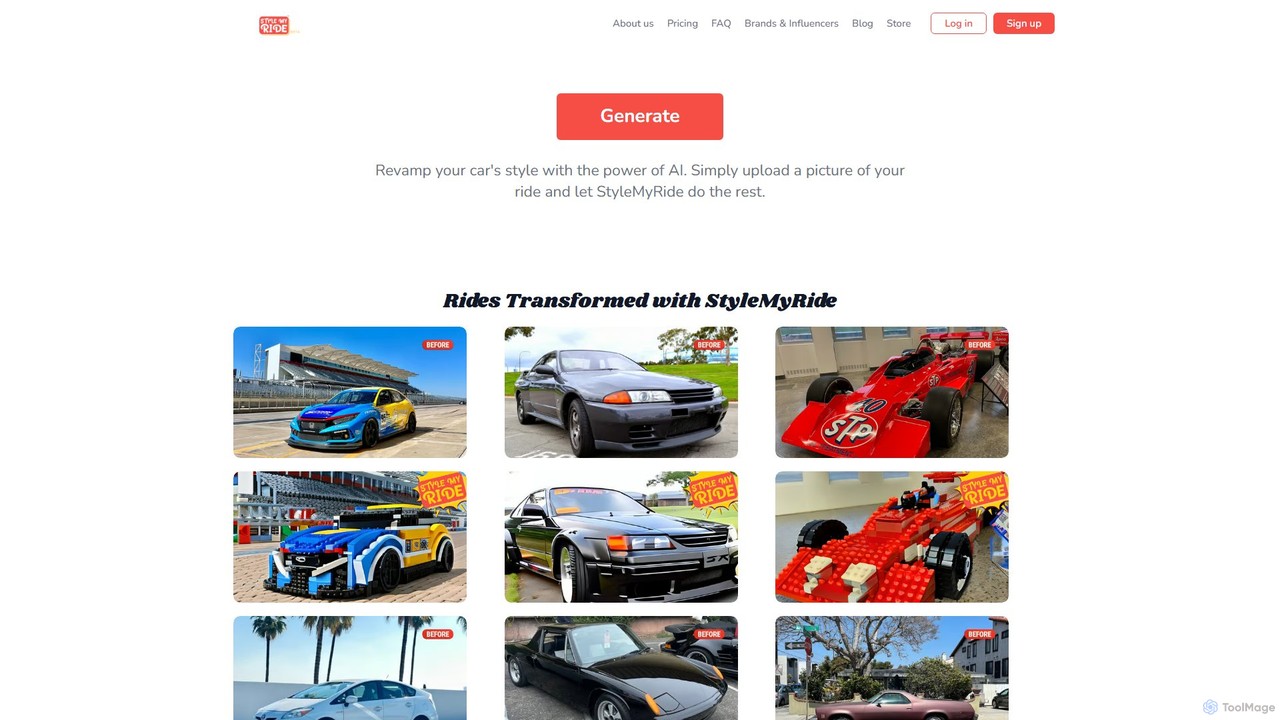
StyleMyRide.ai is an AI-powered platform that allows car enthusiasts to virtually customize their vehicles. Simply upload a photo …
StyleMyRide.ai is an AI-powered platform that allows car enthusiasts to virtually customize their vehicles. Simply upload a photo of your car, and the AI will generate a variety of tuning styles, including body kits, rims, and paint jobs. It's a fast, easy, and cost-effective way to visualize your dream car modifications before committing to them in real life, offering styles like JDM, Hotrod, and Offroad.
About Automotive Design
Automotive Design AI tools are specialized software solutions that leverage artificial intelligence to assist and enhance various stages of vehicle development, from initial concept generation to final visualization. These tools utilize advanced algorithms to accelerate design cycles, foster innovation, and optimize vehicle aesthetics and performance. They empower designers and engineers to explore complex ideas, refine intricate details, and make data-driven decisions more efficiently within the broader field of design.
Core Features
- AI-Powered Concept Generation: Rapidly generates diverse vehicle sketches, 3D forms, and styling variations based on textual prompts or existing designs.
- Parametric Modeling & Optimization: Automatically adjusts design parameters to meet performance targets, such as aerodynamics, structural integrity, or manufacturing constraints.
- Material & Texture Recommendation: Suggests suitable materials based on desired properties (e.g., weight, sustainability, cost) and applies realistic textures for visualization.
- Aerodynamic & Ergonomic Simulation: Integrates AI to predict and optimize airflow, interior space, and human-machine interaction within the vehicle design.
- High-Fidelity Rendering: Creates photorealistic images and interactive 3D models for presentations and marketing, significantly reducing the need for physical prototypes.
Applicable Scenarios
These tools are indispensable for automotive manufacturers, independent design studios, and R&D departments. They are used in early-stage ideation to quickly visualize numerous concepts, during detailed design for performance optimization, and in marketing for creating compelling visuals of unreleased models. Designers can iterate on exterior styling, interior layouts, and component designs with unprecedented speed and precision.
How to Choose
When selecting an AI automotive design tool, consider its integration capabilities with existing CAD/CAE software, the breadth of its AI-driven features (e.g., concept generation, simulation, rendering), the accuracy and realism of its outputs, and its ability to handle complex automotive datasets. Evaluate the user interface for ease of use and the availability of specialized modules for specific design challenges like aerodynamics or interior ergonomics.

Automotive DesignUse Cases
Concept Sketch Generation for New Models
Automotive concept artists and designers use AI tools to overcome creative blocks and rapidly explore hundreds of unique vehicle concepts. By inputting descriptive text prompts or rough sketches, the AI generates diverse stylistic variations, body shapes, and design elements, significantly accelerating the initial ideation phase and providing a rich pool of ideas for further development.
Aerodynamic Performance Optimization
Aerodynamic engineers leverage AI to analyze and optimize vehicle shapes for reduced drag and improved fuel efficiency. The AI can simulate airflow patterns, identify areas of turbulence, and suggest subtle modifications to body panels, spoilers, and underbody components, leading to performance gains without extensive physical prototyping and testing.
Interior Layout and Ergonomics Design
Interior designers utilize AI to optimize cabin space, seating configurations, and control placement for maximum comfort, safety, and user experience. The AI can analyze passenger anthropometric data, simulate various layouts, and recommend ergonomic improvements, ensuring intuitive interaction and efficient use of interior volume across different vehicle segments.
Material Selection and Visualization for Components
Product development teams employ AI to recommend optimal materials for specific vehicle components based on criteria like weight, strength, cost, and sustainability. The AI can then apply realistic textures and finishes to these materials within the 3D model, allowing designers to visualize the final aesthetic and tactile qualities before manufacturing.
Parametric Design Iteration for Customization
Manufacturers offering vehicle customization options use AI to generate and evaluate thousands of design variations for elements like wheel rims, grille patterns, or lighting signatures. The AI can quickly iterate through parametric models, ensuring each variant adheres to design language and engineering constraints, providing customers with a wide range of personalized choices.
Photorealistic Rendering for Marketing & Pre-Sales
Marketing and sales teams use AI-powered rendering tools to create stunning photorealistic images and interactive 3D visualizations of upcoming vehicle models. This allows for compelling promotional content and pre-sales campaigns long before physical prototypes are available, generating excitement and gathering early feedback from potential customers.