ToolMage
Sign in

Best 2 Email Design AI tools for Design

Popular Email Design AI tools in Design include MailUi and KindlyMail, helping you work more efficiently.

KindlyMail
Freemium

KindlyMail

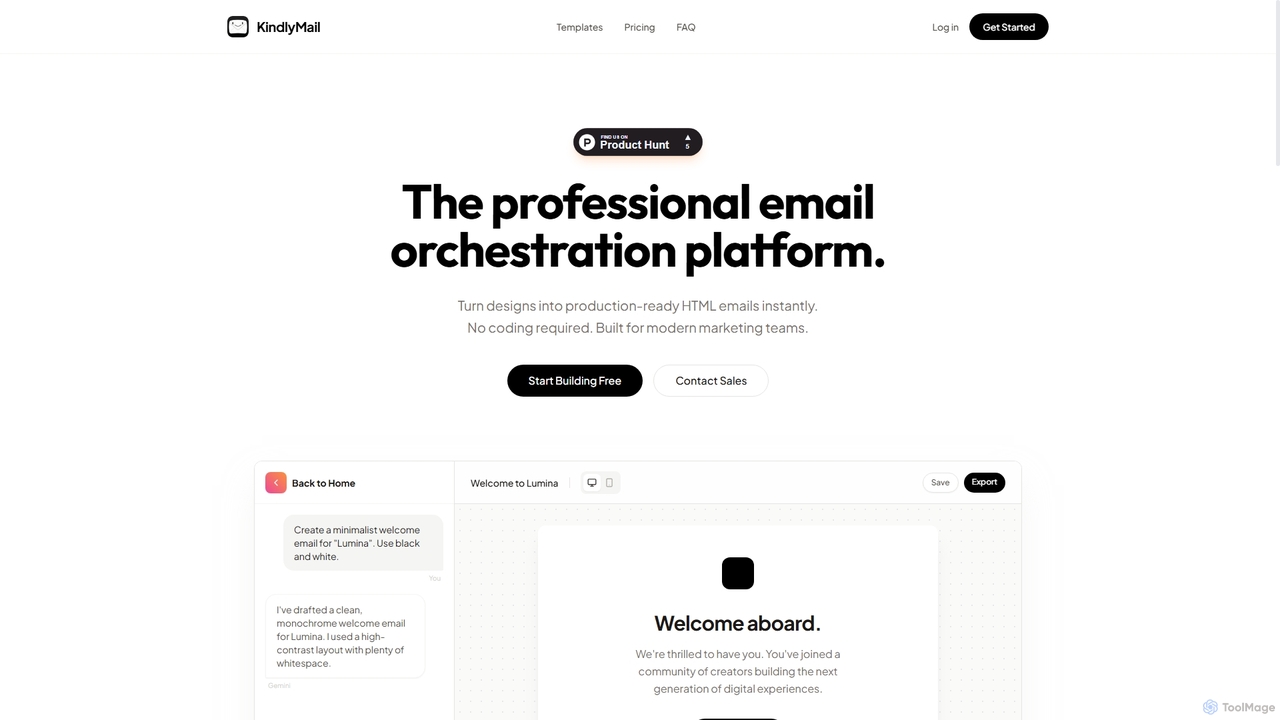
KindlyMail is a professional AI-powered email orchestration platform that transforms design concepts into production-ready HTML emails instantly. It empowers modern marketing teams and individual creators to generate high-quality, responsive emails without requiring any coding expertise.

Email Design
Visits 4.9KFavorites 48Likes 40
MailUi
Freemium

MailUi

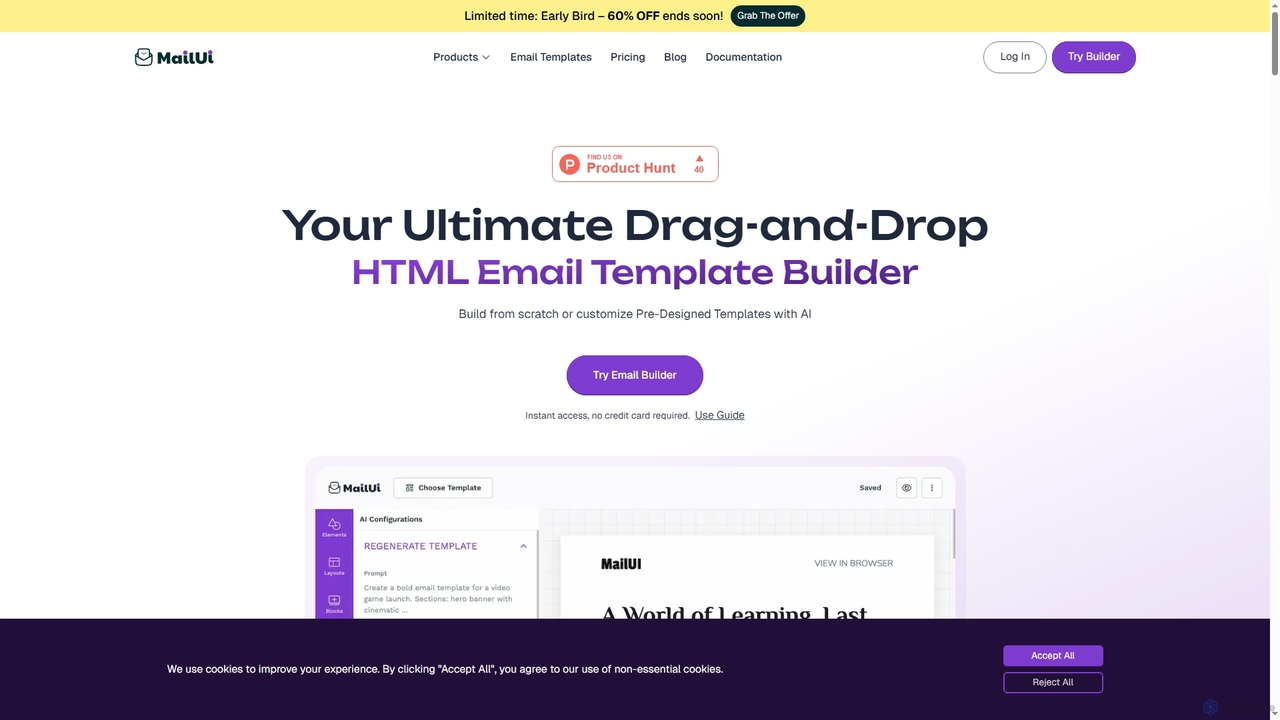
MailUi is an AI-powered email template builder designed for seamless integration into any platform. It enables users to create, customize, and send professional, responsive email templates directly within their applications using a drag-and-drop interface, reusable content blocks, and AI-assisted content generation.

Email Design
Visits 5KFavorites 133Likes 124

About Email Design

Email Design AI tools are specialized platforms that leverage artificial intelligence to streamline and enhance the creation of professional and engaging email campaigns. These tools utilize advanced AI algorithms for tasks such as intelligent layout generation, dynamic content optimization, and hyper-personalization, significantly reducing manual effort and design time. They empower marketers, businesses, and content creators to produce visually appealing and high-performing emails efficiently, ensuring brand consistency and improved recipient engagement across diverse audiences. By automating repetitive design processes and providing data-driven insights, these AI solutions allow users to focus more on strategic messaging, campaign effectiveness, and overall marketing goals.

Core Features

  • AI-Powered Layout Generation: Automatically suggests and creates responsive email templates tailored to specific content, audience, and brand guidelines, accelerating the initial design phase.
  • Content Optimization & Personalization: Analyzes text, images, and recipient data to recommend improvements for engagement, subject line effectiveness, and tailors content for individual recipients at scale.
  • Automated Image & Asset Selection: Intelligently selects relevant stock photos, icons, and visual elements from libraries or generates new ones to complement email content, ensuring visual appeal.
  • Brand Kit Integration & Enforcement: Allows users to upload and manage brand assets, ensuring all designs strictly adhere to predefined brand colors, fonts, logos, and style guides for consistent messaging.
  • A/B Testing & Performance Prediction: Uses AI to predict the effectiveness of different design elements, subject lines, and calls-to-action, suggesting optimal variations to maximize open rates and conversions.

Applicable Scenarios

Email Design AI tools are invaluable for marketing teams aiming to scale their outreach and maintain brand consistency across numerous campaigns, small businesses needing professional templates without a dedicated designer, and e-commerce platforms personalizing promotional emails for diverse customer segments. They help accelerate campaign launches by automating complex design tasks, ensure consistent branding across all communications, and optimize email performance through data-driven insights, leading to higher engagement and conversion rates. From newsletters to transactional emails, these tools simplify the entire design workflow.

How to Choose

When selecting an Email Design AI tool, consider its integration capabilities with your existing CRM, marketing automation platforms, and content management systems to ensure a seamless workflow. Evaluate the breadth of AI-driven features, such as advanced content generation, personalization engines, and predictive analytics for performance. Assess the flexibility and intuitiveness of its drag-and-drop design editor, the availability of a wide range of pre-built, customizable templates, and the tool's ability to enforce strict brand guidelines. Furthermore, consider the ease of use for non-designers, the scalability for future needs, pricing models, and the quality of customer support for long-term adoption and success.

Email Design use cases

1

Generate Engaging Newsletters with AI

Content marketers and bloggers often spend hours designing visually appealing newsletters to distribute their latest articles and updates. AI Email Design tools streamline this process by automatically generating layouts, suggesting relevant images, and optimizing text for engagement based on the provided content. Users can simply input their article links or text, and the AI crafts a professional, on-brand newsletter, saving up to 70% of design time and ensuring consistent delivery of high-quality content to subscribers.

2

Personalize E-commerce Promotional Emails

E-commerce businesses strive to send highly relevant promotional emails to drive sales, but manual personalization for thousands of customers is impractical. AI Email Design tools integrate with customer data platforms to automatically tailor product recommendations, offers, and visual layouts based on individual browsing history, purchase behavior, and demographics. This results in unique, personalized emails for each recipient, significantly boosting click-through rates and conversion metrics by up to 25% compared to generic campaigns.

3

Ensure Brand-Consistent Corporate Communications

Large enterprises often struggle to maintain consistent branding across all internal and external email communications, especially with multiple teams creating content. AI Email Design tools enforce brand guidelines by automatically applying approved logos, color palettes, fonts, and imagery to every email template. This ensures that all corporate announcements, internal newsletters, and external marketing emails strictly adhere to brand standards, eliminating manual checks and reducing the risk of off-brand messaging, thereby strengthening brand identity and trust.

4

Generate Responsive Email Templates for Developers

Web developers and designers often need to create custom, responsive email templates that render perfectly across various devices and email clients. AI Email Design tools can assist by generating clean, semantic HTML/CSS code for email templates based on visual inputs or design specifications. This significantly reduces the manual coding effort and debugging time, ensuring cross-client compatibility and responsiveness. Developers can then fine-tune the AI-generated code, accelerating their workflow and delivering robust email solutions.

5

Optimize Email Campaigns with A/B Test Predictions

Marketing analysts constantly seek to optimize email campaign performance through A/B testing, but manually setting up and analyzing multiple variations can be time-consuming. AI Email Design tools leverage predictive analytics to suggest optimal design elements, subject lines, and calls-to-action before a campaign is even launched. This allows analysts to focus on higher-impact strategic decisions, reducing the need for extensive manual testing and improving campaign effectiveness by identifying winning variations with greater accuracy and speed.

6

Design Event Invitations and Reminders

Event organizers frequently need to create visually appealing invitations and timely reminders for webinars, conferences, or workshops. AI Email Design tools simplify this by offering event-specific templates and AI-driven content suggestions for dates, times, and call-to-action buttons. They can also integrate with event management platforms to automatically pull attendee data for personalized reminders. This ensures professional-looking communications that enhance event registration and attendance, while saving significant design and coordination time for organizers.

Email Design FAQ

What are AI Email Design tools?

AI Email Design tools are software applications that leverage artificial intelligence to automate and enhance various aspects of email creation, from layout generation to content optimization. They go beyond traditional drag-and-drop builders by using machine learning to suggest designs, personalize content for recipients, and ensure brand consistency. These tools aim to significantly reduce the manual effort involved in designing effective email campaigns, allowing users to create professional, high-converting emails faster and more efficiently.

How to choose the best AI Email Design tool?

To choose the best AI Email Design tool, consider several key factors. First, evaluate its integration capabilities with your existing CRM, marketing automation, and content platforms. Second, assess the breadth and depth of its AI features, such as advanced content generation, personalization engines, and predictive analytics. Third, examine the flexibility and intuitiveness of its design editor, including the availability of customizable templates and brand guideline enforcement. Finally, consider the pricing model, scalability for future needs, and the quality of customer support to ensure long-term value and success.

What specific features do AI email design tools offer?

AI email design tools offer a range of specific features designed to automate and enhance the email creation process. These include AI-powered layout generation that suggests responsive templates, intelligent content optimization for subject lines and body text, and advanced personalization engines that tailor content based on recipient data. They also provide automated image and asset selection, brand kit integration to ensure consistency, and predictive analytics for A/B testing to optimize campaign performance before launch. Some tools even offer dynamic content blocks that adapt based on user behavior.

What are the main benefits of using AI for email design?

The main benefits of using AI for email design include significant time and cost savings by automating repetitive tasks like layout generation and asset selection. AI enhances personalization at scale, leading to higher engagement and conversion rates. It ensures brand consistency across all communications by enforcing guidelines automatically. Furthermore, AI-driven insights and predictive analytics optimize campaign performance, reducing the need for extensive manual testing and allowing marketers to make data-backed decisions more quickly. This ultimately leads to more effective and efficient email marketing strategies.

How do AI email design tools differ from traditional email builders?

AI email design tools differ from traditional email builders primarily through their automation and intelligence capabilities. Traditional builders rely on manual drag-and-drop functionality and user input for every design element. In contrast, AI tools leverage machine learning to suggest layouts, optimize content, personalize messages at scale, and predict performance. They automate repetitive tasks, enforce brand guidelines proactively, and provide data-driven insights, significantly reducing manual effort and enhancing the strategic impact of email campaigns beyond what conventional builders can offer.