
ToolMage
Sign in

Best 1 Home Decor AI tools for Design

Popular Home Decor AI tools in Design include Interior Deco, helping you work more efficiently.

Interior Deco
Paid

Interior Deco

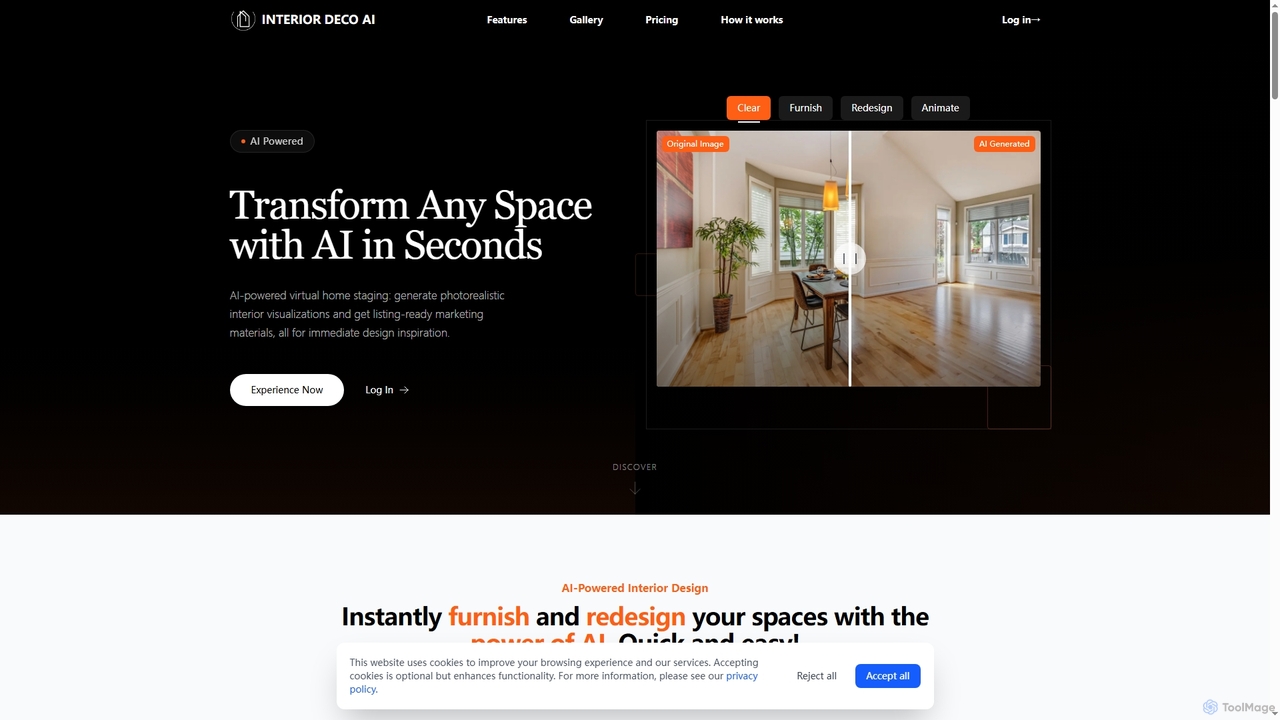
Interior Deco is an AI-powered platform that transforms any room or property image into redesigned furnished visuals and animated videos. It's perfect for real estate agents, interior designers, and homeowners looking to create appealing property listings and visualize design ideas efficiently.

Home Decor
Visits 7.1KFavorites 97Likes 103

About Home Decor

AI Home Decor tools are specialized applications that use artificial intelligence to help users visualize and plan interior design concepts. These tools leverage generative AI and computer vision to create realistic room mockups, suggest furniture placements, and generate cohesive style palettes from simple text prompts or images. This enables homeowners, interior designers, and real estate professionals to experiment with different styles and layouts virtually, saving time and cost before committing to physical changes. They offer a focused approach within the broader AI Design category, specifically tailored for interior spaces.

Core Features

  • Virtual Staging: Automatically furnishes empty rooms with realistic furniture and decor based on a chosen style.
  • Style Transfer & Redesign: Applies a new design style (e.g., modern, rustic) to an existing photo of a room.
  • AI Furniture Recommendation: Suggests specific furniture items that match the room's style, dimensions, and color scheme.
  • Layout Optimization: Generates multiple efficient and aesthetically pleasing furniture arrangements for a given space.
  • Color Palette Generation: Creates harmonious color schemes based on an image or user preferences.

Use Cases

These tools are widely used by real estate agents for virtual staging of properties to attract buyers. Interior designers use them to quickly create and present multiple design concepts to clients. Homeowners and renters also utilize them for planning renovations, testing paint colors, or simply exploring new decor ideas for their personal space without risk.

How to Choose

When selecting an AI Home Decor tool, consider the quality and realism of the generated images. Evaluate the size and variety of the furniture and decor library. Check for ease of use, especially for non-professionals. Also, consider the pricing model—whether it's subscription-based or pay-per-image—and if it aligns with your project frequency and budget.

Home Decor use cases

1

Virtual Staging for Real Estate Listings

A real estate agent needs to market an empty property. Instead of incurring the high cost of physical staging, they upload photos of the vacant rooms to an AI Home Decor tool. They select a 'Modern Minimalist' style, and the AI automatically populates the images with appropriate, high-quality furniture, lighting, and art. The resulting photorealistic images are used in online listings, significantly increasing buyer interest and helping potential clients visualize the property as a lived-in home, which can lead to faster sales.

2

Planning a Personal Room Renovation

A homeowner wants to redecorate their living room but is unsure which style to choose. They take a photo of their current room and upload it to an AI redesign tool. They can then apply various styles with one click, such as 'Bohemian', 'Industrial', or 'Coastal'. The tool instantly generates visualizations of their own living room transformed into these styles. This allows them to compare different aesthetics in their actual space, test paint colors, and see how new furniture might look before making any purchases, preventing costly mistakes.

3

Interior Designer's Client Presentations

An interior designer is working with a client who has trouble visualizing concepts from 2D mood boards. The designer uses an AI Home Decor tool to create multiple photorealistic renderings of the client's actual space. They can quickly generate variations showing different furniture layouts, color schemes, and decor items. This interactive presentation allows the client to see the potential outcome clearly, provide specific feedback, and make decisions more confidently, streamlining the approval process and reducing misunderstandings.

4

Optimizing Layouts for Small Spaces

A person moving into a small studio apartment is struggling to fit all their essential furniture without making the space feel cramped. They use an AI layout optimization tool, inputting the room's dimensions and a list of their furniture (bed, desk, sofa). The AI generates several layout options that maximize floor space, create distinct functional zones (sleeping, working, living), and ensure proper flow. They can visually compare each layout in 3D, helping them choose the most practical and spacious-feeling arrangement before moving a single heavy item.

5

Testing Paint Colors and Wallpapers Virtually

A couple is hesitant to paint their bedroom a bold color like dark green, fearing it might make the room too dark. Using an AI home decor app, they upload a photo of their bedroom. The tool's 'wall editor' feature allows them to virtually 'paint' the walls in various shades of green or even apply different wallpaper patterns. They can see how the color interacts with their existing furniture and the natural light in the room at different times of the day, giving them the confidence to proceed with their choice without any guesswork.

6

Furniture Retailer's 'View in Your Room' Feature

An online furniture retailer integrates an AI-powered Augmented Reality (AR) feature into their mobile app. A customer browsing for a new sofa can tap a 'View in Your Room' button. This activates their phone's camera, and the AI tool overlays a true-to-scale 3D model of the sofa into their living room view. The customer can walk around it, check its dimensions against their space, and see how its color complements their existing decor. This immersive experience bridges the gap between online shopping and physical reality, increasing conversion rates and reducing product returns.

Home Decor FAQ

What are AI Home Decor tools?

AI Home Decor tools are specialized software applications that use artificial intelligence to help users create, visualize, and plan interior designs. Unlike general design tools, they are specifically trained on datasets of interior spaces, furniture, and decor styles. Key features include virtual staging of empty rooms, redesigning existing spaces with new styles, optimizing furniture layouts, and generating color palettes. They are primarily used by homeowners, interior designers, and real estate professionals to experiment with design ideas digitally before implementation.

How do I choose the right AI Home Decor tool?

To choose the right tool, consider these factors:

  • Primary Use Case: Are you doing virtual staging, a full redesign, or just testing paint colors? Some tools specialize in one area.
  • Image Quality: Look for tools that produce high-resolution, photorealistic results. Check user reviews or galleries for examples.
  • Ease of Use: If you're not a professional designer, choose a tool with an intuitive interface and simple controls.
  • Features and Library: Ensure the tool has the features you need (e.g., layout optimization, wall editing) and a diverse library of modern furniture and decor styles.
  • Pricing Model: Compare subscription plans versus pay-per-use credits to find what best suits your budget and project frequency.
What's the difference between AI Home Decor tools and general AI Image Generators?

The main difference is specialization. AI Home Decor tools are specifically designed for interior design tasks. They understand the context of a room, including perspective, lighting, and scale, allowing them to place furniture realistically or change wall colors accurately. Their models are trained on architectural and decor data. In contrast, general AI Image Generators (like Midjourney or DALL-E) are built for broad, creative image creation from text prompts. While they can generate images of rooms, they lack the specific controls, contextual awareness, and editing capabilities needed for practical interior design planning.

Can I use my own furniture in AI Home Decor tools?

This capability varies between tools. Many simpler tools rely on their built-in library of 3D furniture models for virtual staging and redesign. However, more advanced platforms, particularly those geared towards professional designers, are beginning to incorporate features that allow you to upload photos of your own furniture. The AI can then attempt to convert it into a 3D model or realistically place the 2D image into the scene, respecting lighting and perspective. It's an evolving feature, so it's important to check the specific capabilities of each tool if this is a requirement for you.

Who are AI Home Decor tools best suited for?

AI Home Decor tools are beneficial for a wide range of users:

  • Homeowners and Renters: For planning renovations, testing decor ideas, and visualizing furniture purchases without financial risk.
  • Interior Designers: To streamline their workflow, quickly generate multiple concepts for clients, and create compelling visual presentations.
  • Real Estate Agents: For virtual staging of empty properties to make listings more attractive and help buyers visualize the potential of a space.
  • Furniture Retailers: To offer 'view in your room' AR experiences, which can increase sales and reduce returns.
  • DIY Enthusiasts: For anyone who enjoys experimenting with design and wants a powerful tool to bring their ideas to life.