vinish
A suite of free, specialized AI and developer tools created by Oracle ACE Pro Vinish Kapoor. The platform …
A suite of free, specialized AI and developer tools created by Oracle ACE Pro Vinish Kapoor. The platform offers an AI-powered Hate Speech Detector, an Image Anomaly Detector, and a variety of powerful utilities for Oracle SQL developers, all accessible directly through the web.
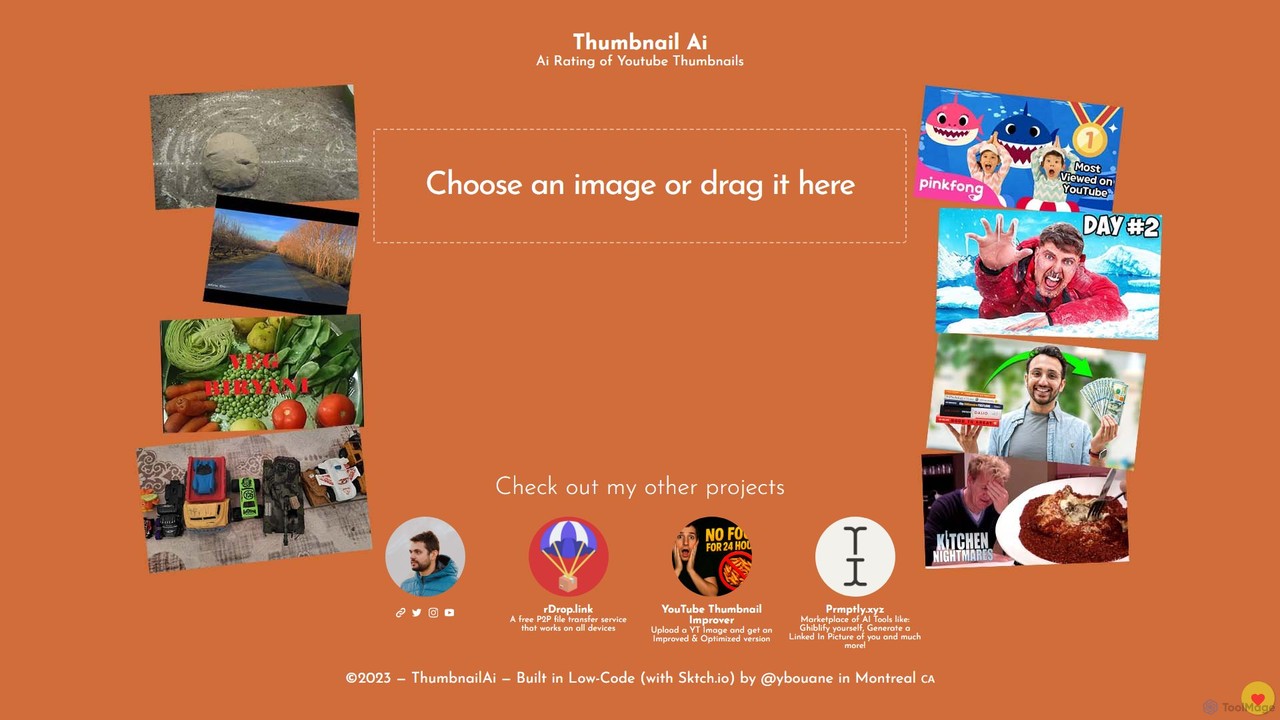
ThumbnailAi
ThumbnailAi is a free AI-powered tool for YouTube creators. It analyzes and rates your video thumbnails, providing an …
ThumbnailAi is a free AI-powered tool for YouTube creators. It analyzes and rates your video thumbnails, providing an objective score to predict their click-through potential. By offering data-driven feedback on visual elements, it helps you optimize thumbnails to maximize clicks, engagement, and channel growth.
About Image Analysis
Image Analysis tools are a class of AI software designed to automatically interpret and extract meaningful information from visual data. These tools leverage computer vision and machine learning models to identify objects, people, text, and other patterns within an image. Their primary value lies in automating the process of visual inspection and data extraction, enabling businesses to process and understand large volumes of images at scale. Within the broader design field, Image Analysis focuses on understanding existing visual content, rather than creating or editing it.
Core Features
- Object Detection: Identifies and locates specific items within an image, often drawing bounding boxes around them.
- Optical Character Recognition (OCR): Extracts and converts printed or handwritten text from images into machine-readable text.
- Facial Recognition & Analysis: Detects human faces and can analyze attributes such as age, gender, and emotion.
- Image Tagging & Categorization: Automatically generates relevant keywords and assigns categories to images based on their content.
- Scene Understanding: Interprets the overall context of an image, such as identifying an event as a 'wedding' or a location as a 'beach'.
Use Cases
Image Analysis tools are widely used across various industries. In e-commerce, they automate product tagging and visual search. In social media, they are crucial for content moderation to detect inappropriate material. Healthcare professionals use them for preliminary analysis of medical scans, while financial institutions apply them for digitizing documents and checks through OCR.
How to Choose
When selecting an Image Analysis tool, consider the specific analysis capabilities you need (e.g., OCR vs. object detection). Evaluate the model's accuracy and precision for your specific use case. Assess its API availability and documentation for seamless integration into your existing workflows. Also, consider processing speed, scalability, and the provider's data privacy and security policies.
Image AnalysisUse Cases
Automated Product Tagging for E-commerce
An e-commerce manager is responsible for uploading hundreds of new products weekly. Manually tagging each product image with attributes like color, style, and material is time-consuming and prone to inconsistency. By using an AI Image Analysis tool, they can automate this entire process. The tool scans each product photo, uses object detection to identify the item, and automatically generates accurate tags such as 'blue cotton t-shirt' or 'leather ankle boots'. This not only saves hours of manual labor but also improves on-site search accuracy and enhances product discoverability for customers.
Social Media Content Moderation
A community manager for a large online platform needs to ensure that user-generated content adheres to safety guidelines. Manually reviewing millions of daily image uploads is impossible. An Image Analysis tool can be integrated into their platform to automatically scan every uploaded image in real-time. It can detect and flag inappropriate content, such as violence, hate symbols, or adult material, based on pre-trained models. This allows the moderation team to focus only on the flagged content, drastically reducing their workload and improving the platform's safety and response time to policy violations.
Digitizing Invoices for Automated Data Entry
An accounting department processes thousands of paper invoices and receipts each month. Manual data entry into their accounting software is tedious and error-prone. By implementing an Image Analysis tool with strong Optical Character Recognition (OCR) capabilities, they can streamline this workflow. Staff simply scan or photograph the documents. The AI then analyzes the images, identifies key fields like invoice number, vendor name, date, and total amount, and extracts this information as structured text. This data can then be automatically imported into the accounting system, reducing data entry time by over 90% and minimizing human error.
Brand Logo Monitoring in Digital Media
A marketing analyst needs to track the visibility of their company's logo across social media and news websites to measure sponsorship ROI. Manually searching for logos is an impossible task. They use an Image Analysis tool to continuously scan a vast number of online images. The tool is trained to recognize their specific brand logo, even when it's small, partially obscured, or at an angle. It provides a dashboard showing where and how often the logo appears, giving the marketing team valuable data on brand exposure and the effectiveness of their partnership campaigns without manual effort.
Analyzing Satellite Imagery for Agriculture
An agricultural scientist needs to monitor crop health across thousands of acres. Physical inspection is impractical. Using an AI Image Analysis tool, they can process satellite or drone imagery of the fields. The AI analyzes factors like color variations (indicating nutrient deficiencies or disease), plant density, and growth patterns. It can identify problem areas that need attention, predict crop yields, and help optimize irrigation and fertilization strategies. This data-driven approach allows for more precise and sustainable farming practices, improving overall farm productivity.
Quality Control in Manufacturing
A quality control inspector on a manufacturing line is tasked with identifying defective products. Relying on human inspection can lead to fatigue and missed defects. By installing cameras connected to an Image Analysis system, the process can be automated. The AI is trained on images of perfect and defective products. As items move along the conveyor belt, the system captures an image of each one and instantly analyzes it for scratches, cracks, misalignments, or other flaws. If a defect is detected, the system can automatically trigger an alert or divert the item, ensuring higher product quality and consistency.