ToolMage
Sign in

Best 1 Jewelry Design AI tools for Design

Popular Jewelry Design AI tools in Design include Tashvi, helping you work more efficiently.

Tashvi
Freemium

Tashvi

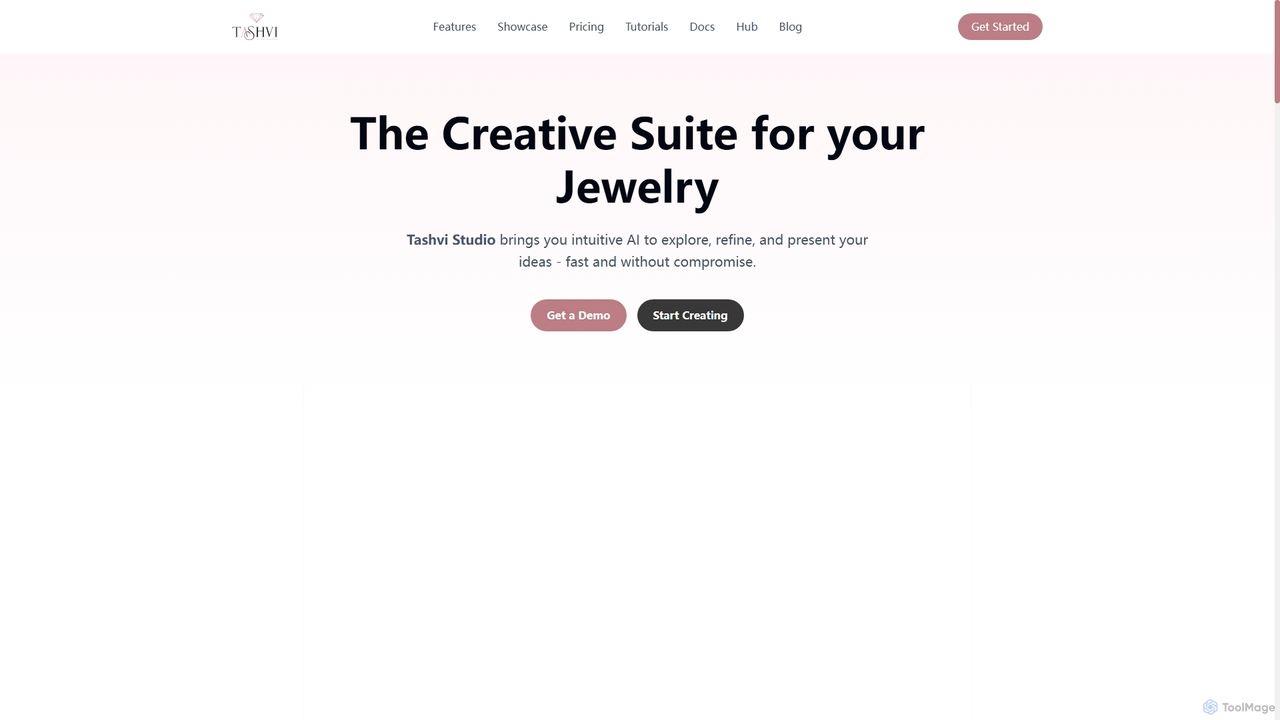
Tashvi is an AI-powered creative suite designed specifically for jewelry designers, transforming ideas into realistic renderings and market-ready content with unprecedented speed and detail. It empowers creators to explore, refine, and present jewelry designs using advanced AI models, canvas editing, and video generation, bridging traditional artistry with cutting-edge technology.

Jewelry Design
Visits 41.7KFavorites 140Likes 129

About Jewelry Design

Jewelry Design AI tools are specialized software solutions that leverage artificial intelligence to streamline and enhance the creation process of jewelry. These tools utilize advanced algorithms for generative design, 3D modeling, and realistic rendering, enabling designers to rapidly conceptualize, visualize, and refine intricate pieces. They empower jewelers, designers, and brands to explore countless design variations, simulate material properties, and present stunning visuals with unprecedented efficiency and precision.

Core Features

  • Generative Design: Automatically creates numerous unique jewelry designs based on specified parameters like gemstone type, metal, and style.
  • 3D Modeling & Sculpting: Provides AI-assisted tools for precise 3D modeling, allowing for intricate detailing and ergonomic shaping of jewelry pieces.
  • Realistic Rendering: Generates high-fidelity, photorealistic images and animations of jewelry, simulating light, reflections, and material textures.
  • Material & Gemstone Simulation: Accurately predicts how different metals and gemstones will appear under various lighting conditions and settings.
  • Virtual Try-On: Enables customers to virtually try on jewelry pieces using augmented reality, enhancing the online shopping experience.

Use Cases

These tools are invaluable for independent jewelers seeking to expand their custom design offerings, large jewelry brands aiming to accelerate product development cycles, and fashion designers looking to integrate unique accessories into their collections. They facilitate rapid prototyping, personalized customer experiences, and efficient marketing material creation.

How to Choose

When selecting an AI jewelry design tool, consider its generative capabilities for design exploration, the precision and flexibility of its 3D modeling features, and the realism of its rendering engine. Evaluate its compatibility with existing CAD/CAM software, the range of material libraries available, and the ease of use for your specific design workflow. Pricing models and community support are also crucial factors for long-term adoption.

Jewelry Design use cases

1

Rapidly Generate Custom Engagement Ring Designs

An independent jeweler uses AI tools to quickly generate hundreds of unique engagement ring designs based on a client's preferences for stone cut, metal, and style. This allows for a highly personalized consultation, presenting diverse options without extensive manual design time, significantly speeding up the custom order process and increasing client satisfaction.

2

Rapidly Generate Unique Ring Designs

A bespoke jewelry designer needs to offer clients a wide array of unique ring designs quickly. Using AI jewelry design tools, they can input client preferences like metal type, gemstone shape, and style, and the AI generates numerous distinct ring concepts. This allows for faster client consultations, presenting diverse options without extensive manual drafting, and significantly reduces the initial design iteration time.

3

Rapid Prototyping of Custom Rings

A bespoke jeweler uses AI to generate multiple ring designs based on client preferences (stone, metal, style) in minutes, accelerating client approval and reducing manual design time. This allows for quick exploration of various aesthetic and structural options, ensuring the final design perfectly matches the client's vision while significantly cutting down on the iterative design cycle.

4

Visualize New Collection Prototypes

A jewelry brand is developing a new collection and needs to visualize prototypes before physical production. AI tools enable them to create high-fidelity 3D renderings of necklaces, earrings, and bracelets with accurate material and gemstone simulations. This helps in making informed decisions on design aesthetics, material combinations, and market appeal, saving costs associated with physical prototyping.

5

Visualize New Collection Pieces on Virtual Models

A jewelry brand's marketing team leverages AI to render their upcoming collection on diverse virtual models. This eliminates the need for expensive photoshoots, provides consistent high-quality visuals for e-commerce and social media, and allows for quick iterations on presentation styles, ensuring a cohesive and appealing launch campaign.

6

Developing New Jewelry Collections

A jewelry brand designer inputs themes and parameters to generate hundreds of unique earring, necklace, or bracelet designs, exploring diverse styles and trends for a new collection efficiently. This capability allows brands to quickly adapt to market demands, test various design directions, and present a wide array of innovative products without extensive manual design effort.

7

Customize Engagement Rings for Clients

Retail jewelers often receive requests for highly customized engagement rings. With AI jewelry design software, they can easily modify existing templates or generate new designs based on specific customer requirements, such as unique stone settings, intricate filigree work, or personalized engravings. This enhances the customer experience by providing immediate visual feedback and precise customization options.

8

Personalized Engagement Ring Design

A customer service representative helps a client design a unique engagement ring by adjusting parameters (cut, carat, setting) in real-time with AI, showing instant 3D previews and facilitating informed decisions. This interactive process enhances the customer experience, allowing them to visualize their dream ring before it's even made, leading to higher satisfaction and reduced revision requests.

9

Optimize Gemstone Placement for Maximum Brilliance

A gemstone setter utilizes AI algorithms to analyze a rough stone's facets and automatically suggest optimal cutting and setting positions within a design. This ensures maximum brilliance and fire, minimizes material waste, and helps achieve the best possible aesthetic and value for each individual gemstone, enhancing the final product's quality.

10

Creating Intricate Filigree Patterns

A designer uses AI to automatically generate complex and symmetrical filigree or pave settings, which would be extremely time-consuming and challenging to model manually, ensuring precision and consistency. This capability significantly reduces the labor involved in creating highly detailed and delicate designs, allowing designers to focus on creative aspects rather than repetitive technical tasks.

11

Optimize Designs for 3D Printing

A jewelry manufacturer specializing in 3D printing needs designs optimized for additive manufacturing processes. AI tools can analyze the structural integrity and printability of a design, suggesting modifications to wall thickness, support structures, and material distribution. This ensures successful prints, minimizes material waste, and reduces post-processing efforts, leading to more efficient production.

12

Create Personalized Jewelry for E-commerce Customers

An online jewelry retailer integrates AI design tools into their website, allowing customers to customize existing designs or create new ones by selecting elements like metal type, stone shape, and engravings. The AI instantly generates a 3D preview, offering a unique, interactive shopping experience and driving higher conversion rates for personalized products.

13

Simulate Material Properties for Manufacturing Feasibility

A jewelry manufacturer employs AI to simulate how different metal alloys and structural designs will behave under stress and during the manufacturing process. This helps identify potential weaknesses, optimize material usage, and ensure the design's structural integrity and manufacturability before physical prototyping, reducing costly errors and rework.

14

Visualizing Jewelry on Different Skin Tones

A marketing team uses AI to render jewelry pieces on various virtual models with different skin tones and lighting conditions for diverse marketing campaigns, enhancing product presentation and appeal. This allows brands to create inclusive and representative marketing materials, helping potential customers better visualize how a piece would look on them, thereby boosting engagement and sales.

15

Create Realistic Marketing Visuals

An e-commerce jewelry store requires high-quality, realistic images for its online catalog and marketing campaigns. AI jewelry design tools can render stunning photorealistic images and even animated videos of jewelry pieces without the need for expensive photoshoots. This allows the store to showcase new products quickly and attractively, driving sales and enhancing brand image.

16

Explore Complex Geometric Patterns

An avant-garde jewelry artist wants to experiment with complex, non-traditional geometric patterns that are challenging to design manually. AI generative design capabilities allow them to define mathematical parameters or artistic rules, and the AI explores and creates intricate, organic, or futuristic forms. This expands creative boundaries and enables the production of truly unique, innovative pieces.

17

Design Intricate Filigree Patterns with AI Assistance

A designer specializing in intricate filigree work uses AI tools to generate complex, symmetrical, or organic patterns that would be extremely time-consuming to create manually. The AI can suggest variations, ensure structural integrity for delicate designs, and quickly adapt patterns to different jewelry forms, pushing creative boundaries while maintaining precision.

18

Optimizing Gemstone Placement for Brilliance

An expert uses AI to analyze and suggest optimal placement and angle for multiple gemstones in a setting to maximize light reflection and brilliance, improving the aesthetic and value of the piece. This advanced analytical capability ensures that each stone contributes maximally to the overall sparkle and fire of the jewelry, a task that would be incredibly complex and time-consuming to achieve through manual trial and error.

Jewelry Design FAQ

What are AI Jewelry Design tools?

AI Jewelry Design tools are software applications that use artificial intelligence to assist in the conceptualization, 3D modeling, rendering, and manufacturing preparation of jewelry. They can automate repetitive tasks, generate design variations, simulate material properties, and create photorealistic visualizations, significantly enhancing the efficiency and creativity of the jewelry design process.

What are AI Jewelry Design tools?

AI Jewelry Design tools are software applications that use artificial intelligence to assist in the conceptualization, modeling, and rendering of jewelry. They leverage algorithms for generative design, 3D visualization, and material simulation. These tools help designers rapidly create unique pieces, visualize complex designs, and optimize for manufacturing, significantly enhancing efficiency and creativity in the jewelry industry.

What are AI Jewelry Design tools?

AI Jewelry Design tools are specialized software applications that utilize artificial intelligence to aid in the creation, visualization, and customization of jewelry. They integrate generative AI, 3D modeling, and advanced rendering to help designers rapidly produce detailed, photorealistic designs. These tools significantly accelerate the design process, enable extensive design exploration, and facilitate personalized creations, distinguishing them as a niche within broader AI design solutions.

How do AI tools enhance traditional jewelry design?

AI tools enhance traditional jewelry design by offering unprecedented speed, iteration capabilities, and complexity in design exploration. While traditional methods rely on manual sketching and CAD, AI can generate countless variations from simple parameters, simulate materials realistically, and automate intricate patterns. This allows designers to experiment more freely, reduce prototyping costs, and present clients with highly customized, photorealistic previews much faster than ever before.

How do AI tools enhance traditional jewelry design?

AI tools enhance traditional jewelry design by accelerating the ideation phase through generative design, allowing designers to explore more options in less time. They provide advanced 3D modeling capabilities for intricate details, offer realistic rendering for marketing, and can optimize designs for manufacturing, complementing human creativity with computational power and precision.

How do AI tools enhance traditional jewelry design?

AI tools enhance traditional jewelry design by automating repetitive tasks, accelerating the ideation process, and providing advanced visualization capabilities. While traditional methods rely on manual sketching and CAD, AI introduces generative design to explore vast design possibilities, offers realistic material rendering, and optimizes designs for manufacturing. This allows designers to focus more on creative concepts and less on tedious technical execution, bridging the gap between artistry and technology.

What are the key features to look for in an AI Jewelry Design tool?

When choosing an AI jewelry design tool, prioritize features such as robust generative design capabilities for exploring variations, precise 3D modeling and sculpting tools, and a high-fidelity rendering engine for photorealistic visuals. Also, consider material and gemstone simulation, virtual try-on options, and compatibility with CAD/CAM software for seamless integration into your workflow.

What are the key features to look for in AI Jewelry Design software?

Key features to look for include robust generative design capabilities for creating novel patterns, high-fidelity 3D rendering with accurate material and gemstone simulation, and parametric modeling for easy customization. Integration with CAD/CAM systems, support for various export formats (e.g., STL for 3D printing), and tools for manufacturing optimization (like weight reduction or structural analysis) are also crucial. User-friendliness and a comprehensive material library are additional benefits.

What features should I look for in AI Jewelry Design software?

When selecting AI Jewelry Design software, prioritize robust 3D modeling and rendering capabilities for realistic visualization. Look for strong generative design features that allow for parameter-driven variation and exploration. Essential features also include accurate material and gemstone simulation, parametric customization options, and compatibility with industry-standard CAD/CAM software for seamless manufacturing integration. An intuitive user interface is also crucial for efficient workflow.

Can AI Jewelry Design tools help with manufacturing?

Yes, AI Jewelry Design tools can significantly aid in manufacturing. They often include features for manufacturing optimization, such as analyzing designs for structural integrity, suggesting adjustments for material efficiency, and ensuring compatibility with 3D printing or traditional casting processes. By identifying potential production issues early and optimizing designs for specific manufacturing techniques, these tools help reduce material waste, lower production costs, and streamline the overall manufacturing workflow.

Can AI Jewelry Design tools help with custom orders?

Yes, AI Jewelry Design tools are exceptionally useful for custom orders. They enable designers to quickly generate multiple design options based on client specifications, allowing for real-time adjustments and visualizations. This personalized approach enhances client engagement, reduces design iteration time, and ensures the final product perfectly matches the customer's vision.

Can AI Jewelry Design tools be used for manufacturing?

Yes, AI Jewelry Design tools are often integrated into the manufacturing workflow. While they primarily focus on the design and visualization phase, most professional tools can export designs in industry-standard formats (like STL, OBJ) that are compatible with CAD/CAM software, 3D printers, and CNC machines used in jewelry manufacturing. This seamless transition from digital design to physical production significantly streamlines the entire process, reducing errors and lead times.

What is the difference between AI Jewelry Design and general 3D CAD software?

While general 3D CAD software provides tools for creating 3D models, AI Jewelry Design tools are specifically tailored for the unique complexities of jewelry. They incorporate AI algorithms for generative design, material-specific simulations (like gemstone brilliance), and features like virtual try-on, which are not typically found in generic CAD software, offering specialized functionalities for the jewelry industry.

What is the difference between AI Jewelry Design and general CAD software for jewelry?

While both AI Jewelry Design tools and general CAD software are used for jewelry creation, AI tools introduce advanced generative capabilities. Traditional CAD software provides precise manual modeling and drafting. AI tools, however, can automatically generate design variations based on parameters, simulate materials with greater realism, and offer optimization suggestions for manufacturing. AI focuses on augmenting creativity and efficiency through intelligent automation, whereas CAD primarily provides a digital canvas for manual design execution.

What's the difference between general 3D design software and AI Jewelry Design tools?

General 3D design software (like Blender or Maya) provides broad modeling capabilities for various industries, while AI Jewelry Design tools are highly specialized. The key difference lies in their domain-specific features: AI jewelry tools offer dedicated material libraries for metals and gemstones, advanced light simulation for brilliance, generative design algorithms tailored for jewelry patterns, and parametric controls for common jewelry elements. This specialization makes them far more efficient and accurate for jewelry creation than general-purpose software.