ToolMage
Sign in

Best 1 Localization AI tools for Design

Popular Localization AI tools in Design include Translate.Photo, helping you work more efficiently.

Translate.Photo
Freemium

Translate.Photo

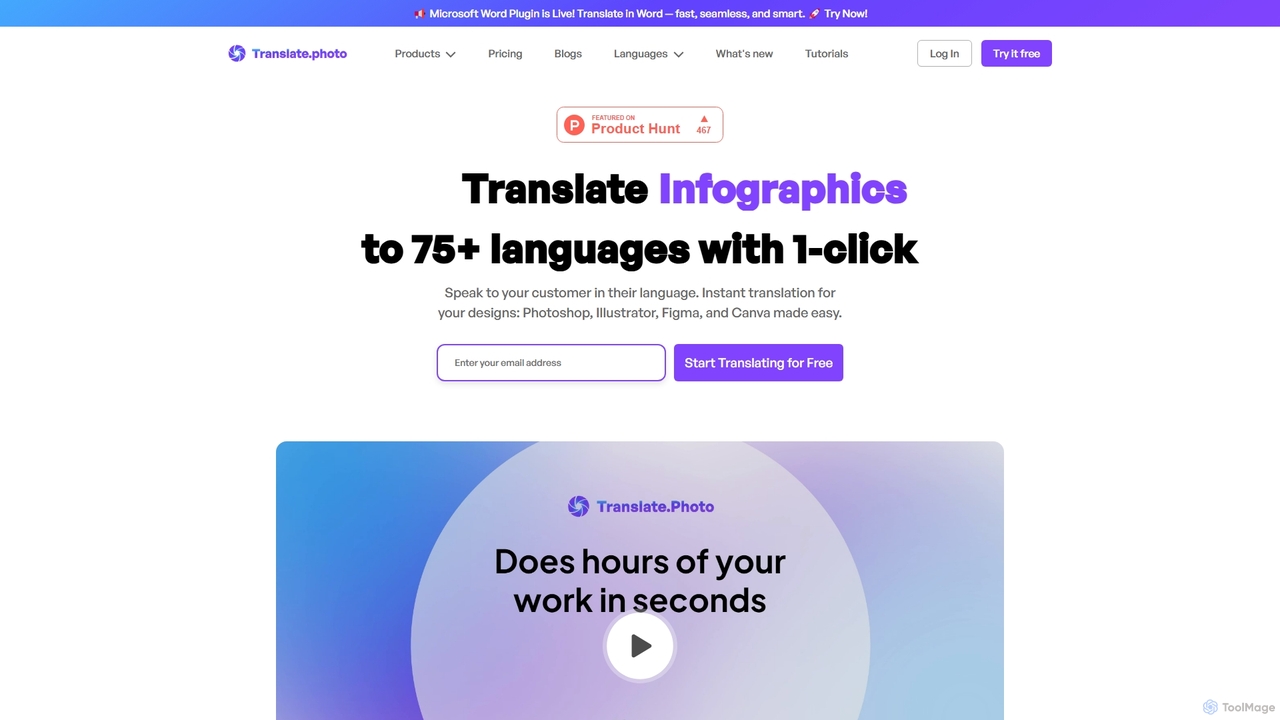
Translate.Photo is an AI-powered tool that translates text within images and design files into over 75 languages with a single click. It integrates seamlessly with popular design software like Photoshop, Illustrator, Figma, and InDesign, preserving your original layout and design integrity. Ideal for designers, marketers, and businesses looking to localize visual content efficiently.

Localization
Visits 7.8KFavorites 101Likes 111

About Localization

Localization tools are AI-powered platforms designed to adapt products, services, or content for specific target markets, encompassing linguistic, cultural, and technical adjustments. These tools leverage advanced machine learning, natural language processing, and sometimes computer vision to automate and streamline the complex process of internationalization and localization. They are crucial for businesses aiming to expand globally, ensuring that digital products, marketing materials, and user interfaces resonate authentically with diverse audiences. Within the broader context of Design, AI localization specifically focuses on adapting visual elements, user interfaces, and interactive content to maintain brand consistency and user experience across different locales.

Core Features

  • AI-Powered Translation: Automated, context-aware translation of text, often integrated with translation memory and terminology management.
  • Cultural Adaptation: AI suggestions for adapting imagery, colors, symbols, and content tone to suit local cultural norms and preferences.
  • Linguistic Quality Assurance (LQA): Automated checks for grammatical errors, stylistic inconsistencies, and adherence to brand guidelines in localized content.
  • UI/UX Localization: Tools to preview and adjust user interface layouts, text expansion/contraction, and visual elements for different languages and scripts.
  • Workflow Automation: Integration with content management systems (CMS) and design tools to automate the localization pipeline from source content to localized delivery.

Use Cases

AI localization tools are indispensable for global enterprises, marketing agencies, and content creators. They enable the efficient adaptation of websites, mobile applications, and software interfaces to cater to diverse linguistic and cultural user bases. For design teams, these tools facilitate the seamless integration of localized text and visual assets into their creative workflows, ensuring that the final product maintains its intended aesthetic and functionality across all target markets.

How to Choose

When selecting an AI localization tool, consider its translation quality and language support, especially for niche languages. Evaluate its integration capabilities with your existing design and content management systems. Assess the level of cultural adaptation features, such as image and tone suggestions. Finally, review its scalability to handle growing content volumes and its pricing model, including per-word or subscription-based options, to ensure it aligns with your budget and project needs.

Featured tool rankings

Localization use cases

1

Localizing Mobile App UI/UX

A mobile app developer uses AI localization to automatically translate and adjust the layout of their app's user interface for Japanese, German, and Spanish markets. The tool identifies text expansion issues, suggests culturally appropriate icons, and ensures that date/time formats and currency symbols are correctly displayed, significantly reducing manual design adjustments and speeding up market entry.

2

Adapting Global Marketing Campaigns

A global marketing team employs AI localization to tailor a new product launch campaign for five different regions. The AI not only translates ad copy and website content but also analyzes local market trends to suggest culturally relevant imagery, color palettes, and taglines, ensuring the campaign resonates deeply with each target audience while maintaining brand consistency.

3

Streamlining E-commerce Product Descriptions

An international e-commerce business utilizes AI localization to translate and optimize thousands of product descriptions for various country-specific online stores. The tool ensures accurate terminology, adapts measurement units, and incorporates local SEO keywords, enhancing product discoverability and customer engagement in each market without extensive manual review.

4

Ensuring Linguistic & Cultural Accuracy in Gaming

A game development studio integrates AI localization to translate in-game dialogue, UI elements, and lore for multiple languages. The AI helps maintain character voice consistency, flags culturally sensitive content, and ensures that humor and idioms are appropriately adapted, providing an immersive and authentic experience for players worldwide.

5

Automating Video Subtitle & Dubbing Localization

A media company uses AI localization to generate accurate subtitles and dubbing scripts for its video content in several languages. The AI automatically transcribes audio, translates it, and then adjusts timing and phrasing to fit spoken dialogue or on-screen text, drastically cutting down the time and cost associated with manual video localization.

6

Localizing Technical Documentation & User Manuals

A software company leverages AI localization to translate and adapt its complex technical documentation and user manuals for global distribution. The tool ensures consistent terminology across all documents, handles formatting for different script directions (e.g., right-to-left languages), and integrates with version control systems, guaranteeing up-to-date and accurate information for international users.

Localization FAQ

What are AI Localization tools?

AI Localization tools are software solutions that use artificial intelligence, primarily machine learning and natural language processing, to automate and enhance the process of adapting content, products, or services for specific linguistic and cultural markets. They go beyond simple translation by considering cultural nuances, design elements, and technical requirements to ensure global relevance and user experience.

How do AI Localization tools benefit design and content teams?

AI Localization tools significantly benefit design and content teams by accelerating the localization workflow, reducing manual effort, and improving consistency. For designers, they help adapt UI layouts and visual assets for different languages. For content teams, they ensure accurate, culturally appropriate translations and streamline content delivery across multiple locales, allowing teams to focus on creative tasks rather than repetitive translation management.

What are the key features to look for in an AI Localization tool?

Key features include high-quality AI-powered translation engines, robust translation memory and terminology management, and integrated linguistic quality assurance (LQA). Look for tools with strong cultural adaptation capabilities (e.g., image/color suggestions), seamless integration with design and content management systems, and support for a wide range of file formats and languages. Workflow automation and scalability are also crucial.

How do AI Localization tools differ from traditional translation software?

Traditional translation software often relies on human translators or basic machine translation with limited context. AI Localization tools, however, leverage advanced AI to offer more intelligent, context-aware translations, cultural adaptation suggestions, and automated quality checks. They are designed for end-to-end localization workflows, integrating with design and content platforms to provide a more holistic and automated solution than standalone translation memory tools.

Who typically uses AI Localization tools?

AI Localization tools are primarily used by global businesses, e-commerce platforms, software and app developers, gaming studios, marketing agencies, and media companies. Any organization looking to expand its reach into international markets and needing to adapt its digital products, marketing materials, or content efficiently and effectively for diverse linguistic and cultural audiences will find these tools invaluable.