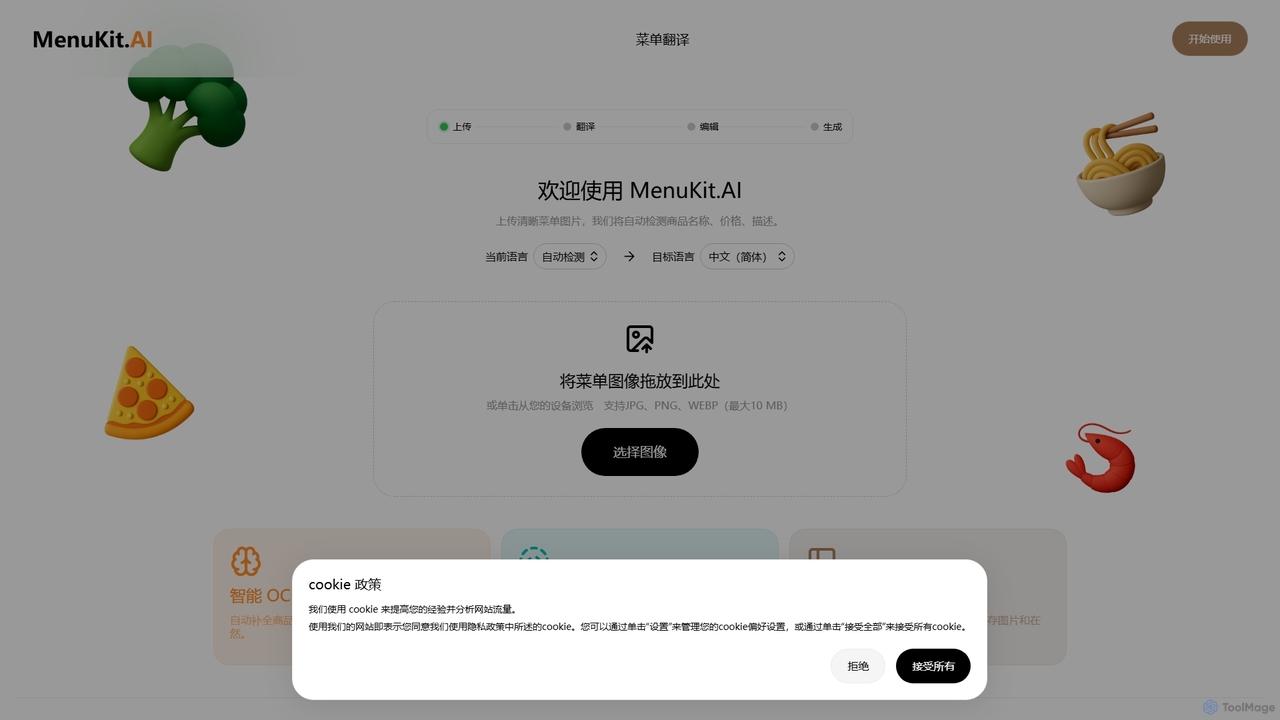
Menu Creation tools are AI-powered platforms designed to streamline the design and generation of various types of menus, from restaurant offerings to digital navigation. These tools leverage intelligent templates and content integration features to simplify the complex process of layout, typography, and visual branding. They enable businesses and individuals to quickly produce professional, visually appealing menus that are consistent with their brand identity, saving significant time and resources in the design workflow. By automating repetitive design tasks, these solutions allow for greater focus on content and user experience.
Core Features
- Template-Based Design: Offers a wide array of pre-designed, customizable templates for different menu types and styles.
- Content Management: Allows easy input, organization, and updating of menu items, descriptions, prices, and dietary information.
- Visual Customization: Provides extensive options for adjusting fonts, colors, backgrounds, images, and layout elements to match brand aesthetics.
- Multi-Platform Export: Supports exporting menus in various formats suitable for print (PDF), digital display (web, app), or interactive use.
- AI-Powered Suggestions: Offers intelligent recommendations for layout, imagery, or even dish descriptions to enhance menu appeal.
Use Cases
Businesses in the hospitality sector, event organizers, and digital product managers frequently utilize menu creation tools. Restaurants can rapidly update seasonal offerings or daily specials, ensuring their physical and digital menus are always current. Event planners can design elegant, themed menus for weddings or corporate gatherings. Digital product teams can prototype and iterate on app navigation menus, testing different user flows and visual hierarchies efficiently.
How to Choose
When selecting a menu creation tool, prioritize features like the breadth of template options, ease of content integration, and the level of visual customization available. Consider its export capabilities to ensure compatibility with your intended output (print, web, app). Evaluate the user interface for intuitiveness and whether it offers collaborative features for team projects. Finally, assess pricing models and customer support to find a solution that aligns with your budget and operational needs.