Design Best in category 1 results Sprint Management AI Tool

Popular AI tools in the Sprint Management field of Design include Metodic, etc., helping you quickly improve efficiency.

Metodic

Metodic

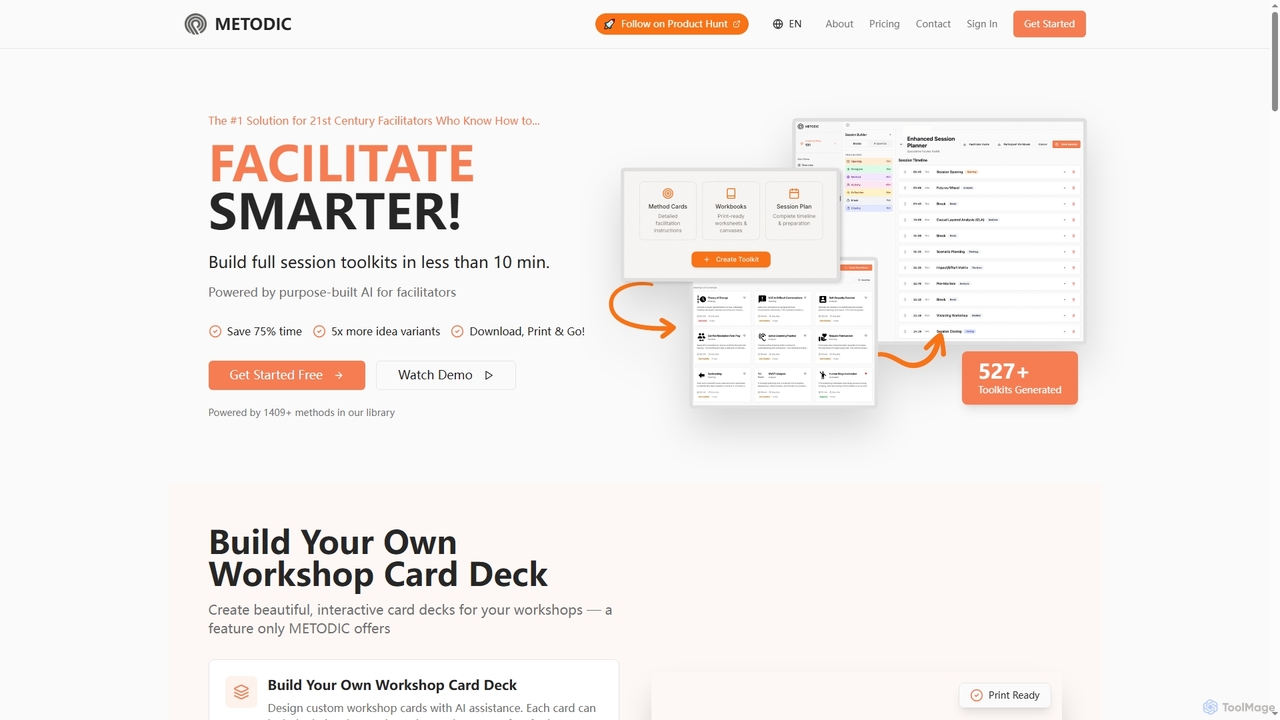
Metodic is an AI-powered platform designed for facilitators to rapidly generate comprehensive session toolkits, method card decks, and …

4.7K

About Sprint Management

Sprint Management tools are specialized AI-powered platforms designed to facilitate agile methodologies within design and development teams. These tools streamline the planning, execution, and tracking of iterative work cycles, commonly known as sprints. By centralizing tasks, fostering real-time collaboration, and providing visual progress insights, they empower teams to deliver design projects efficiently and adaptively, ensuring alignment with project goals and stakeholder expectations.

Core Features

  • Sprint Planning & Backlog Management: Organize and prioritize design tasks, user stories, and epics into manageable sprints.
  • Task Tracking & Workflow Visualization: Monitor individual and team progress through Kanban boards or Gantt charts, visualizing design workflow stages.
  • Collaboration & Communication: Provide integrated platforms for team discussions, feedback loops, and document sharing specific to design assets.
  • Performance Analytics & Reporting: Generate burndown/burnup charts and velocity reports to assess sprint performance and predict future design capacity.
  • Retrospective & Feedback Management: Facilitate structured sprint reviews and retrospectives to identify improvements for subsequent design iterations.

Applicable Scenarios

These tools are indispensable for UI/UX design teams managing iterative product development, marketing creative teams coordinating campaign asset production, and cross-functional teams executing design sprints. They support structured workflows for rapid prototyping, user testing cycles, and continuous design improvement, ensuring projects stay on track and within scope.

How to Choose

When selecting a Sprint Management tool, consider its integration capabilities with existing design software (e.g., Figma, Sketch), the flexibility of its workflow customization to match your team's agile practices, and its reporting features for actionable insights. Evaluate scalability for team growth and the level of AI assistance offered for task prioritization or timeline prediction, ensuring it aligns with your project complexity and budget.

Sprint ManagementUse Cases

1

Streamlining UI/UX Design Sprints

UI/UX design teams leverage Sprint Management tools to meticulously plan and execute design sprints. Designers can break down complex features into smaller, manageable tasks, assign them to team members, and track progress on a visual board. This ensures a structured approach to prototyping, user testing, and iteration, leading to faster delivery of high-quality user interfaces and experiences while maintaining clear communication across the team.

2

Managing Agile Marketing Content Creation

Marketing teams utilize Sprint Management tools to organize and track the iterative creation of content, such as social media campaigns, blog posts, or video assets. They can plan content sprints, assign tasks like copywriting, graphic design, and video editing, and monitor each stage's completion. This agile approach helps marketing teams respond quickly to market trends, maintain consistent brand messaging, and efficiently deliver diverse content formats on schedule.

3

Coordinating Cross-Functional Product Development

For product development involving design, engineering, and marketing, Sprint Management tools provide a unified platform for coordination. Teams can collaborate on shared backlogs, prioritize features, and track dependencies across different disciplines. This ensures that design mockups are seamlessly handed off to developers, marketing materials align with product launches, and all teams remain synchronized, reducing bottlenecks and accelerating time-to-market for new products.

4

Facilitating Remote Design Team Collaboration

Remote design teams benefit significantly from Sprint Management tools by maintaining transparency and fostering collaboration regardless of location. These platforms enable shared task boards, real-time updates, and integrated communication channels for feedback on design iterations. This ensures every team member understands their responsibilities, tracks collective progress, and contributes effectively to design sprints, overcoming geographical barriers and enhancing team cohesion.

5

Tracking Progress of Creative Asset Production

Creative agencies and in-house design departments use Sprint Management tools to manage the production lifecycle of various creative assets, from initial concept to final delivery. They can define sprints for specific projects, assign tasks for illustration, animation, or photography, and track review cycles. This structured approach helps manage client expectations, ensures timely delivery of high-quality visuals, and optimizes resource allocation for multiple creative projects simultaneously.

6

Optimizing Iterative Software Design Cycles

Software design teams employ Sprint Management tools to optimize their iterative development cycles, particularly for UI/UX enhancements and feature rollouts. They can plan design sprints focused on specific user stories, track the progress of wireframing, mockups, and usability testing, and gather feedback efficiently. This systematic approach allows for continuous improvement, rapid iteration based on user feedback, and a more predictable delivery schedule for software design components.

Sprint ManagementFrequently Asked Questions