CipherClaw
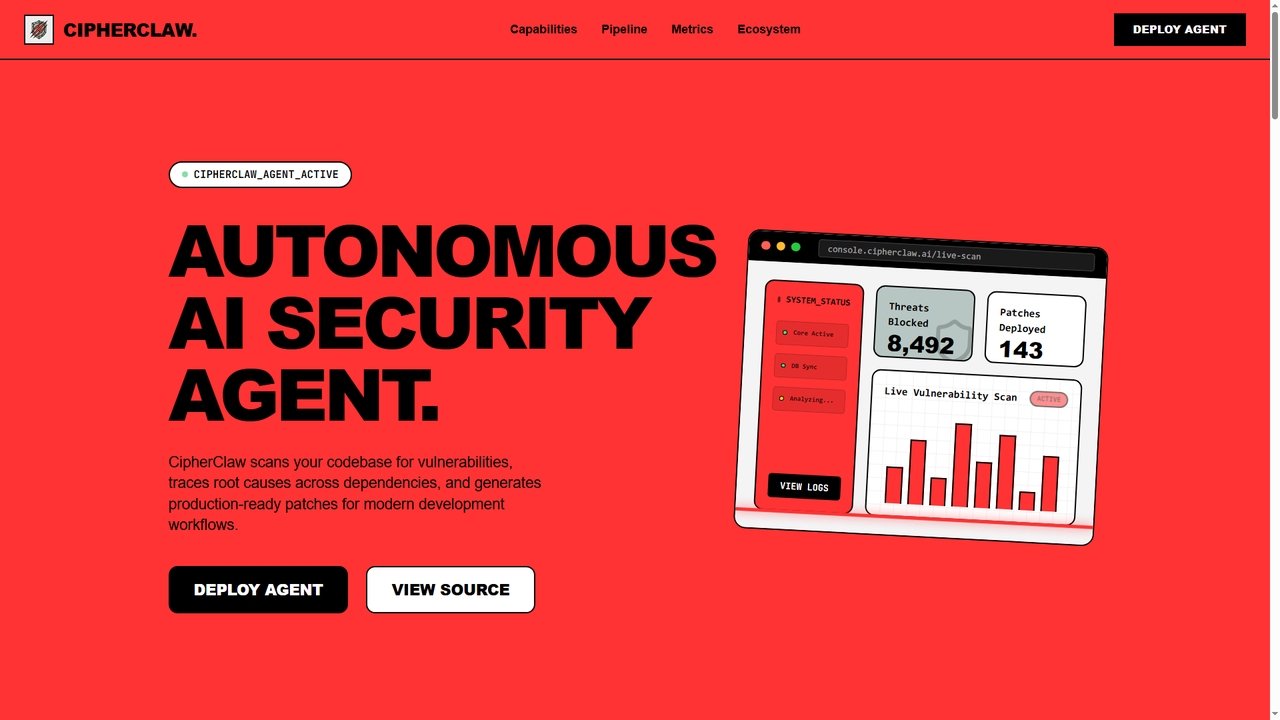
CipherClaw is an autonomous AI security agent that proactively scans your codebase for vulnerabilities, performs root cause analysis …
CipherClaw is an autonomous AI security agent that proactively scans your codebase for vulnerabilities, performs root cause analysis across dependencies using advanced causal graph and abstract geometric analysis, and autonomously generates and deploys production-ready patches. Designed for modern, AI-generated development workflows, it integrates seamlessly with ecosystems like OpenClaw, NVIDIA Nemo Claw, Lovable, and n8n.
The Security Bulldog
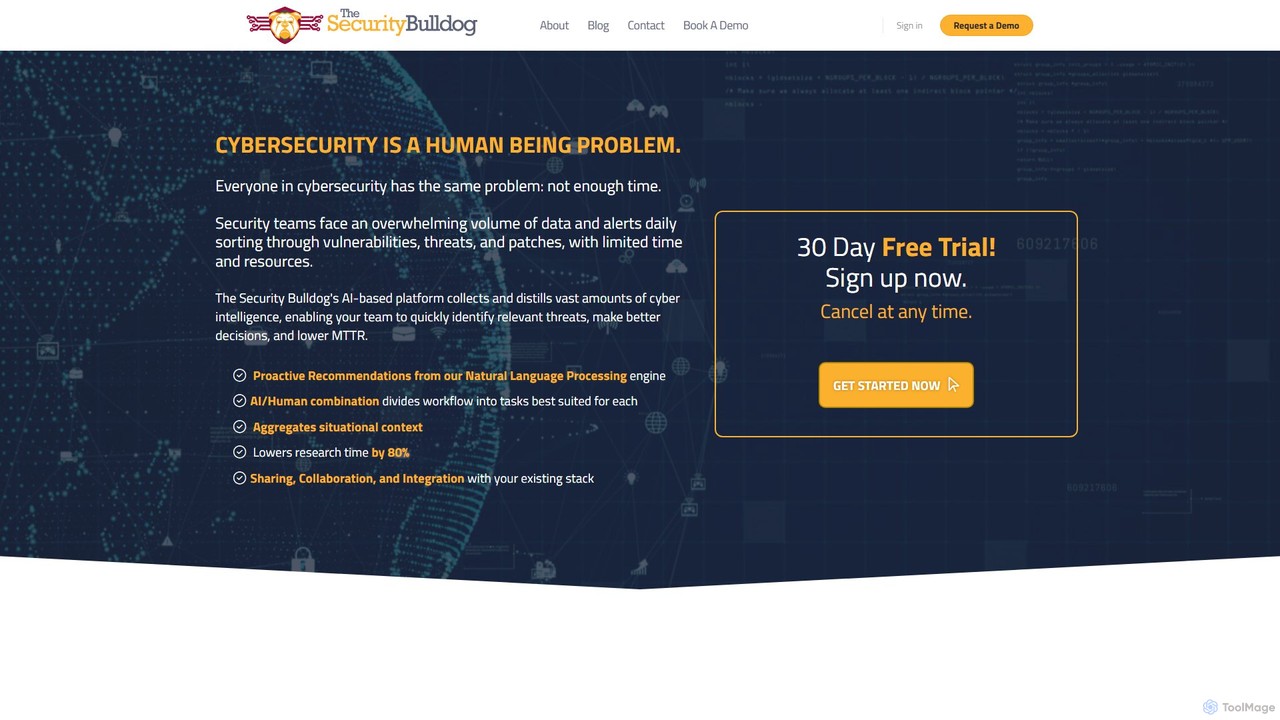
The Security Bulldog is an AI-powered cybersecurity platform that uses a proprietary NLP engine to distill vast amounts …
The Security Bulldog is an AI-powered cybersecurity platform that uses a proprietary NLP engine to distill vast amounts of cyber intelligence. It helps security teams reduce manual research time, quickly identify relevant threats, make better decisions, and lower Mean Time To Remediate (MTTR).
Veriom
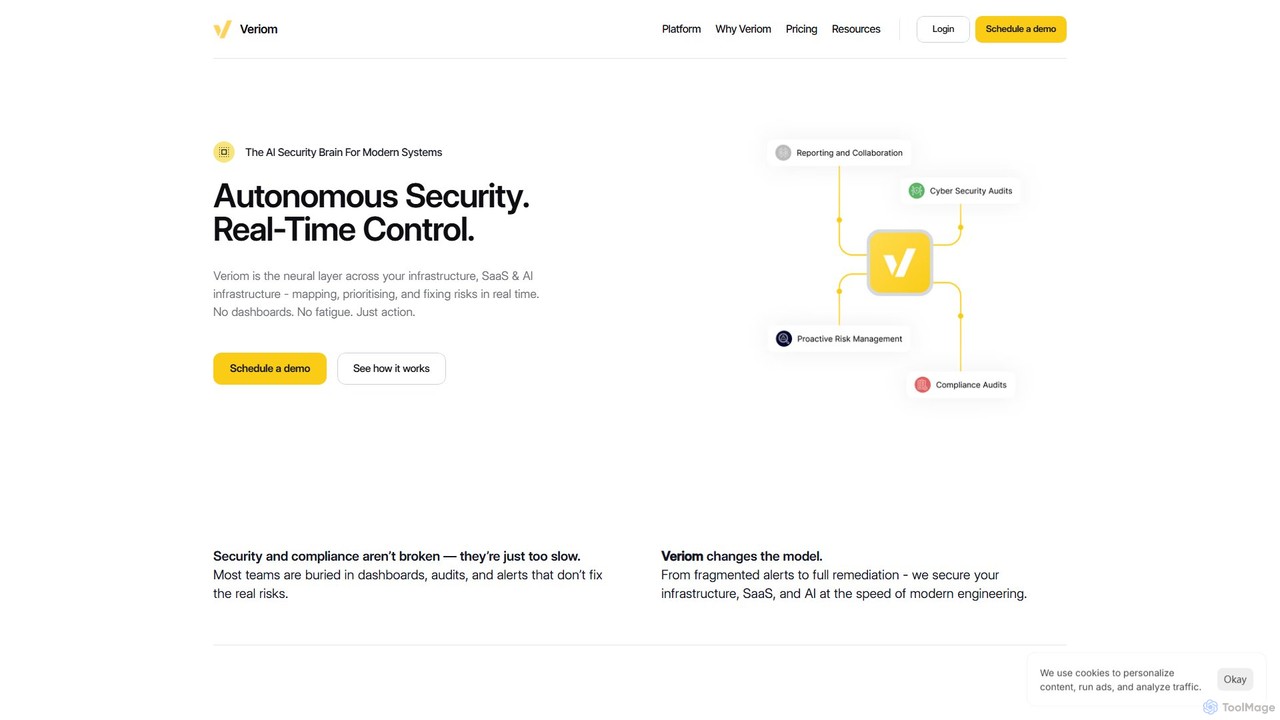
Veriom is an autonomous AI security platform that acts as a neural layer for your infrastructure, SaaS, and …
Veriom is an autonomous AI security platform that acts as a neural layer for your infrastructure, SaaS, and AI systems. It goes beyond detection by mapping, prioritizing, and automatically fixing cybersecurity and compliance risks in real-time. By eliminating alert fatigue and manual triage, Veriom provides continuous assurance and proactive risk management.
Cotool
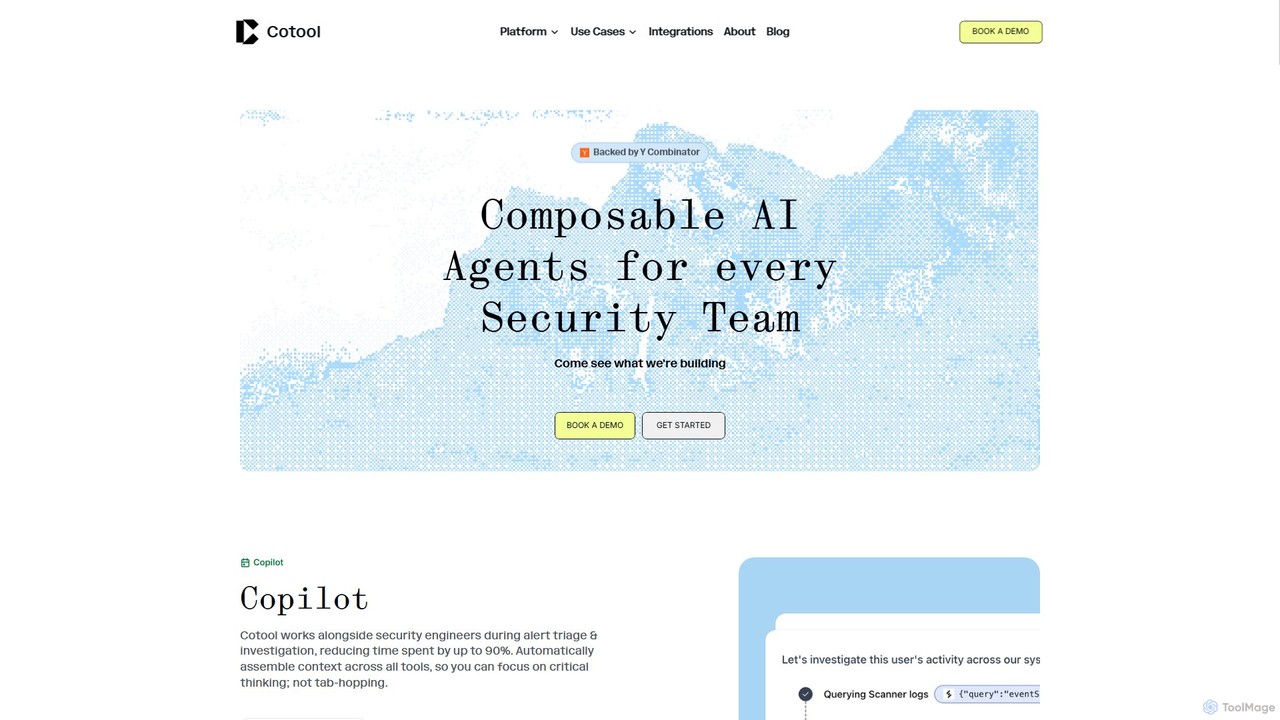
Cotool is an AI security platform featuring composable agents designed for security teams. It automates alert triage, incident …
Cotool is an AI security platform featuring composable agents designed for security teams. It automates alert triage, incident investigation, and threat detection, reducing manual work by up to 90%. By integrating with your existing security stack, it streamlines workflows and empowers analysts to focus on critical threats.
furl
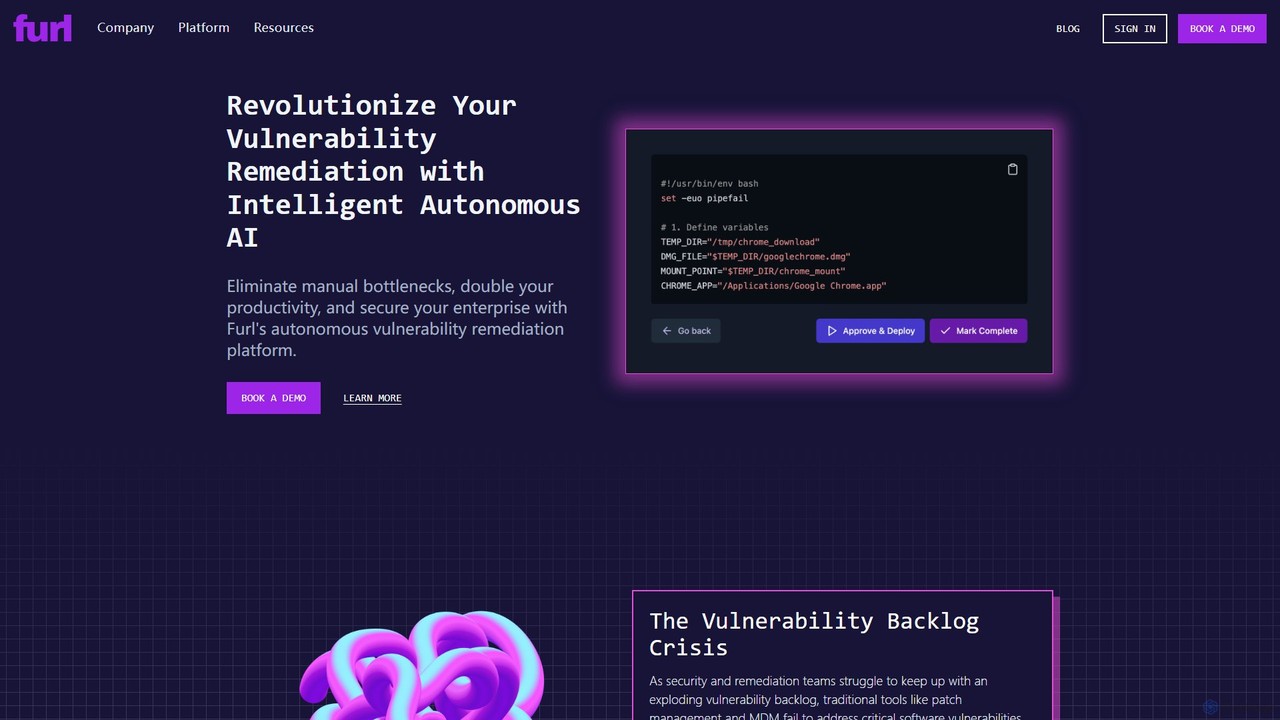
Furl is an AI-powered autonomous remediation platform designed to help security and IT teams tackle the growing backlog …
Furl is an AI-powered autonomous remediation platform designed to help security and IT teams tackle the growing backlog of software vulnerabilities. It automates the entire remediation lifecycle, from consolidating vulnerability data and prioritizing risks to generating and deploying tailored fixes. By replacing manual processes with intelligent automation, Furl doubles productivity and secures enterprise systems efficiently.
About Devsecops
DevSecOps is a set of methodologies and tools that deeply integrate security practices into the entire Software Development Life Cycle (SDLC), from design and development to deployment and operations. These tools automate security testing, vulnerability management, and compliance checks, embedding security as a shared responsibility across development, security, and operations teams. By shifting security left, DevSecOps aims to identify and remediate security issues early, reducing risks and accelerating secure software delivery.
Core Features
- Static Application Security Testing (SAST): Analyzes source code, bytecode, or binary code for security vulnerabilities without executing the application.
- Dynamic Application Security Testing (DAST): Tests applications in their running state to identify vulnerabilities that appear during execution.
- Software Composition Analysis (SCA): Identifies and manages open-source components, their licenses, and known vulnerabilities within an application.
- Container Security: Scans container images for vulnerabilities, misconfigurations, and compliance issues, ensuring secure deployment environments.
- Infrastructure as Code (IaC) Security: Analyzes configuration files (e.g., Terraform, CloudFormation) for security flaws and compliance violations before deployment.
Applicable Scenarios
DevSecOps tools are crucial for organizations developing cloud-native applications, microservices, or complex enterprise software that require continuous delivery and robust security. They are widely adopted in highly regulated industries like finance and healthcare, as well as by technology companies prioritizing rapid, secure innovation. Development teams leverage these tools to automate security checks within their CI/CD pipelines, while security teams gain visibility and control over the entire software supply chain.
How to Choose
When selecting DevSecOps tools, consider their integration capabilities with your existing CI/CD pipeline, version control systems, and cloud platforms. Evaluate the breadth and depth of their security scanning (SAST, DAST, SCA, IaC), their ability to provide actionable remediation guidance, and their compliance reporting features. Scalability, ease of use for developers, and the vendor's support for various programming languages and frameworks are also critical factors.

DevsecopsUse Cases
Automating Code Security Scans in CI/CD
A software development team integrates SAST and SCA tools into their CI/CD pipeline. As developers commit code, these tools automatically scan for vulnerabilities in custom code and open-source dependencies. This allows them to identify and fix security flaws immediately, preventing insecure code from reaching production and significantly reducing the cost and effort of remediation later in the development cycle.
Securing Containerized Applications and Microservices
An operations team uses DevSecOps container security tools to scan Docker images and Kubernetes configurations for vulnerabilities and misconfigurations before deployment. This ensures that only secure, compliant images are deployed to production environments. The tools also provide runtime protection and continuous monitoring, alerting the team to any suspicious activity or newly discovered vulnerabilities in their microservices architecture, enhancing overall system resilience.
Ensuring Compliance in Regulated Industries
A financial institution leverages DevSecOps tools to enforce compliance with industry regulations like PCI DSS and GDPR. These tools integrate compliance-as-code principles, automatically checking infrastructure configurations and application code against predefined security policies and regulatory requirements. This proactive approach helps the institution maintain a strong security posture, pass audits with greater ease, and avoid costly penalties associated with non-compliance, streamlining their regulatory adherence process.
Threat Modeling and Risk Assessment for New Features
Before developing a new feature, a product security team uses DevSecOps practices to conduct threat modeling. They identify potential attack vectors and vulnerabilities early in the design phase, using specialized tools to visualize data flows and trust boundaries. This proactive risk assessment allows developers to build security controls directly into the feature's architecture, reducing the likelihood of security flaws and ensuring a more secure product from inception.
Managing Open-Source Software Vulnerabilities
A development team building a new application relies heavily on open-source libraries. They implement an SCA tool as part of their DevSecOps strategy. This tool automatically scans their codebase to identify all open-source components, flags known vulnerabilities (CVEs), and checks license compliance. This proactive management helps the team quickly patch critical vulnerabilities, avoid legal issues related to licenses, and maintain a secure and compliant software supply chain without manual effort.
Real-time Security Monitoring and Incident Response
An enterprise security operations center (SOC) utilizes DevSecOps tools for continuous security monitoring of deployed applications. These tools provide real-time alerts on suspicious activities, unauthorized access attempts, or runtime vulnerabilities. By integrating with incident response platforms, they enable rapid investigation and automated remediation actions, significantly reducing the mean time to detect (MTTD) and mean time to respond (MTTR) to security incidents, thus protecting critical business assets.