
ToolMage
Sign in

Best 7 Mobile App Development AI tools for Development

Popular Mobile App Development AI tools in Development include Bilt, nomtek, Povio, digitalsoftwarelabs, Xvibe, Soul16, and Brogrammers, helping you work more efficiently.

Xvibe
Freemium

Xvibe

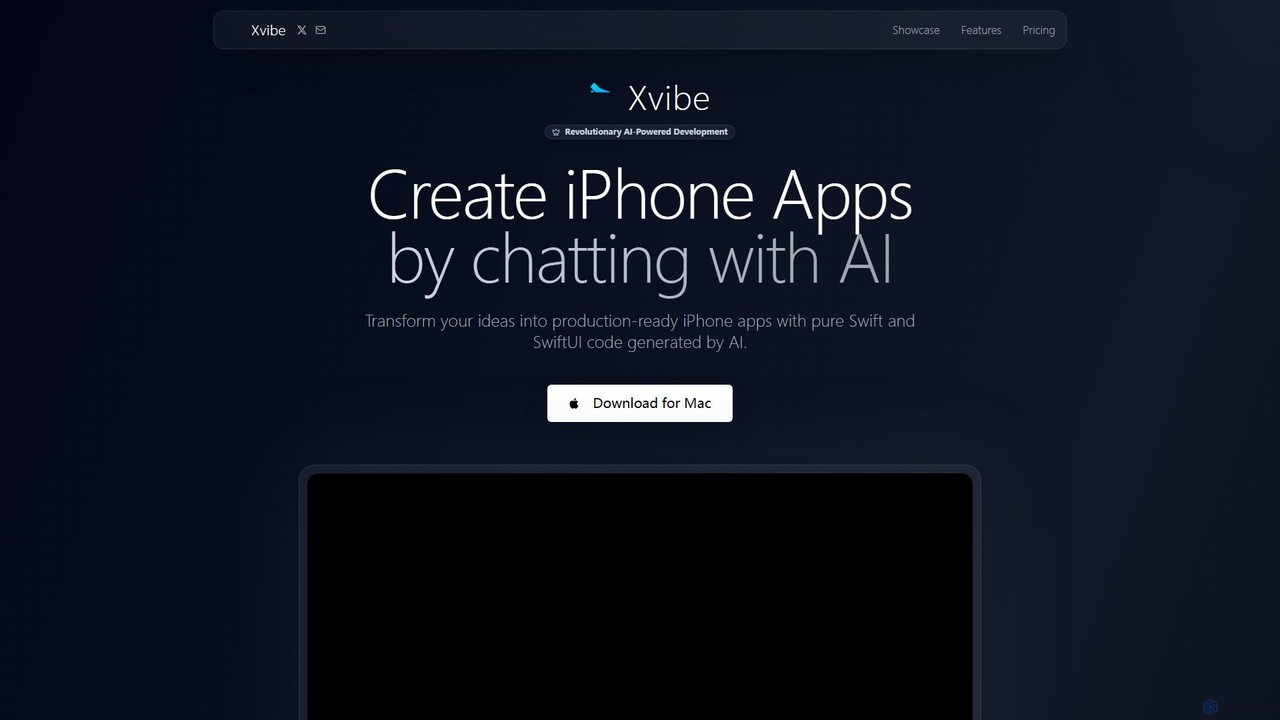
Xvibe is a revolutionary AI-powered development tool for macOS that transforms natural language prompts into production-ready native iOS applications. It generates pure Swift and SwiftUI code, enabling developers to build high-performance iPhone apps in minutes, complete with automated App Store metadata and global localization.

Code Generation
Visits 4.7KFavorites 131Likes 120

About Mobile App Development

Mobile App Development AI tools are designed to streamline and enhance the creation of mobile applications. These tools leverage machine learning and automation to assist developers across the entire app lifecycle. They significantly accelerate development, improve code quality, and enable more personalized user experiences. This integration of AI helps overcome traditional development challenges, making app creation more efficient and accessible.

Core Features

  • Automated Code Generation: Generates boilerplate code, UI components, or even entire functional modules based on specifications or design inputs.
  • Intelligent UI/UX Design: Provides AI-driven suggestions for layout, color schemes, and user flows, optimizing for engagement and accessibility.
  • Predictive Testing & Debugging: Identifies potential bugs, performance bottlenecks, and security vulnerabilities before deployment, suggesting fixes.
  • Personalized Content & Features: Integrates AI models to deliver dynamic, user-specific content, recommendations, or adaptive interfaces within the app.
  • Cross-Platform Compatibility: Assists in adapting app logic and UI for seamless deployment across different mobile operating systems like iOS and Android.

Use Cases

Mobile app development AI tools are utilized by individual developers, startups, and large enterprises to build, test, and deploy applications more efficiently. They are particularly valuable for accelerating prototyping, ensuring code quality in complex projects, and implementing advanced features like AI-driven personalization or intelligent search within apps.

How to Choose

When selecting mobile app development AI tools, consider the specific development stage you want to enhance (e.g., design, coding, testing), the platforms you target (iOS, Android, cross-platform), and the level of AI integration required. Evaluate the tool's compatibility with existing tech stacks, its learning curve, and the accuracy of its AI-driven suggestions or automations.

Featured tool rankings

Mobile App Development use cases

1

Automating UI Component Generation

A mobile app designer uses an AI tool to convert wireframes or design mockups into functional UI code components (e.g., buttons, forms, navigation bars) for iOS and Android. This drastically reduces manual coding time, ensuring design consistency and accelerating the hand-off to developers.

2

Predictive Bug Detection in Large Codebases

A development team working on a complex enterprise mobile application employs an AI-powered testing tool. The tool analyzes code changes and historical bug data to predict and highlight potential errors or performance issues before compilation, significantly reducing debugging cycles and improving app stability.

3

Personalizing In-App User Experiences

An e-commerce app developer integrates an AI module that learns user preferences and behavior patterns. The AI then dynamically adjusts product recommendations, promotional offers, and even the app's layout for each individual user, leading to higher engagement and conversion rates.

4

Accelerating Cross-Platform Development

A startup aims to launch its app on both iOS and Android simultaneously with limited resources. They use an AI-assisted cross-platform development tool that helps translate UI elements and business logic, ensuring native-like performance and appearance on both platforms while minimizing duplicate effort.

5

Generating Test Cases and Test Data

A QA engineer for a banking app uses an AI tool to automatically generate comprehensive test cases and realistic synthetic test data. This ensures thorough coverage of various user scenarios, edge cases, and data privacy compliance without manually creating extensive datasets.

6

Optimizing App Performance and Resource Usage

A mobile game developer utilizes an AI-driven optimization tool to analyze the app's runtime performance, identifying memory leaks, CPU bottlenecks, and excessive battery consumption. The tool provides actionable insights and code suggestions to improve the game's efficiency and user experience.

Mobile App Development FAQ

What are AI tools for Mobile App Development?

AI tools for Mobile App Development are software solutions that leverage artificial intelligence, such as machine learning and natural language processing, to automate, assist, and enhance various stages of creating mobile applications. They aim to improve efficiency, quality, and user experience by handling tasks like code generation, UI design, testing, and personalization.

How do AI tools accelerate mobile app development?

AI tools accelerate mobile app development by automating repetitive tasks like boilerplate code generation, UI component creation, and test case generation. They can also provide intelligent suggestions for design, identify bugs proactively, and optimize performance, allowing developers to focus on complex logic and innovative features, significantly reducing development cycles.

What's the difference between AI Mobile App Development tools and traditional IDEs?

Traditional Integrated Development Environments (IDEs) provide a comprehensive environment for coding, debugging, and compiling. AI Mobile App Development tools, while often integrating with IDEs, go further by using AI to assist or automate these processes. They offer intelligent code suggestions, design recommendations, predictive testing, and even code generation, which traditional IDEs typically do not provide natively.

Can AI tools help with cross-platform mobile development?

Yes, many AI tools are specifically designed to assist with cross-platform mobile development. They can help translate UI elements and business logic between different platforms (iOS, Android), suggest optimal code structures for compatibility, and identify platform-specific issues, thereby streamlining the process of building apps that work seamlessly across multiple operating systems.

What are the key benefits of using AI in mobile app development?

The key benefits include faster development cycles through automation, improved app quality by predictive bug detection and performance optimization, enhanced user experience via AI-driven personalization, and reduced development costs. AI also enables developers to implement more sophisticated features that would be challenging with traditional methods.