ToolMage
Sign in

Best 1 Mobile Applications for Development

Popular Mobile Applications in Development include Spaculus, helping you work more efficiently.

Spaculus
Paid

Spaculus

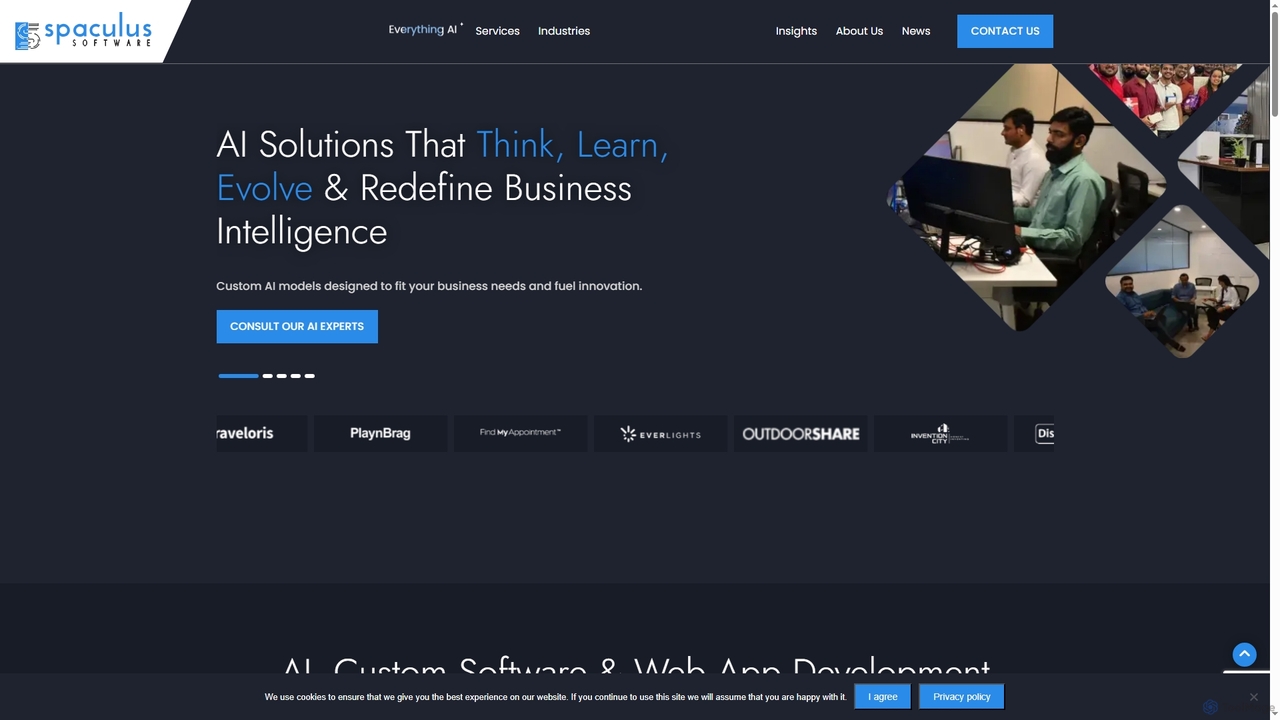
Spaculus is a leading technology company specializing in AI, custom software, and web app development. They provide tailored solutions including advanced AI models, machine learning, generative AI, and intelligent chatbots to help businesses automate processes, enhance decision-making, and drive innovation. They also offer mobile app development and expert AI engineering talent.

Generative Models
Visits 6KFavorites 116Likes 110

About Mobile Applications

Mobile Applications tools leverage artificial intelligence to enhance the entire lifecycle of mobile app development, optimization, and user experience. These AI-powered solutions utilize machine learning, natural language processing, and computer vision to automate complex tasks, personalize user interactions, and provide predictive insights. They empower developers, designers, and product managers to build smarter, more efficient, and highly engaging mobile applications across various platforms.

Core Features

  • AI-powered Development Assistance: Automates code generation, suggests optimizations, and detects potential bugs in real-time.
  • Intelligent UI/UX Optimization: Analyzes user behavior patterns to recommend design improvements and personalize interfaces.
  • Predictive Analytics & User Engagement: Offers insights into user churn, engagement trends, and app performance for proactive strategies.
  • Automated Testing & Quality Assurance: Generates test cases, simulates user interactions, and identifies vulnerabilities more efficiently.
  • Natural Language & Voice Integration: Facilitates the seamless integration of conversational AI and voice commands into mobile apps.

Applicable Scenarios

These tools are indispensable for mobile app development teams seeking to accelerate their workflow, enhance app quality, and deliver highly personalized user experiences. They are widely adopted by independent developers, large enterprises, and startups aiming to innovate in areas like gaming, e-commerce, productivity, and social media applications.

How to Choose

When selecting AI Mobile Applications tools, consider their compatibility with your existing development stack (e.g., iOS, Android, cross-platform frameworks), the depth of AI model customization offered, scalability for growing user bases, and robust security features. Evaluate the ease of integration, the accuracy of AI predictions, and the overall cost-effectiveness for your project needs.

Featured tool rankings

Mobile Applications use cases

1

Automated UI/UX Optimization for App Designers

App designers and product teams can utilize AI Mobile Applications tools to automatically analyze user interaction data, A/B test different interface elements, and receive AI-driven recommendations for optimizing layouts, navigation flows, and visual components. This helps in creating more intuitive and engaging user experiences, reducing the need for extensive manual testing and iterative design cycles, ultimately leading to higher user satisfaction and retention rates.

2

Personalized Content Delivery in E-commerce Apps

E-commerce businesses leverage AI tools to personalize product recommendations, promotional offers, and content feeds within their mobile applications. By analyzing individual user browsing history, purchase patterns, and demographic data, the AI can dynamically curate a unique shopping experience for each user, significantly increasing conversion rates and customer loyalty. This moves beyond static recommendations to truly adaptive and real-time personalization.

3

Predictive User Churn Analysis for Subscription Apps

Subscription-based mobile applications, such as streaming services or fitness trackers, employ AI tools to predict which users are at risk of churning. The AI analyzes usage patterns, engagement levels, and feedback to identify early warning signs. Product managers can then implement targeted re-engagement campaigns or offer personalized incentives to retain these users, thereby minimizing subscriber loss and maximizing long-term revenue.

4

AI-driven Asset Generation for Mobile Games

Mobile game developers use AI Mobile Applications tools to accelerate the creation of game assets, including textures, character models, and environmental elements. AI can generate variations of existing assets or create entirely new ones based on textual descriptions or reference images, significantly reducing the time and cost associated with manual asset production. This allows development teams to focus more on core gameplay mechanics and innovation.

5

Automated Mobile App Testing and Bug Detection

QA engineers and development teams utilize AI-powered testing tools to automate the process of identifying bugs, performance bottlenecks, and security vulnerabilities in mobile applications. These tools can simulate thousands of user interactions, explore various device configurations, and even generate intelligent test cases, drastically cutting down testing time and improving the overall stability and reliability of the app before release.

6

Seamless Voice Assistant Integration for Productivity Apps

Developers of productivity and utility mobile applications integrate AI tools to add sophisticated voice assistant capabilities. Users can interact with the app using natural language commands for tasks like scheduling meetings, setting reminders, or dictating notes. The AI handles speech recognition, natural language understanding, and intent recognition, making the app more accessible and efficient for hands-free operation, enhancing user convenience.

Mobile Applications FAQ

What are AI Mobile Applications tools?

AI Mobile Applications tools are specialized software solutions that integrate artificial intelligence capabilities, such as machine learning and natural language processing, into the development, testing, and operational phases of mobile applications. They aim to automate complex tasks, provide intelligent insights, and enhance user experiences by making apps smarter and more responsive to individual needs.

How do AI tools enhance mobile app development?

AI tools enhance mobile app development by automating repetitive coding tasks, optimizing UI/UX designs based on predictive analytics, accelerating quality assurance through intelligent testing, and enabling personalized content delivery. They help developers build more robust, user-centric, and performant applications faster, from initial concept to post-launch optimization.

What's the difference between traditional mobile development and AI Mobile Applications development?

Traditional mobile development relies heavily on manual coding, design, and testing processes, with logic explicitly programmed by developers. AI Mobile Applications development, while still requiring traditional coding, integrates AI models to introduce adaptive behaviors, predictive capabilities, and automated optimizations. This allows apps to learn from user data, personalize experiences dynamically, and perform tasks that would be impossible with purely rule-based systems.

What key features should I look for in AI Mobile Application tools?

When evaluating AI Mobile Application tools, prioritize features like robust machine learning model integration, comprehensive analytics for user behavior and app performance, automated testing capabilities, and support for natural language processing or computer vision if relevant to your app's functionality. Also consider ease of integration with your existing tech stack, scalability, and strong data security protocols.

Who benefits most from using AI Mobile Application tools?

Mobile app developers, product managers, UI/UX designers, and QA engineers are the primary beneficiaries. Developers gain efficiency through automated coding and bug detection; product managers get deeper insights into user behavior; designers can optimize interfaces with data-driven recommendations; and QA teams can accelerate testing cycles. Ultimately, end-users benefit from more personalized, intelligent, and reliable mobile experiences.