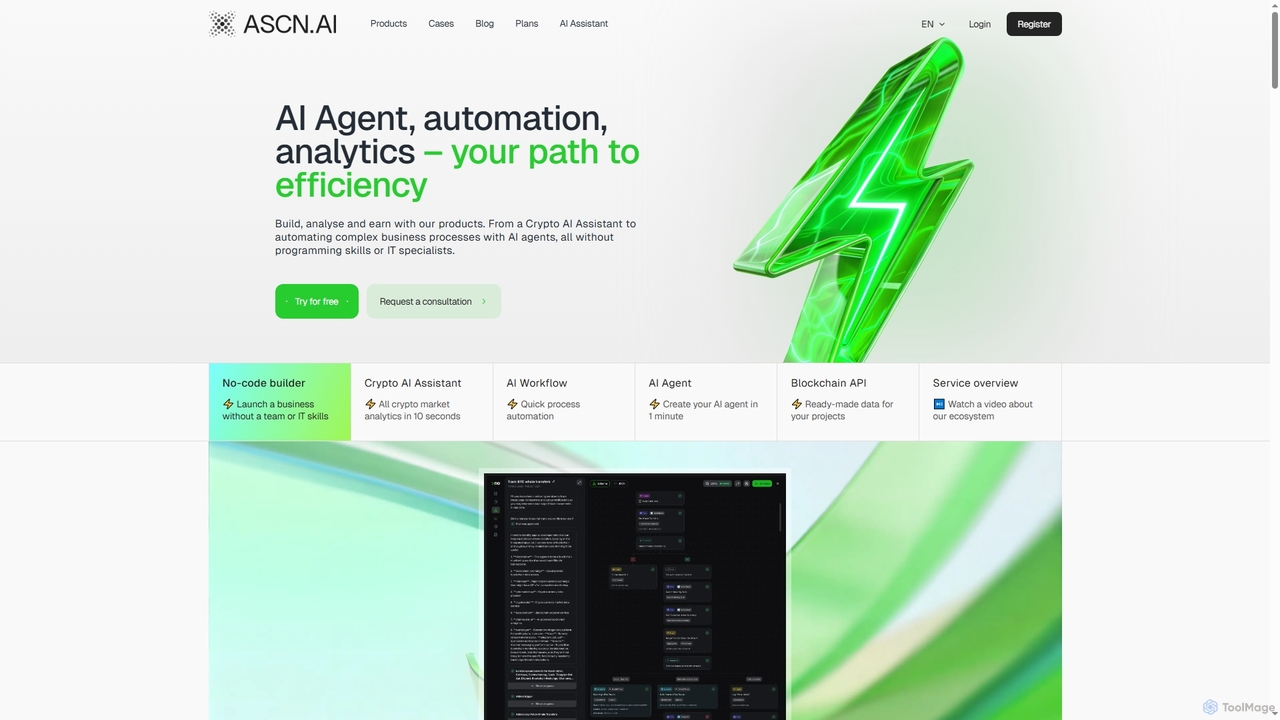
No Code Platforms are innovative tools that empower users to build applications, websites, and automate workflows without writing any traditional programming code. These platforms typically leverage visual development environments, such as drag-and-drop interfaces and pre-built components, to simplify the creation process. They democratize software development, making it accessible to business users, entrepreneurs, and non-technical professionals within the broader Development category. This approach significantly accelerates prototyping and deployment, reducing reliance on specialized coding skills.
Core Features
- Visual Development Interface: Drag-and-drop editors for designing user interfaces and defining logic.
- Pre-built Templates & Components: Ready-to-use modules for common functionalities like forms, databases, and user authentication.
- Workflow Automation: Tools to connect different applications and automate sequential tasks without manual coding.
- Database & Data Management: Integrated or easily connectable databases for storing and managing application data.
- API Integration (Codeless): Ability to connect with external services and APIs through visual configuration, extending functionality.
Applicable Scenarios
No Code Platforms are ideal for individuals and teams looking to rapidly develop digital solutions without deep technical expertise. Small business owners can create custom internal tools or customer portals, while marketing teams can quickly launch interactive landing pages and campaign sites. Entrepreneurs frequently use these platforms to build Minimum Viable Products (MVPs) to validate business ideas with minimal investment and time.
How to Choose
When selecting a No Code Platform, consider its ease of use and learning curve, as some platforms offer more flexibility but require a steeper learning investment. Evaluate the platform's scalability and customization options to ensure it can grow with your needs and integrate with existing systems. Assess the range of pre-built components and templates, as well as its pricing model, which often varies based on features, users, and data volume. Finally, check for robust community support and available learning resources.