ToolMage
Sign in

Best 1 Performance Monitoring AI tools for Development

Popular Performance Monitoring AI tools in Development include Sublyzer, helping you work more efficiently.

Sublyzer
Freemium

Sublyzer

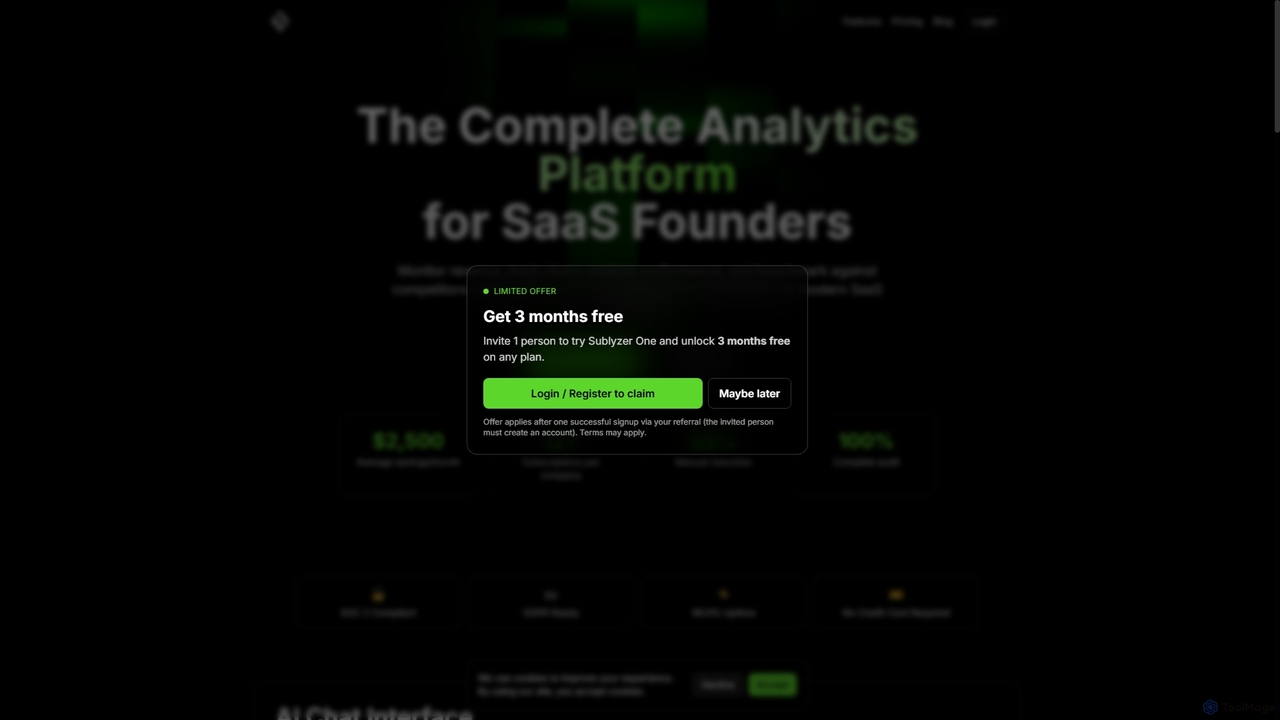
Sublyzer is an AI-powered analytics platform designed for SaaS founders and developers to monitor revenue, track churn, analyze performance, and resolve errors efficiently. It offers a unified dashboard with smart error tracking, AI explanations, and solution suggestions through a conversational interface.

Saas Analytics
Visits 5.6KFavorites 129Likes 124

About Performance Monitoring

Performance Monitoring tools are AI-powered solutions designed to continuously track, analyze, and optimize the operational health and efficiency of software applications, systems, and infrastructure. These tools leverage AI and machine learning to detect anomalies, predict potential issues, and provide actionable insights into system behavior. They are essential for developers, operations teams, and businesses to ensure high availability, responsiveness, and resource utilization, proactively identifying bottlenecks and performance degradation before they impact end-users.

Core Features

  • Real-time Data Collection: Gathers metrics, logs, and traces from various sources instantly for immediate analysis.
  • Anomaly Detection: Uses AI to identify unusual patterns and deviations from normal system behavior without predefined thresholds.
  • Root Cause Analysis: Pinpoints the exact source of performance issues, often with AI-driven correlation across complex systems.
  • Predictive Analytics: Forecasts future performance trends and potential resource exhaustion based on historical data.
  • Alerting & Notifications: Automatically notifies teams of critical issues and performance degradations via various communication channels.

Use Cases

Performance Monitoring tools are crucial across various development and operational contexts. They are used by DevOps teams to ensure application stability and optimize cloud resource usage, by SREs to maintain service level objectives (SLOs) for critical systems, and by software engineers to identify and resolve code-level performance bottlenecks in production environments.

How to Choose

When selecting a Performance Monitoring tool, consider its scope (application, infrastructure, network, end-user experience), the sophistication of its AI capabilities for anomaly detection and root cause analysis, and its integration with your existing tech stack (cloud platforms, databases, CI/CD tools). Also, evaluate its alerting mechanisms, dashboard customization, and reporting features to ensure it meets your team's operational needs and provides clear, actionable insights.

Performance Monitoring use cases

1

Optimizing E-commerce Website Responsiveness

E-commerce operations teams utilize performance monitoring tools to ensure fast page load times and smooth checkout processes, especially during peak sales events. By tracking user journey metrics, identifying slow database queries or API calls, and receiving AI-driven alerts for performance dips, teams can proactively resolve issues. This prevents lost sales due to poor user experience and maintains high customer satisfaction, directly impacting revenue.

2

Proactive Detection of Cloud Infrastructure Overload

DevOps engineers manage dynamic cloud environments and prevent resource exhaustion by deploying performance monitoring tools. These tools analyze CPU, memory, and network usage across virtual machines and containers, using AI to predict scaling needs. This enables automatic scaling of resources up or down, avoiding service disruptions, and optimizing cloud spending by ensuring resources are provisioned efficiently based on actual demand.

3

Troubleshooting Microservices Latency Issues

Software developers diagnose performance bottlenecks in complex, distributed microservices architectures using performance monitoring. By utilizing distributed tracing and AI-driven root cause analysis, they can visualize service dependencies and pinpoint which specific service or function is causing latency. This capability enables rapid identification and fixing of performance regressions in specific microservices, significantly improving overall application speed and reliability.

4

Ensuring SaaS Application Uptime and Reliability

SaaS product managers and SREs guarantee continuous availability and consistent performance for subscription-based services by implementing end-to-end performance monitoring. This includes synthetic transactions and real user monitoring to track service level objectives (SLOs) and detect outages. The result is maintaining high service availability, meeting customer SLAs, and building user trust through reliable service delivery, which is critical for recurring revenue models.

5

Identifying Database Performance Bottlenecks

Database administrators (DBAs) use specialized performance monitoring tools to optimize database queries and ensure efficient data access for applications. These tools analyze query execution times, index usage, and database resource consumption, with AI often suggesting optimization opportunities. This leads to improved data retrieval speeds, reduced application latency, and enhanced overall system performance, which is vital for data-intensive applications.

6

Monitoring IoT Device Fleet Health and Connectivity

IoT solution architects oversee the operational status and data flow of large networks of connected devices. They deploy performance monitoring to collect telemetry data, track device uptime, network latency, and data transmission rates, using AI for anomaly detection in device behavior. This enables proactive identification of malfunctioning devices, prediction of maintenance needs, and ensures reliable data collection from the IoT fleet, critical for maintaining service integrity and data accuracy.

Performance Monitoring FAQ

What is Performance Monitoring in the context of AI tools?

Performance Monitoring, especially with AI, involves continuously collecting and analyzing data from IT systems (applications, servers, networks) to understand their health and efficiency. AI enhances this by automating anomaly detection, predicting issues, and providing intelligent insights for faster root cause analysis, moving beyond simple threshold alerts to proactive problem-solving. It helps ensure systems run optimally and reliably.

How do AI-powered Performance Monitoring tools differ from traditional monitoring solutions?

Traditional monitoring relies on predefined thresholds and rules, often leading to alert fatigue and missed subtle issues. AI-powered tools use machine learning to learn normal system behavior, automatically detect anomalies, correlate events across complex systems, and even predict future performance degradations. This offers more proactive and intelligent insights without extensive manual configuration, providing a significant advantage in dynamic and complex IT environments.

What are the key benefits of using Performance Monitoring tools for development teams?

For development teams, these tools offer faster debugging by pinpointing code-level issues, ensuring new features don't introduce performance regressions, and providing insights into how code performs in production. This leads to quicker issue resolution, improved code quality, and a better understanding of application behavior under real-world loads, ultimately enhancing developer productivity and product reliability. It bridges the gap between development and operations.

Which metrics are typically tracked by Performance Monitoring tools?

Performance Monitoring tools track a wide array of metrics, including: Application Metrics (response time, error rate, throughput, latency, user experience scores); Infrastructure Metrics (CPU utilization, memory usage, disk I/O, network bandwidth); Database Metrics (query execution time, connection pool usage, lock contention); Log Data (error logs, access logs, system events); and Traces (end-to-end transaction paths across distributed systems). These provide a holistic view of system health.

Can Performance Monitoring tools help with cost optimization in cloud environments?

Yes, absolutely. By providing detailed insights into resource utilization, AI-powered performance monitoring tools can identify over-provisioned resources, idle instances, or inefficient configurations. They can also predict future resource needs, enabling teams to scale resources more precisely, avoid unnecessary spending on underutilized infrastructure, and optimize cloud costs while maintaining performance. This ensures you only pay for what you truly need.