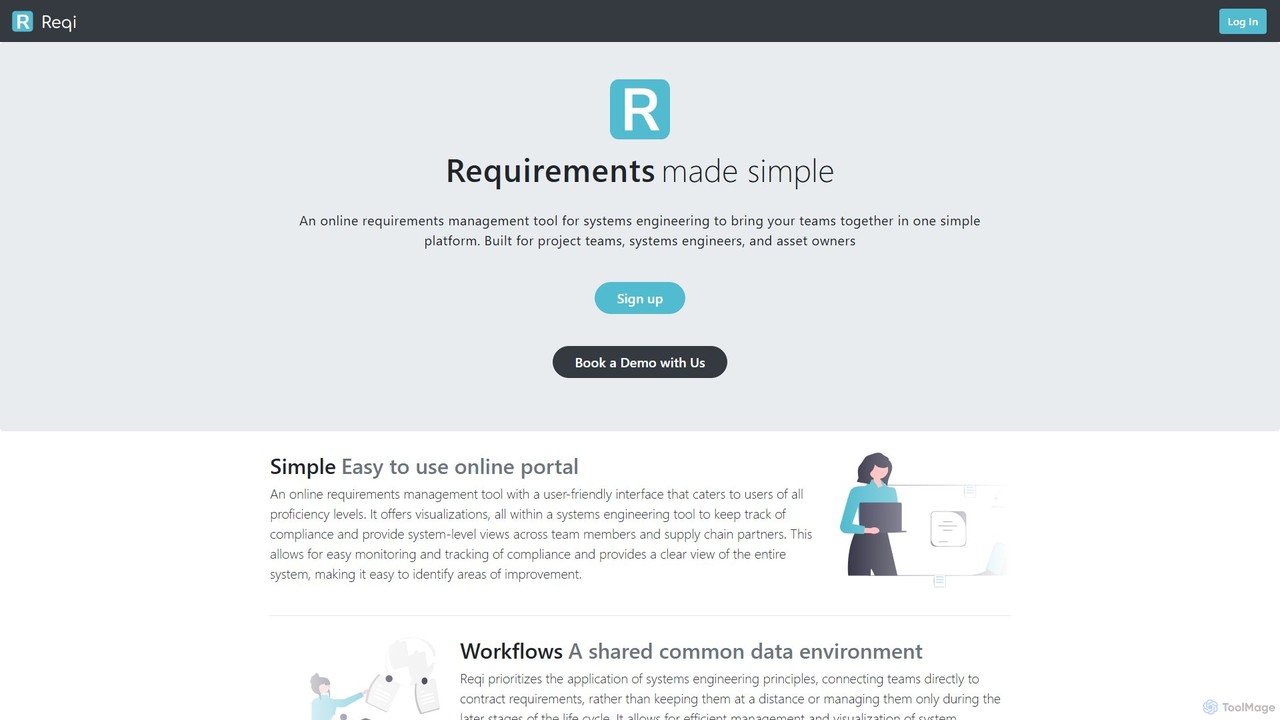
AI Systems Engineering tools are a specialized category of development software that applies artificial intelligence to manage the lifecycle of complex systems. These tools leverage machine learning and natural language processing to enhance tasks like requirements analysis, system design, simulation, and verification. Their primary value lies in reducing complexity, identifying potential errors early, and accelerating the development of robust systems in industries like aerospace, automotive, and healthcare. They focus on the high-level architecture and behavior of the entire system, rather than just individual code components.
Core Features
- AI-Powered Requirements Analysis: Automatically analyzes requirement documents to detect ambiguities, inconsistencies, and gaps.
- Automated Model Generation: Creates system models (e.g., SysML, UML) from natural language descriptions to ensure design consistency.
- Intelligent Simulation & Verification: Generates optimized test cases and uses predictive models to validate system behavior against requirements.
- System Architecture Optimization: Evaluates and suggests optimal system designs based on performance, cost, and reliability constraints.
Use Cases
These tools are critical for systems engineers, architects, and project managers in regulated and mission-critical industries. For example, an aerospace engineer can use them to verify flight control software, while an automotive team can simulate autonomous driving scenarios to ensure safety compliance.
How to Choose
When selecting a tool, consider its modeling language support (SysML, UML), integration with existing PLM and ALM software, the sophistication of its AI algorithms for analysis and verification, and its ability to handle the scale and complexity of your specific projects.