Development Best in category 1 results Technical Writing AI Tool

Popular AI tools in the Technical Writing field of Development include Docsie, etc., helping you quickly improve efficiency.

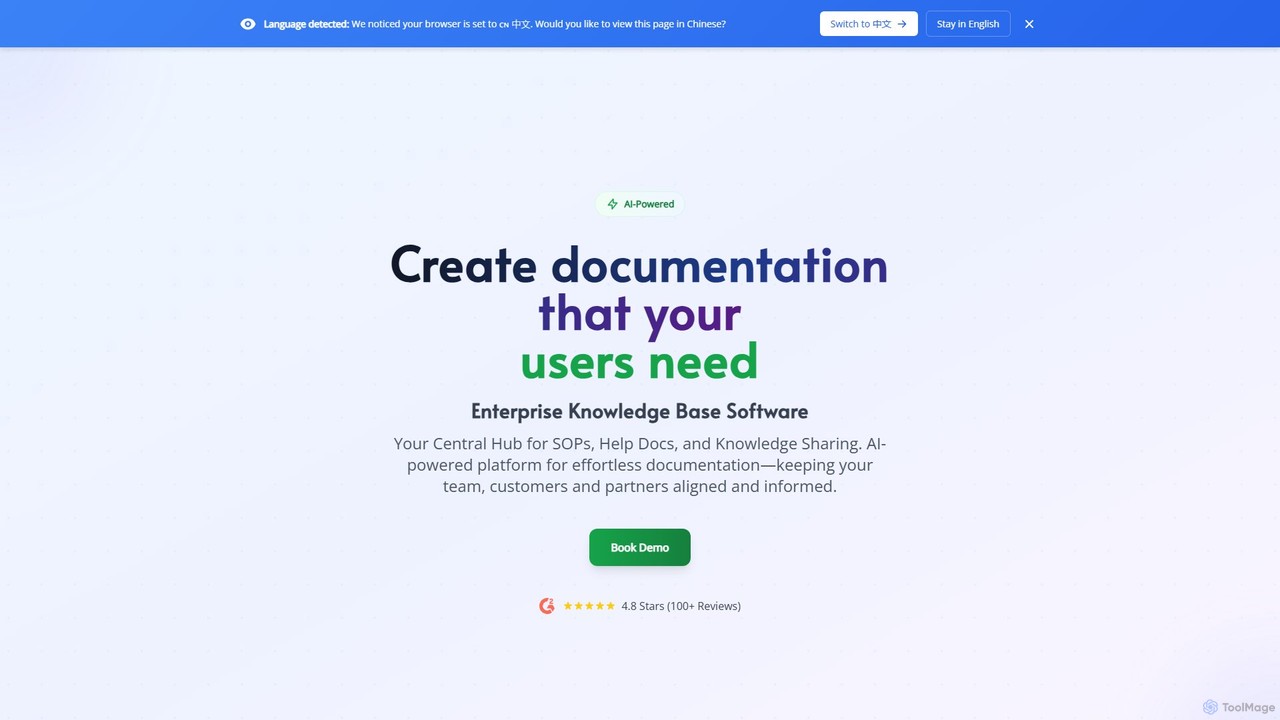
Docsie

Docsie

Docsie is an AI-powered documentation and knowledge base platform designed to help teams create, manage, and deliver technical …

46.6K

About Technical Writing

AI Technical Writing tools are a specialized class of software designed to automate and enhance the creation of technical documentation. These tools leverage Natural Language Processing (NLP) and machine learning to analyze source code, API specifications, and other technical inputs to generate clear, accurate, and consistent content. They significantly streamline the process of producing user manuals, API references, SDK guides, and knowledge bases. This automation reduces manual effort, minimizes human error, and ensures documentation stays synchronized with software updates.

Core Features

  • Automated Documentation Generation: Creates documentation directly from source code comments, API specifications (like OpenAPI), or application interfaces.
  • Content Consistency Enforcement: Analyzes entire document sets to ensure consistent terminology, style, and tone according to predefined rules.
  • Intelligent Content Reuse: Manages and suggests reusable content blocks (snippets) for common instructions, warnings, or definitions.
  • Code-to-Text Explanation: Translates complex code functions and logic into easy-to-understand natural language descriptions.
  • Multi-Format Publishing: Exports documentation into various formats such as HTML, PDF, Markdown, and platform-specific knowledge bases.

Use Cases

These tools are primarily used by software development teams, technical writers, and developer relations (DevRel) professionals. Common applications include generating interactive API documentation for developers, creating comprehensive user guides for end-users, and maintaining internal knowledge bases for support teams. They are essential in agile environments where software changes frequently and documentation needs to be updated in lockstep.

How to Choose

When selecting an AI Technical Writing tool, consider its integration capabilities with your existing development ecosystem (e.g., GitHub, GitLab, CI/CD pipelines). Evaluate its support for your specific programming languages and frameworks. Assess the level of customization available for templates and style guides. Finally, consider collaboration features that allow developers and writers to work together seamlessly on documentation.

Technical WritingUse Cases

1

Automating API Documentation Generation

A backend developer working on a new microservice needs to provide clear documentation for frontend developers. Instead of manually writing descriptions for hundreds of endpoints and parameters, they use an AI Technical Writing tool. The tool connects to their Git repository, parses the OpenAPI (Swagger) specification file, and automatically generates a complete, interactive API reference website. It creates endpoint descriptions, parameter tables, and even generates code snippets in multiple languages (Python, JavaScript, Java), saving the developer dozens of hours of tedious work.

2

Creating User Manuals from Application UI

A technical writer is tasked with creating a user guide for a complex desktop application. They use an AI tool that can analyze the application's user interface. By pointing the tool to different screens and workflows, it automatically captures screenshots, identifies UI elements like buttons and menus, and generates draft text for step-by-step instructions. The writer then refines this AI-generated draft, focusing on adding context and improving clarity, which reduces the initial content creation time by over 60%.

3

Maintaining a Consistent Knowledge Base

A large enterprise's support team manages a knowledge base with thousands of articles written by different authors over many years. This leads to inconsistent terminology and outdated information. They deploy an AI Technical Writing tool to scan the entire knowledge base. The tool identifies all instances of inconsistent terms (e.g., 'Log in', 'Sign in', 'Login'), flags articles that contradict each other, and suggests updates for outdated content based on recent product releases. This helps the team systematically improve content quality and provide a more reliable resource for customers.

4

Generating SDK Guides for Developers

A Developer Relations (DevRel) team is releasing a new Software Development Kit (SDK) for their platform. To encourage adoption, they need comprehensive and easy-to-follow documentation. They use an AI tool that directly integrates with their source code. The tool analyzes the classes, methods, and parameters within the SDK, extracts code comments (like Javadoc or TSDoc), and structures this information into a professional-looking guide. It also generates usage examples and explains complex functions in simpler terms, significantly accelerating the creation of high-quality documentation for third-party developers.

5

Simplifying Complex Code for Internal Training

A senior engineer needs to onboard new developers onto a project with a complex legacy codebase. To speed up their learning curve, the engineer uses an AI Technical Writing tool's 'code explanation' feature. They paste a complex function or algorithm into the tool, and it generates a plain-language summary explaining what the code does, its inputs and outputs, and its role within the larger system. This generated content becomes a core part of the internal training documentation, helping new hires understand the system architecture much faster than by reading the code alone.

6

Translating and Localizing Technical Documents

A global software company needs to release its product documentation in five different languages simultaneously with its software update. Manually translating technical content is slow and prone to inaccuracies. The company uses an AI Technical Writing platform with built-in localization features. The tool not only translates the text but also understands the context of technical terms, ensuring that 'array' is translated correctly for a programming context. It also maintains consistent terminology across all languages, helping the company deliver high-quality, localized documentation to its global user base on schedule.

Technical WritingFrequently Asked Questions