Shipper
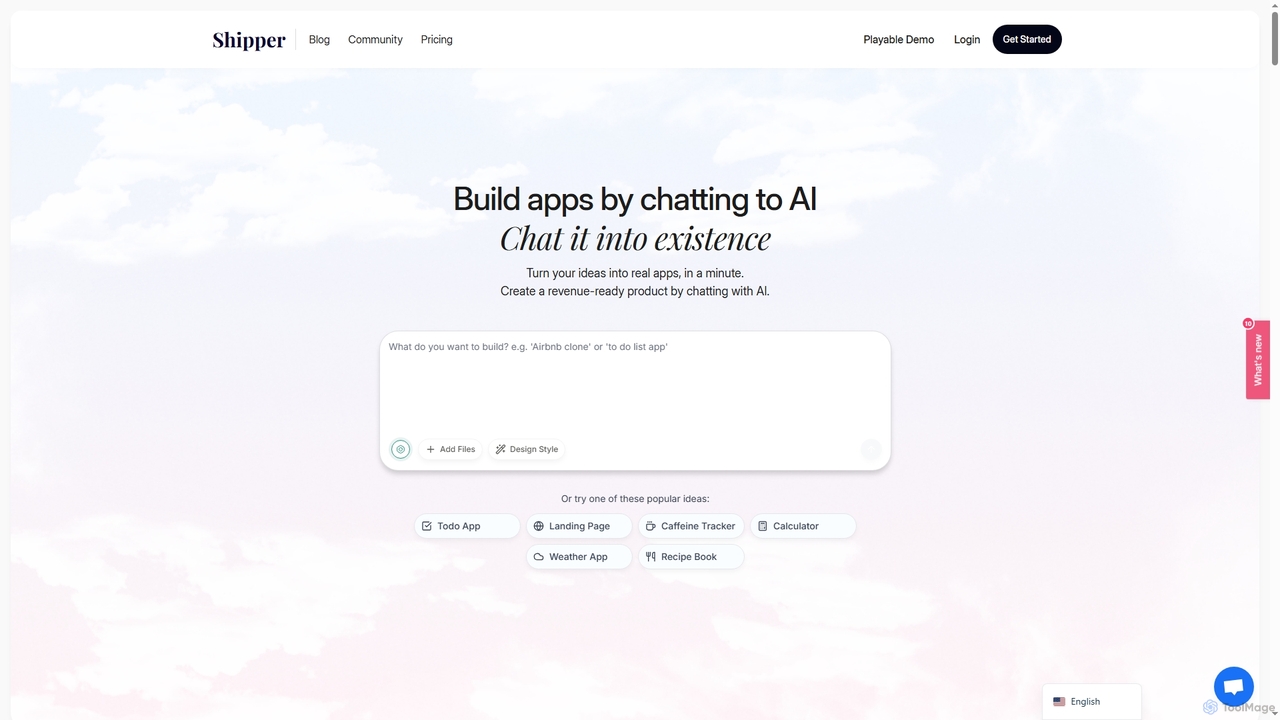
Shipper is an AI-powered app builder that transforms your ideas into functional software through a simple chat interface. …
Shipper is an AI-powered app builder that transforms your ideas into functional software through a simple chat interface. Designed for both non-technical creators and experienced developers, it allows you to build complete applications just by describing your concept in natural language.
About Website & App Building
Website & App Building AI tools are specialized platforms that leverage artificial intelligence to automate and streamline various stages of website and application development. These tools utilize machine learning, natural language processing, and generative AI to assist with tasks from code generation and UI/UX design to content creation and deployment. They empower both developers and non-technical users to build, launch, and maintain digital products more efficiently, reducing development time and costs within the broader field of Development.
Core Features
- AI-powered Code Generation: Automatically generates code snippets, functions, or even entire application modules from natural language descriptions or design inputs.
- Intelligent UI/UX Design: Suggests optimal layouts, color schemes, and component placements based on user data, brand guidelines, and design best practices.
- Automated Content & Asset Creation: Generates text content, images, icons, and other media assets directly applicable to website pages or app interfaces.
- Smart Testing & Debugging: Identifies potential bugs, security vulnerabilities, and performance bottlenecks, often suggesting automated fixes or improvements.
- Low-code/No-code Enhancement: Integrates AI capabilities into low-code/no-code platforms, making complex functionalities accessible without deep programming knowledge.
Use Cases
These tools are invaluable for startups needing rapid prototyping, marketing teams creating content-rich landing pages, and small businesses building custom internal applications. They help accelerate the initial build phase, automate repetitive tasks, and provide intelligent design suggestions, making development more accessible and efficient across various project scales and technical proficiencies.
How to Choose
When selecting a Website & App Building AI tool, consider its integration capabilities with your existing tech stack, the level of customization it offers for generated code or designs, and its scalability to meet future project demands. Evaluate the learning curve for your team, the accuracy and relevance of its AI outputs, and the pricing model relative to the features provided and the complexity of your projects.
Website & App BuildingUse Cases
Rapid MVP Development for Startups
A startup founder with limited technical background can use AI website and app builders to quickly create a Minimum Viable Product (MVP). By describing their app idea in natural language or sketching basic wireframes, the AI generates initial code, UI components, and database structures. This allows them to validate market demand and attract early investors without significant upfront development costs or a large engineering team, reducing time-to-market by up to 70%.
Rapid Prototyping for Startups
A startup founder needs to quickly validate a new product idea with a functional web application. Using an AI-powered app builder, they can describe their concept in natural language, and the tool generates a basic UI, backend logic, and even sample data. This allows for a clickable prototype to be ready in days, not weeks, facilitating early user feedback and investor presentations without extensive coding resources.
Rapidly Launching a Startup MVP Website
An entrepreneur with a new business idea needs to quickly validate their concept. Using an AI website builder, they input their business description and target audience, allowing the AI to generate a functional landing page with lead capture forms and basic product showcases in minutes. This significantly reduces time-to-market and development costs for initial market testing.
Rapid Prototype Generation
Product managers or entrepreneurs can input high-level descriptions or wireframes to instantly generate functional website or app prototypes. This significantly accelerates the initial concept validation phase, allowing for quicker feedback loops and iterative improvements before committing extensive development resources.
Creating Professional Business Websites
Small business owners or freelancers can leverage these tools to establish a professional online presence. They can input their business type, brand colors, and content, and the AI will suggest suitable templates, generate descriptive text, and optimize images for web performance. This eliminates the need for hiring web designers or developers, providing a high-quality, SEO-friendly website in a fraction of the time and cost, enhancing their digital footprint.
Automating E-commerce Website Creation
A small business owner wants to launch an online store but lacks web development expertise. An AI website builder can guide them through the process, generating product pages, payment gateways, and shipping configurations based on their business details and product catalog. The AI suggests design layouts, optimizes for mobile responsiveness, and even helps write product descriptions, enabling a professional e-commerce site to go live quickly and affordably.
Creating a Professional Portfolio for Freelancers
A freelance graphic designer or writer wants to showcase their work online without hiring a web developer. They use an AI website builder to upload their projects and content, and the AI automatically designs a responsive, visually appealing portfolio site with contact forms and social media integration, presenting a professional image to potential clients.
Automated E-commerce Store Creation
Online retailers can use AI tools to automatically generate product descriptions, create appealing product images from basic inputs, and design entire e-commerce store layouts. This streamlines the setup process, reducing the time and effort required to launch new online shops or expand product catalogs.
Developing Internal Tools for Enterprises
Large enterprises can utilize AI app building platforms to rapidly develop custom internal tools, such as project management dashboards, inventory trackers, or employee portals. Business analysts or department heads can define requirements, and the AI assists in building the application logic, user interfaces, and data integrations. This significantly speeds up the delivery of essential operational tools, reduces the burden on IT departments, and improves internal workflow efficiency.
Generating Custom Internal Tools for Enterprises
A large enterprise requires a specific internal dashboard for project management that integrates with various legacy systems. Instead of hiring a dedicated development team for months, IT departments can leverage AI low-code platforms. By defining data sources and desired functionalities, the AI assists in building custom applications, automating data fetching, visualization, and reporting, significantly reducing development time and cost for bespoke solutions.
Building E-commerce Stores for Small Businesses
A small business owner wants to sell products online but lacks coding skills. An AI e-commerce builder enables them to upload product images and descriptions, set up payment gateways, and manage inventory through an intuitive interface. The AI assists with product page layouts and SEO optimization, making it easy to establish an online presence and start selling.
Personalized UI/UX Design Suggestions
UI/UX designers leverage AI to receive intelligent recommendations for user interface layouts, color palettes, typography, and interactive elements based on target audience data, brand guidelines, and user behavior patterns. This enhances design consistency and user engagement while speeding up the design process.
Generating E-commerce Stores with AI Product Descriptions
An e-commerce entrepreneur can use AI website builders to set up a fully functional online store. Beyond basic store creation, these tools can integrate AI to automatically generate compelling product descriptions, suggest personalized recommendations for customers, and optimize product listings for search engines. This streamlines the content creation process, enhances customer engagement, and potentially increases sales conversion rates without manual content writing.
Accelerating Front-End Development for Agencies
A web development agency needs to deliver multiple client websites with unique designs under tight deadlines. AI code generation tools can convert design mockups (e.g., Figma files) or text descriptions into clean, semantic HTML, CSS, and JavaScript. This dramatically speeds up the front-end coding phase, allowing developers to focus on complex interactions and custom features, increasing project throughput and client satisfaction.
Developing Event Registration Mobile Apps
An event organizer needs a custom mobile app for conference attendees to view schedules, speakers, and register. An AI app builder allows them to drag-and-drop components, integrate ticketing systems, and send push notifications without writing code. The AI helps optimize the app's user flow and provides templates for common event features, speeding up deployment.
Internal Business Tool Development
Small businesses or non-technical departments can build custom internal tools, such as project management dashboards or data entry forms, by simply describing their requirements in natural language. AI translates these descriptions into functional applications, eliminating the need for dedicated IT development.
Prototyping Mobile App Designs
UI/UX designers can use AI app building tools to quickly prototype mobile application interfaces and user flows. By inputting design specifications or even hand-drawn sketches, the AI can generate interactive mockups and wireframes, allowing for rapid iteration and user testing. This accelerates the design phase, helps gather early feedback, and ensures a more user-centric final product before committing to full-scale development.
Creating Personalized Mobile Learning Apps
An educational content creator wants to offer a personalized learning experience through a mobile app. Using an AI app builder, they can input course content, quizzes, and desired learning paths. The AI helps structure the app, generates interactive elements, and even adapts content delivery based on user progress and performance, creating engaging and adaptive educational applications without needing a mobile development team.
Generating Marketing Campaign Landing Pages
A marketing team needs to create multiple landing pages for various ad campaigns quickly. With an AI website builder, they input campaign goals and keywords, and the AI generates optimized, conversion-focused landing pages with A/B testing capabilities. This allows marketers to rapidly deploy and iterate on campaigns without developer dependency.
Cross-Platform Code Conversion
Developers can utilize AI to automatically convert existing web application codebases into native mobile app code (iOS/Android) or adapt code between different frameworks. This drastically reduces the effort and time traditionally associated with maintaining multiple versions of an application across different platforms.
Automating Website Content Updates and SEO
Content managers or digital marketers can employ AI website builders that offer intelligent content management features. These tools can automatically generate blog post ideas, draft articles based on keywords, and optimize existing content for SEO by suggesting relevant tags, meta descriptions, and internal linking strategies. This ensures fresh, optimized content is consistently available, improving search engine rankings and organic traffic.
Enhancing Website Accessibility & SEO
A content manager aims to improve their website's accessibility and search engine optimization. AI tools for website building can automatically analyze existing content and structure, suggesting improvements for alt-text on images, semantic HTML tags, and mobile-friendly layouts. They can also identify and fix broken links or optimize page loading speeds, ensuring the website meets modern web standards and ranks better in search results.
Prototyping Internal Business Applications
A department manager needs a simple internal tool for project tracking or data collection. Using a low-code AI app builder, they can quickly prototype and deploy a custom application with forms, dashboards, and reporting features. The AI assists in connecting data sources and automating workflows, improving internal efficiency without IT overhead.
SEO-Optimized Landing Page Creation
Marketing specialists can use AI to generate highly optimized landing pages, including compelling headlines, body copy, and calls-to-action, tailored for specific keywords and target audiences. The AI can also suggest optimal page structures and content elements to improve search engine rankings and conversion rates.