

Paid
Arrim
Arrim is an AI video generator that helps brands and creators produce viral UGC-style product ads in seconds, supporting 50+ languages and direct store integrations for rapid scaling.
AdvertisingVisits 11.6KFavorites 30Likes 33
Popular Advertising AI tools in E Commerce include Arrim, Alace, and ShopMotion, helping you work more efficiently.
Arrim is an AI video generator that helps brands and creators produce viral UGC-style product ads in seconds, supporting 50+ languages and direct store integrations for rapid scaling.
Advertising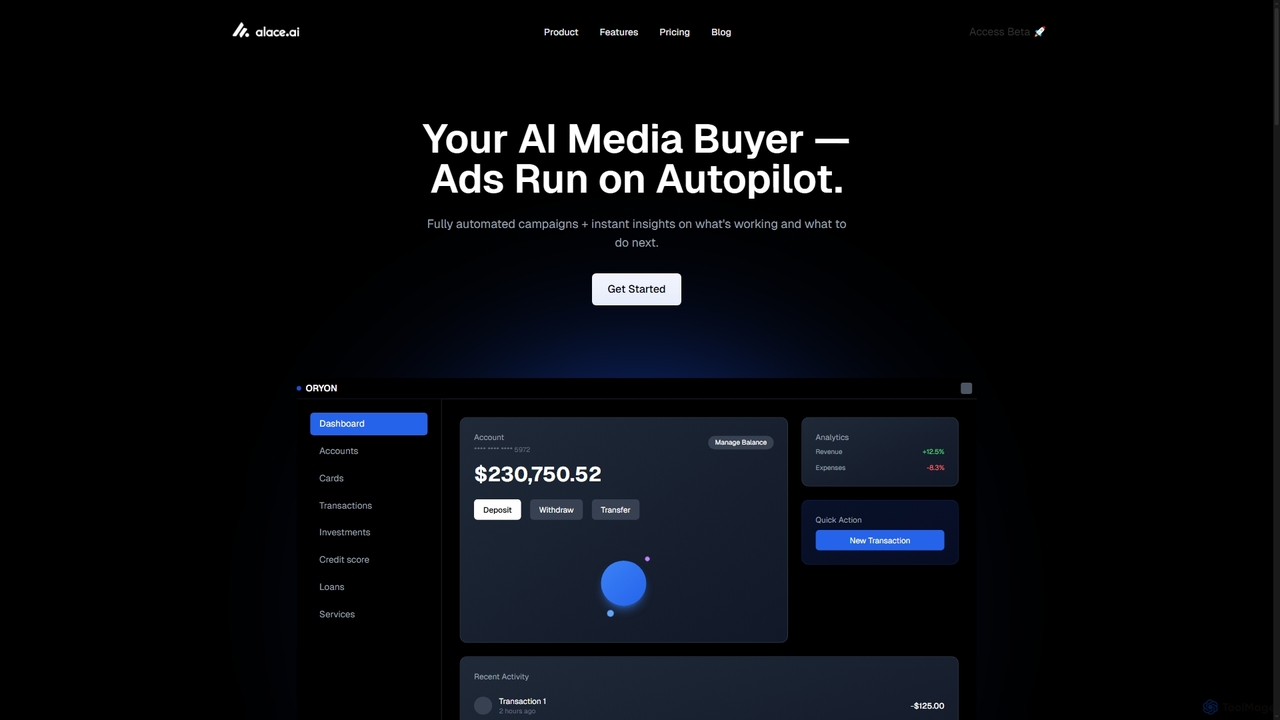
Alace is an AI-powered ad optimization platform that automates ad spend management, provides data-driven insights, and maximizes ROAS for businesses of all sizes, particularly for Meta Ads.
Performance Marketing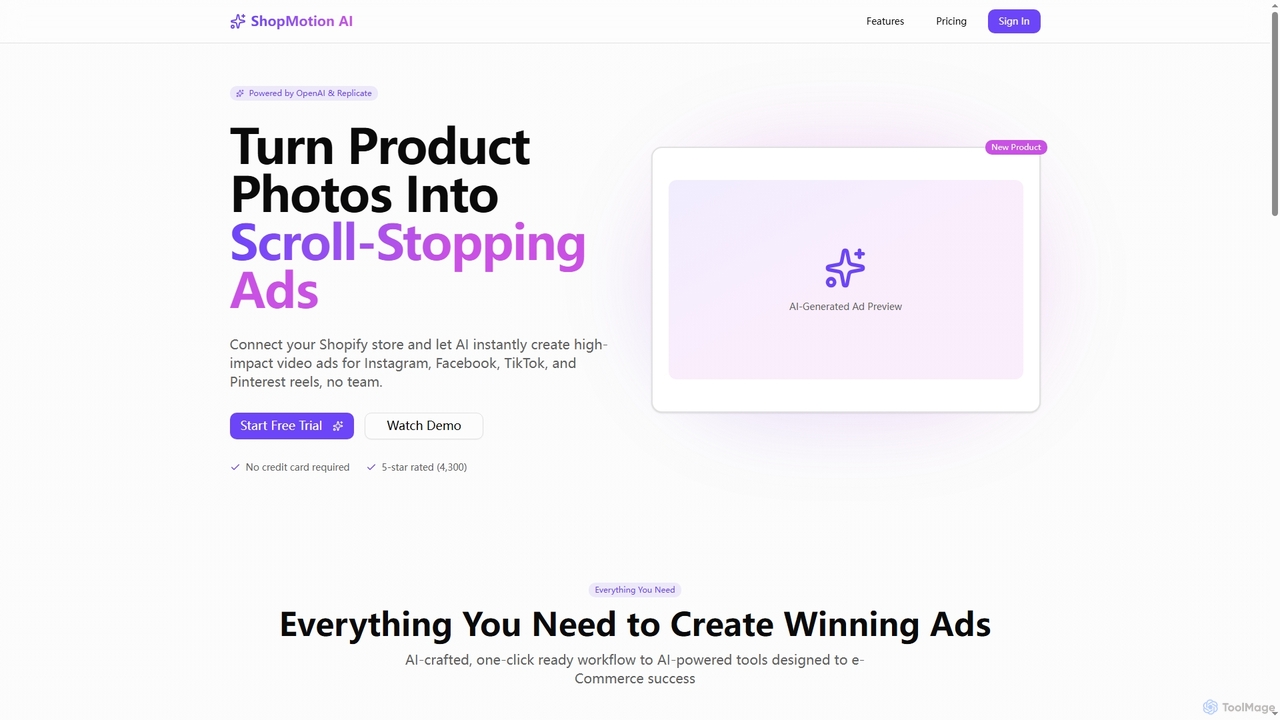
ShopMotion is an AI-powered platform designed for e-commerce businesses to transform static product photos into engaging video advertisements for social media platforms like Instagram, Facebook, TikTok, and Pinterest. It integrates directly with Shopify stores, automating the ad creation process from background removal to copywriting and publishing.
AdvertisingAI Advertising tools are a specialized category of software that leverages machine learning and data analysis to automate and optimize digital advertising campaigns. These tools analyze vast amounts of data to predict consumer behavior, identify high-value audiences, and automatically adjust campaign parameters in real-time. They are designed to help businesses, particularly in e-commerce, maximize their return on ad spend (ROAS) by creating more effective, targeted, and efficient advertisements. This technology enables personalization at a scale that is difficult to achieve through manual management.
These tools are primarily used by e-commerce marketers, digital advertising agencies, and performance marketing specialists. They are essential for managing complex campaigns on platforms like Google Ads, Meta (Facebook & Instagram), TikTok, and Amazon Ads, especially when dealing with large product catalogs or multiple target markets.
When selecting an AI Advertising tool, consider its integration capabilities with your required ad platforms and e-commerce software. Evaluate the sophistication of its targeting and optimization algorithms. Also, assess the level of automation it provides and whether its pricing model (e.g., percentage of ad spend, subscription fee) aligns with your budget and scale.
An e-commerce marketing manager for a fashion brand needs to create dozens of ad variations for a seasonal sale. Using an AI advertising tool, they input product details and promotion info (e.g., '30% off'). The tool instantly generates multiple compelling headlines and descriptions for Facebook and Google Ads. It then automatically A/B tests them to find the best-performing copy, reducing creative production time by over 70% and increasing click-through rates.
A digital marketing specialist for an electronics store wants to re-engage users who abandoned their shopping carts. The AI tool integrates with the store's product catalog and user behavior data. It automatically creates personalized retargeting ads showing the exact products a user viewed. Furthermore, it adjusts bids in real-time based on the user's likelihood to convert, allocating more budget to high-intent users and maximizing return on ad spend (ROAS).
A small business owner runs ads on Google Search, Instagram, and TikTok with a limited budget. An AI advertising platform analyzes performance data from all channels and identifies which platform delivers the lowest cost per acquisition (CPA). The tool then automatically reallocates the budget, shifting funds from underperforming Instagram ads to high-converting TikTok ads, ensuring the marketing budget is spent as efficiently as possible without daily manual checks.
A startup is launching a new smart home device and needs to find its ideal customer base. By analyzing existing customer data and market trends, an AI tool builds predictive models to identify lookalike audiences. It creates highly targeted segments on platforms like Facebook, reaching potential customers who share characteristics with the most valuable existing clients. This data-driven approach improves targeting accuracy and reduces customer acquisition costs for the new product launch.
An advertising agency needs to test various images, videos, and headlines for multiple clients. The AI tool automates the A/B testing process. The team uploads several creative assets, and the tool automatically combines them into numerous ad variations. It then runs these variations with a small budget, quickly identifies the winning combinations based on engagement and conversion rates, and scales the budget for the top performers, ensuring optimal creative performance across all accounts.
A brand manager wants to understand the advertising strategies of key competitors. Some advanced AI advertising tools offer competitive intelligence features. They track competitors' ad spend, top-performing creatives, and messaging across different platforms. This provides valuable insights into market positioning and helps the manager identify gaps or opportunities to create more effective and differentiated campaigns for their own brand, particularly in a crowded e-commerce market.
AI Advertising tools are software applications that use artificial intelligence, particularly machine learning, to automate and optimize digital advertising campaigns. They handle tasks like audience targeting, ad creation, budget allocation, and performance analysis. Their primary goal is to improve advertising efficiency and maximize return on investment (ROI) for businesses, especially in the e-commerce sector.
To choose the right tool, consider these factors:
AI Advertising tools focus specifically on paid media campaigns—optimizing ad spend, targeting, and creative performance on platforms like Google and Facebook. Marketing Automation platforms have a broader scope, often managing email marketing, lead nurturing, social media scheduling, and CRM integration. While some overlap exists, AI Advertising tools provide deeper, more specialized functionality for paid ad optimization.
The main functions include:
AI Advertising tools are ideal for e-commerce businesses, digital marketing agencies, performance marketers, and any company that invests significantly in online advertising. They are particularly valuable for teams managing multiple campaigns across various platforms, as the automation saves considerable time and helps scale advertising efforts effectively.