ToolMage
Sign in

Best 1 Customer Experience AI tools for E Commerce

Popular Customer Experience AI tools in E Commerce include Outfindo, helping you work more efficiently.

Outfindo
Freemium

Outfindo

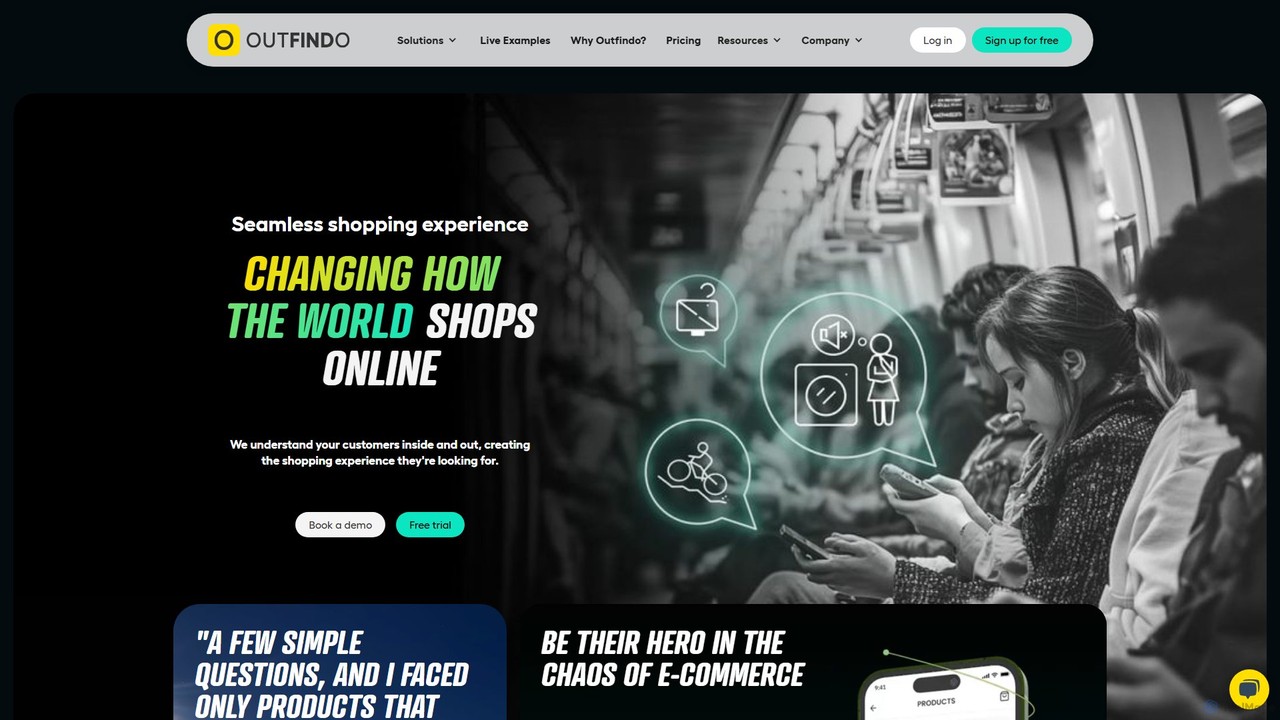
Outfindo is an AI-powered guided selling platform for e-commerce. It helps online stores increase conversions by providing customers with an interactive, research-driven product selection guide. It automates product data management and offers deep insights into customer behavior, creating a seamless shopping journey from inquiry to purchase.

Customer Experience
Visits 7.8KFavorites 104Likes 111

About Customer Experience

Customer Experience (CX) AI tools are a specialized category within e-commerce that leverage artificial intelligence to enhance and optimize every touchpoint of a customer's journey. These tools utilize machine learning, natural language processing, and data analytics to understand customer behavior, personalize interactions, and provide efficient support. Their primary value lies in creating seamless, engaging, and highly personalized shopping experiences, ultimately boosting customer satisfaction and loyalty for online businesses.

Core Features

  • AI Chatbots & Virtual Assistants: Provide instant, 24/7 support, answer FAQs, guide product discovery, and assist with order management.
  • Personalized Recommendation Engines: Analyze browsing history, purchase patterns, and real-time behavior to suggest relevant products and content.
  • Sentiment Analysis & Feedback Processing: Automatically analyze customer reviews, social media comments, and support interactions to gauge sentiment and identify pain points.
  • Predictive Customer Service: Proactively identify potential issues (e.g., shipping delays, product stock) and engage customers before problems escalate.
  • Automated Customer Journey Mapping: Track and optimize customer paths across various channels, identifying friction points and opportunities for improvement.

Applicable Scenarios

E-commerce businesses use CX AI tools to transform their customer interactions. This includes automating routine customer service inquiries, offering highly personalized product suggestions during browsing, and proactively addressing potential issues like delayed shipments. They are crucial for online retailers aiming to scale support, deepen customer engagement, and differentiate their brand through superior service.

How to Choose

When selecting CX AI tools for e-commerce, prioritize seamless integration with existing e-commerce platforms (e.g., Shopify, Magento) and CRM systems. Evaluate the tool's natural language processing capabilities for understanding diverse customer queries and its ability to scale with business growth. Consider data privacy compliance, customization options for branding, and the level of analytical insights provided to continuously improve customer interactions.

Featured tool rankings

Customer Experience use cases

1

Automating E-commerce Customer Support

An online retailer implements an AI chatbot to handle common customer inquiries such as order status, returns, and product information. This frees up human agents to focus on complex issues, providing instant 24/7 support and significantly reducing response times, leading to higher customer satisfaction and operational efficiency.

2

Delivering Personalized Product Recommendations

An e-commerce platform uses an AI recommendation engine to analyze a shopper's browsing history, past purchases, and real-time behavior. The AI then suggests highly relevant products, bundles, or complementary items, enhancing the shopping experience and driving increased average order value and conversion rates.

3

Proactive Cart Abandonment Recovery

An e-commerce store deploys AI to monitor shopping cart activity and identify users likely to abandon their purchase. The AI can then trigger personalized, timely interventions, such as a targeted email with a special offer or a chatbot message offering assistance, effectively recovering potential lost sales.

4

Analyzing Customer Feedback for Product Improvement

A brand utilizes AI-powered sentiment analysis to process thousands of customer reviews, social media comments, and support tickets. The AI identifies recurring themes, common complaints, and positive feedback, providing actionable insights for product development, marketing strategies, and service improvements.

5

Guiding Shoppers with Virtual Assistants

A fashion retailer integrates a virtual shopping assistant that uses AI to understand customer preferences and style. Shoppers can describe what they're looking for, and the AI guides them through product discovery, answers style-related questions, and helps them find the perfect outfit, mimicking an in-store personal shopper experience.

6

Predicting and Preventing Customer Churn

An e-commerce subscription service employs AI to analyze customer usage patterns, engagement levels, and support interactions. The AI identifies customers at risk of churning and flags them for proactive outreach, allowing the company to offer personalized incentives or support to retain valuable subscribers before they leave.

Customer Experience FAQ

What are AI Customer Experience tools in e-commerce?

AI Customer Experience (CX) tools in e-commerce are software solutions that use artificial intelligence to automate, personalize, and optimize customer interactions across the online shopping journey. They leverage technologies like NLP, machine learning, and data analytics to provide instant support, tailored recommendations, and proactive engagement, aiming to improve satisfaction and loyalty.

How do AI tools personalize the e-commerce customer journey?

AI tools personalize the e-commerce customer journey by analyzing vast amounts of data, including browsing history, purchase behavior, demographics, and real-time interactions. This allows them to deliver highly relevant product recommendations, customized marketing messages, personalized website content, and tailored support, making each customer's experience unique and engaging.

What's the difference between AI CX tools and traditional CRM systems?

Traditional CRM systems primarily manage customer data and interactions, focusing on sales and service processes. AI CX tools, while often integrating with CRM, go further by actively using AI to understand and predict customer needs, automate intelligent responses, and personalize experiences dynamically. CRM is a record-keeping and process management system; AI CX is about intelligent, proactive engagement.

What should I consider when choosing an AI CX platform for my online store?

When selecting an AI CX platform, consider its integration capabilities with your existing e-commerce platform and other tools. Evaluate its core AI functionalities, such as natural language understanding for chatbots and recommendation accuracy. Look at scalability, data security, customization options to match your brand, and the analytics it provides to measure impact and refine strategies.

Can AI CX tools help reduce cart abandonment in e-commerce?

Yes, AI CX tools are highly effective in reducing cart abandonment. They can identify patterns indicating abandonment risk and trigger personalized interventions, such as sending targeted follow-up emails with incentives, offering real-time chatbot assistance to resolve queries, or providing dynamic discounts. This proactive engagement helps re-engage shoppers and convert potential lost sales.