ToolMage
Sign in

Best 3 Customer Support AI tools for E Commerce

Popular Customer Support AI tools in E Commerce include Juphy, Relish AI, and Roborder, helping you work more efficiently.

Relish AI
Freemium

Relish AI

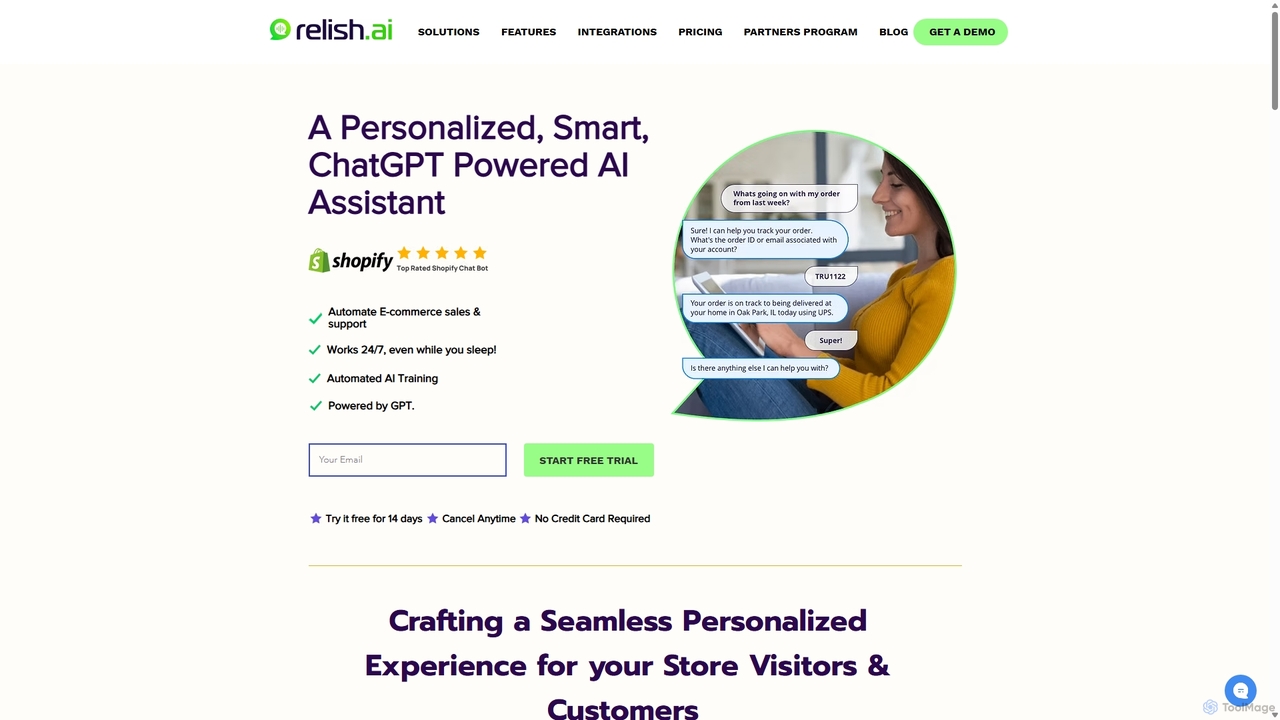
Relish AI is a GPT-powered chatbot and smart shopping assistant for Shopify stores. It automates sales and customer support 24/7, engaging customers with personalized recommendations, conversational search, and instant FAQ answers. Key features include abandoned cart recovery, lead generation, and seamless integration with helpdesks like Gorgias and Zendesk to boost conversions and reduce support costs.

Customer Support
Visits 7.5KFavorites 131Likes 119
Roborder
Freemium

Roborder

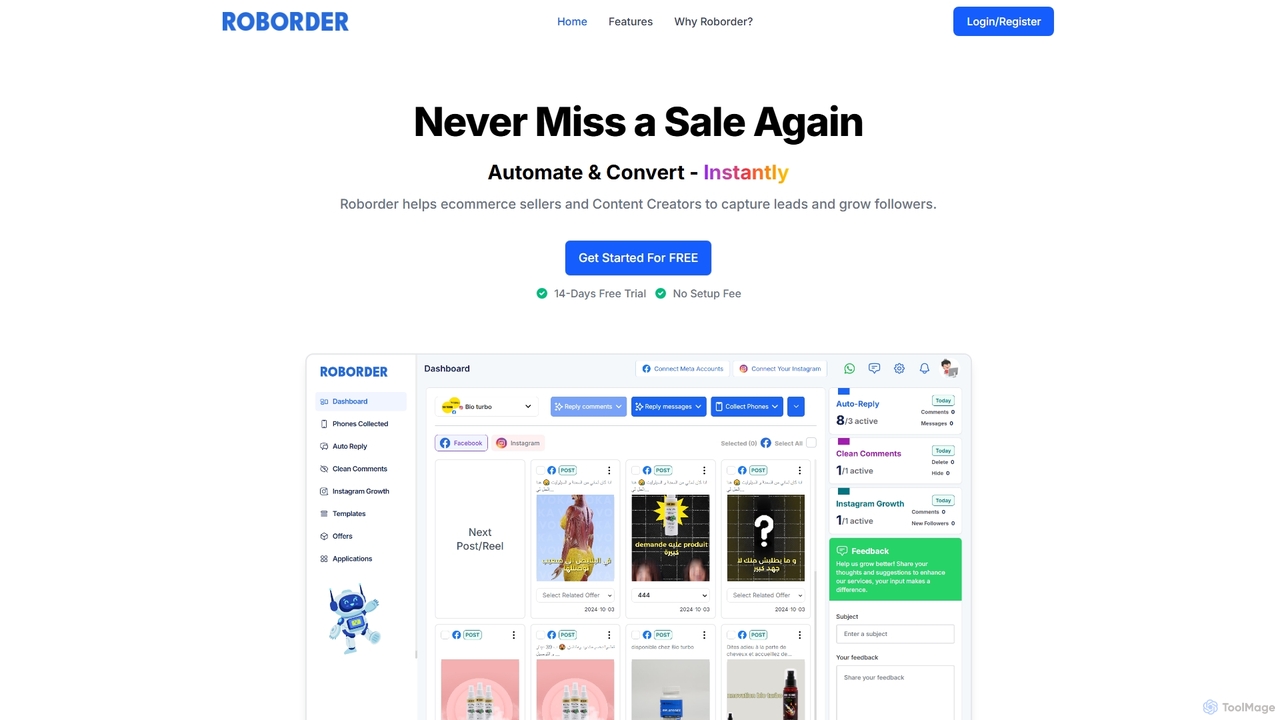
Roborder is an AI-powered automation tool for e-commerce sellers and content creators to capture leads and boost sales on social media. It automates replies to comments and DMs, moderates content, and converts engagement into followers and customers 24/7.

Customer Support
Visits 6.6KFavorites 144Likes 125
Juphy
Paid

Juphy

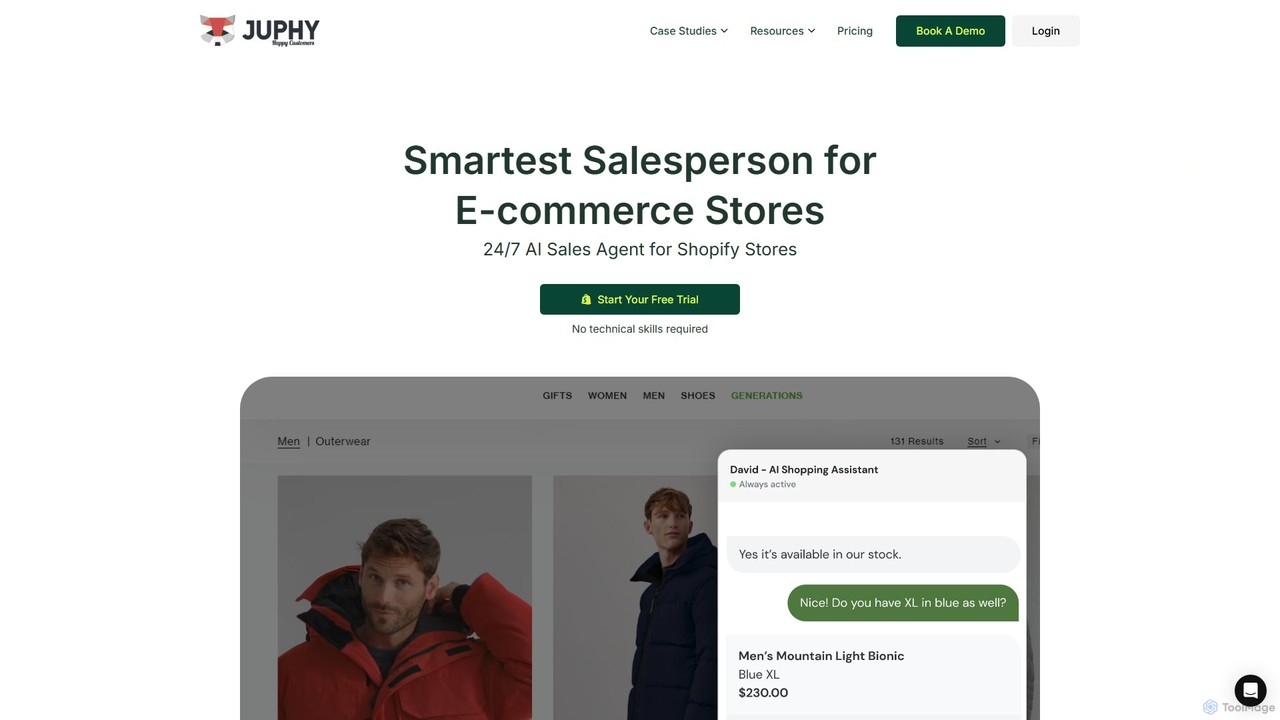
Juphy is a 24/7 AI Sales Assistant built specifically for Shopify stores. It automates customer support, provides personalized product recommendations, tracks orders, and integrates with social media channels to boost sales and enhance customer satisfaction, all from within the Shopify admin dashboard.

Customer Support
Visits 25.2KFavorites 125Likes 125

About Customer Support

Customer Support AI tools are designed to automate and enhance customer interactions across various channels. These tools leverage natural language processing (NLP) and machine learning to understand customer queries, provide instant responses, and personalize service. They significantly improve response times, reduce operational costs, and elevate the overall customer experience, especially within e-commerce environments.

Core Features

  • AI Chatbots & Virtual Assistants: Provide instant, 24/7 automated responses to common customer inquiries.
  • Intelligent Ticket Routing: Automatically categorize and assign support tickets to the most appropriate agent or department.
  • Sentiment Analysis: Analyze customer emotions in real-time to prioritize urgent cases and tailor responses.
  • Knowledge Base Integration: Seamlessly pull information from existing FAQs and documentation to answer questions.
  • Personalized Recommendations: Offer product suggestions or solutions based on customer history and preferences.

Use Cases

E-commerce businesses utilize these tools to handle peak season inquiries, provide instant product information, and manage returns processes efficiently. They are also crucial for offering personalized shopping assistance and proactive support, ensuring a seamless customer journey from browsing to post-purchase.

How to Choose

When selecting Customer Support AI tools, consider the breadth of integration with your existing CRM and e-commerce platforms. Evaluate their NLP capabilities for understanding complex queries and multilingual support. Assess the ease of customization for your specific business rules and the scalability to handle fluctuating customer volumes. Finally, review the analytics and reporting features for continuous improvement.

Customer Support use cases

1

Automating FAQ Responses 24/7

E-commerce customers often have repetitive questions about shipping, returns, or product details. An AI chatbot can instantly answer these common queries around the clock, freeing up human agents for more complex issues. This ensures customers receive immediate assistance, improving satisfaction and reducing agent workload, especially during off-hours or peak sales periods.

2

Intelligent Ticket Prioritization and Routing

For businesses receiving high volumes of support requests, AI tools can analyze incoming tickets, identify urgency and sentiment, and automatically route them to the most qualified agent or department. This ensures critical issues are addressed promptly, reducing resolution times and preventing customer frustration, leading to a more efficient support operation.

3

Personalized Product Recommendations in Chat

During a customer's browsing session or while they are asking for product information, an AI assistant can leverage their browsing history, past purchases, and stated preferences to offer personalized product recommendations. This enhances the shopping experience, increases conversion rates, and helps customers discover relevant items they might not have found otherwise.

4

Proactive Customer Outreach for Order Updates

AI-powered systems can proactively send automated notifications to customers regarding order status, shipping delays, or delivery confirmations via their preferred channel (e.g., SMS, email, chat). This reduces inbound "where is my order" inquiries, keeps customers informed, and demonstrates a commitment to transparency, boosting trust and satisfaction.

5

Analyzing Customer Feedback and Sentiment

AI tools can process vast amounts of customer feedback from surveys, chat transcripts, and social media to identify common pain points, emerging trends, and overall sentiment. This provides actionable insights for product development, service improvements, and marketing strategies, allowing businesses to make data-driven decisions to enhance the customer experience.

6

Multilingual Support for Global E-commerce

For e-commerce businesses operating internationally, AI customer support tools can provide instant, accurate responses in multiple languages. This breaks down communication barriers, ensures a consistent support experience for a diverse customer base, and allows businesses to scale their global operations without significantly increasing human agent headcount.

Customer Support FAQ

What are AI Customer Support tools?

AI Customer Support tools are software solutions that use artificial intelligence, primarily natural language processing (NLP) and machine learning, to automate and enhance customer service interactions. They aim to provide instant, personalized, and efficient support across various channels like chat, email, and voice, improving customer satisfaction and operational efficiency.

How do AI Customer Support tools differ from traditional chatbots?

Traditional chatbots are typically rule-based, following pre-programmed scripts and keywords. AI Customer Support tools, however, use advanced NLP to understand context, intent, and sentiment in natural language, allowing for more flexible, human-like conversations and problem-solving. They can learn from interactions and adapt over time, offering a more sophisticated and personalized experience.

What are the key benefits of implementing AI in customer support for e-commerce?

Implementing AI in e-commerce customer support offers several benefits: 24/7 availability, instant response times, reduced operational costs, improved customer satisfaction through personalized interactions, efficient handling of high inquiry volumes, and valuable insights from customer data analysis. It allows human agents to focus on complex, high-value tasks.

What should I consider when choosing an AI Customer Support solution?

When choosing an AI Customer Support solution, consider its integration capabilities with your existing CRM and e-commerce platforms, the accuracy and flexibility of its NLP engine, multilingual support options, ease of customization for your specific business needs, scalability, and the quality of its analytics and reporting features. Also, evaluate the vendor's support and training.

Can AI Customer Support tools fully replace human agents?

While AI Customer Support tools can automate a significant portion of routine inquiries and tasks, they are generally designed to augment, rather than fully replace, human agents. AI excels at efficiency and consistency for common issues, but human agents remain crucial for handling complex, sensitive, or emotionally charged situations, building rapport, and providing nuanced problem-solving.