
ToolMage
Sign in

Best 1 Global Sales AI tools for E Commerce

Popular Global Sales AI tools in E Commerce include Dodo Payments, helping you work more efficiently.

Dodo Payments
Paid

Dodo Payments

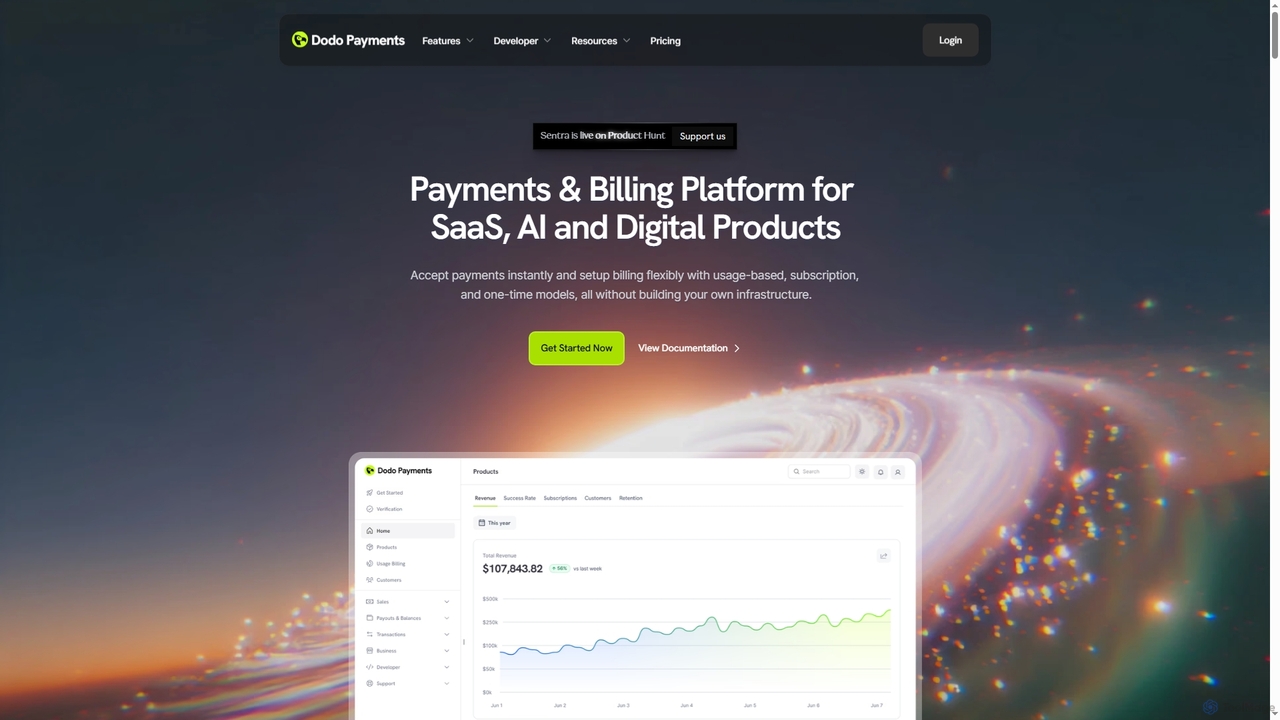
Dodo Payments is an all-in-one payment and billing platform designed for SaaS, AI, and digital products. It enables businesses to accept payments globally, set up flexible billing models (usage-based, subscription, one-time), and manage distribution without extensive infrastructure development. It simplifies global monetization, tax compliance, and offers robust developer tools for seamless integration.

Saas Management
Visits 598.2KFavorites 110Likes 129

About Global Sales

Global Sales AI tools are a category of solutions leveraging artificial intelligence to optimize international trade and cross-border e-commerce processes. These tools utilize advanced algorithms for market analysis, language processing, and predictive modeling. They enable businesses to expand their reach, streamline global operations, and enhance customer experiences across diverse markets. By automating complex tasks, they help companies navigate the intricacies of international commerce more efficiently.

Core Features

  • Multilingual Content Generation: Automatically translates and localizes product descriptions, marketing materials, and customer communications.
  • Dynamic International Pricing: Adjusts product prices in real-time based on exchange rates, local market demand, and competitor analysis.
  • Cross-border Logistics Optimization: Identifies optimal shipping routes, carriers, and customs procedures to reduce costs and delivery times.
  • Trade Compliance Automation: Assists in generating necessary customs declarations, tariffs, and regulatory documents for various countries.
  • Global Market Intelligence: Provides insights into international market trends, consumer behavior, and potential new sales territories.

Applicable Scenarios

Global Sales AI tools are essential for e-commerce businesses looking to expand internationally, offering solutions for managing diverse product catalogs across multiple regions. They are also vital for manufacturers and distributors engaged in exporting, helping them navigate complex customs and logistics challenges. Furthermore, these tools benefit marketing teams aiming to localize campaigns and sales professionals seeking to identify and penetrate new global markets efficiently.

How to Choose

When selecting Global Sales AI tools, prioritize solutions with robust multilingual support and accurate currency conversion capabilities. Evaluate their integration potential with your existing e-commerce platforms, CRM, and ERP systems to ensure seamless data flow. Consider the breadth of their compliance features for different regions and their ability to scale with your international growth. Finally, assess the clarity of their market intelligence and reporting functionalities to inform strategic decisions.

Global Sales use cases

1

Automate Multilingual Product Listings

An e-commerce seller with a global customer base uses AI tools to automatically translate and localize product descriptions, specifications, and marketing copy into multiple languages. This ensures product information is accurate and culturally relevant for each target market, saving hundreds of hours of manual translation work and significantly improving conversion rates in international storefronts.

2

Optimize Cross-border Shipping Logistics

A logistics manager for an international retailer employs Global Sales AI tools to analyze various shipping carriers, routes, and customs regulations across different countries. The AI identifies the most cost-effective and time-efficient options, automatically generates necessary customs documentation, and tracks shipments in real-time, reducing shipping delays by 15% and cutting logistics costs by 10%.

3

Dynamic Pricing for International Markets

A global e-commerce platform uses AI to implement dynamic pricing strategies across its international stores. The AI continuously monitors exchange rates, local purchasing power, competitor pricing, and regional demand fluctuations. It automatically adjusts product prices to maximize revenue and competitiveness in each specific market, leading to a 5-8% increase in international sales margins.

4

Automate Global Customer Support

A multinational company deploys AI-powered chatbots and virtual assistants to provide 24/7 multilingual customer support across all its global sales channels. These tools can understand and respond to customer inquiries in various languages, resolve common issues, and escalate complex cases to human agents, significantly improving customer satisfaction and reducing support team workload by 30%.

5

Identify New International Market Opportunities

A business development team utilizes Global Sales AI tools to analyze vast amounts of global market data, including economic indicators, social media trends, and competitor activities. The AI identifies underserved regions, emerging consumer demands, and optimal entry strategies for new markets, enabling the company to launch new products or services in previously untapped territories with a 20% higher success rate.

6

Automate Trade Compliance and Documentation

An import/export specialist uses Global Sales AI tools to automate the generation and verification of trade compliance documents such as customs declarations, certificates of origin, and shipping manifests. The AI ensures all documentation adheres to the specific regulations of destination countries, minimizing errors, reducing processing time by 40%, and avoiding costly delays or penalties associated with non-compliance.

Global Sales FAQ

What are Global Sales AI tools?

Global Sales AI tools are software solutions that use artificial intelligence to streamline and enhance international sales and e-commerce operations. They leverage AI for tasks like market analysis, language translation, dynamic pricing, and logistics optimization. These tools help businesses overcome the complexities of cross-border trade, expand into new markets, and improve efficiency in global commerce.

How do Global Sales AI tools help with cross-border e-commerce?

Global Sales AI tools significantly enhance cross-border e-commerce by automating key processes. They provide features like real-time currency conversion, localized content generation for product listings, and intelligent recommendations for shipping and customs. This automation reduces manual effort, minimizes errors, and helps e-commerce businesses comply with diverse international regulations, ultimately boosting sales and customer satisfaction in foreign markets.

What are the key features to look for in Global Sales AI tools?

When choosing Global Sales AI tools, look for robust multilingual support for content and customer service, dynamic pricing capabilities that adapt to local markets, and comprehensive cross-border logistics optimization. Essential features also include trade compliance automation for various regulations, global market intelligence for strategic insights, and seamless integration with existing e-commerce and CRM platforms. Scalability and strong data security are also crucial.

How do Global Sales AI tools differ from traditional international trade software?

Global Sales AI tools differ from traditional international trade software primarily through their use of advanced artificial intelligence. While traditional software often relies on rule-based systems and manual data input for compliance and logistics, AI tools offer predictive analytics, machine learning for dynamic adjustments (e.g., pricing), and natural language processing for automated localization. This results in greater adaptability, efficiency, and strategic insights compared to static, less intelligent systems.

Who can benefit most from using Global Sales AI tools?

Businesses engaged in cross-border e-commerce, international manufacturers, and export-oriented companies can benefit most from Global Sales AI tools. This includes small to medium-sized enterprises (SMEs) looking to expand globally without extensive resources, as well as large corporations aiming to optimize complex international supply chains and marketing efforts. Sales and marketing teams, logistics managers, and compliance officers also find these tools invaluable for their specific roles.