DesignNBuy
DesignNBuy is an AI-powered, all-in-one web-to-print software solution that automates the entire print lifecycle. It enables printing and …
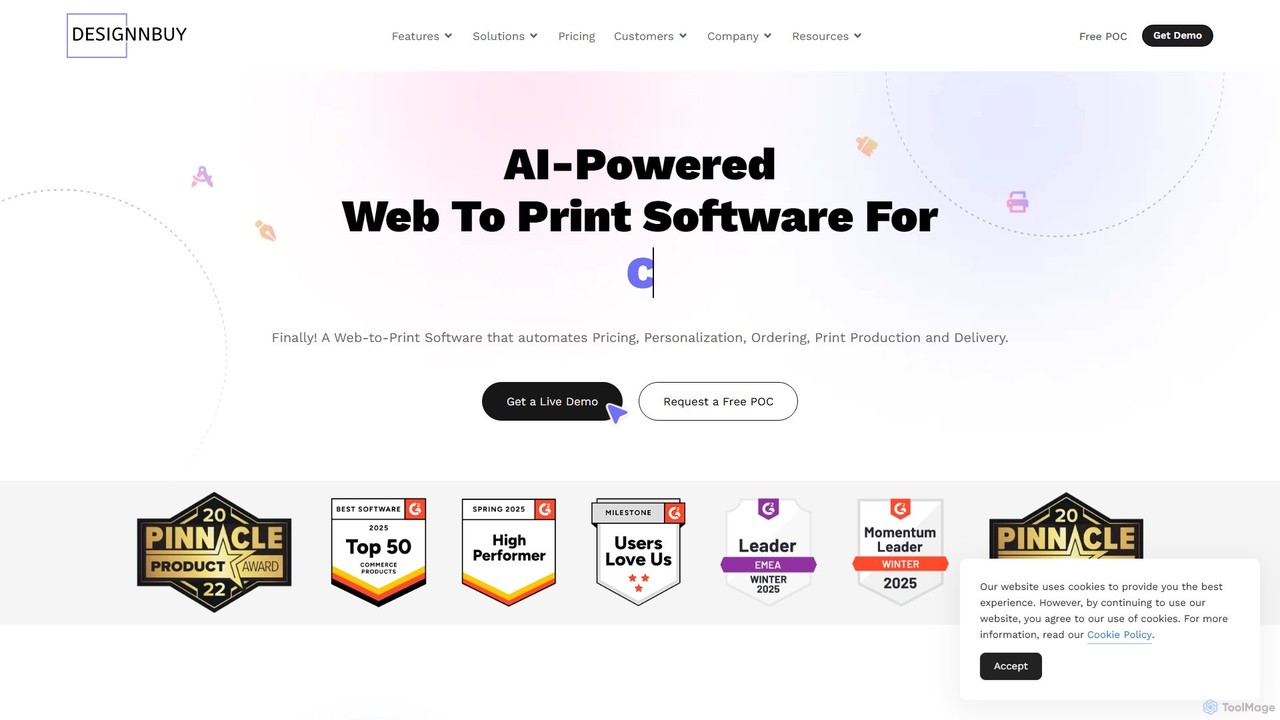
DesignNBuy is an AI-powered, all-in-one web-to-print software solution that automates the entire print lifecycle. It enables printing and packaging businesses to offer online product personalization, streamline ordering, manage production workflows, and integrate seamlessly with major e-commerce platforms to boost sales and efficiency.
About Printing Automation
Printing Automation is a category of AI-powered tools designed to streamline and optimize the entire printing process, particularly within the e-commerce sector. These advanced solutions leverage artificial intelligence, machine learning, and robotics to automate tasks ranging from initial order intake and dynamic design customization to efficient production, rigorous quality control, and seamless dispatch. Their primary value lies in significantly reducing manual intervention, accelerating production cycles, and ensuring consistent, high-quality output for the high-volume, personalized print orders common in online retail and print-on-demand businesses.
Core Features
- Automated Order Processing: Integrates seamlessly with various e-commerce platforms to automatically receive, validate, and queue print orders, minimizing human error and speeding up initial steps.
- Dynamic Design Customization: AI-driven engines empower customers to personalize products (e.g., custom apparel, personalized gifts, marketing materials) and automatically generate print-ready files, reducing design bottlenecks.
- Intelligent Workflow Management: Optimizes print queues, assigns tasks to specific machines based on load and capability, and monitors production progress in real-time, ensuring efficient resource allocation.
- Quality Control & Error Detection: Utilizes advanced computer vision and machine learning to inspect printed items for defects, color accuracy, and alignment, ensuring high standards before products are dispatched.
- Material & Resource Optimization: AI algorithms analyze production data to suggest optimal material usage, minimize waste, and schedule machines efficiently, leading to cost savings and increased throughput.
Applicable Scenarios
Businesses in the print-on-demand, personalized gift, custom apparel, and bespoke marketing material sectors within e-commerce heavily rely on printing automation. It enables them to efficiently handle fluctuating order volumes, offer extensive customization options without manual overhead, and maintain rapid fulfillment times crucial for customer satisfaction. This technology is indispensable for scaling operations without proportional increases in labor costs, making unique, bespoke products accessible and profitable for online retailers.
How to Choose
When selecting a Printing Automation solution, critically evaluate its integration capabilities with your existing e-commerce platform (e.g., Shopify, WooCommerce) and CRM systems to ensure a smooth data flow. Assess the breadth and depth of design customization and print-ready file generation it supports, along with its compatibility with your specific printing hardware and materials. Scalability to handle future growth, robust real-time monitoring features, and the effectiveness of its quality control mechanisms are also paramount for ensuring efficient, reliable, and high-quality production.

Printing AutomationUse Cases
Automating Custom T-Shirt Production for E-commerce
An online custom apparel store uses printing automation to manage thousands of daily orders. When a customer designs a t-shirt on the website, the AI automatically generates a print-ready file, queues it for the correct printer based on fabric type and color, and monitors the printing process. This eliminates manual file preparation and queue management, ensuring rapid production and dispatch of personalized garments.
Streamlining Personalized Photo Album Printing
A digital photo printing service integrates printing automation to handle personalized photo album orders. After a customer uploads photos and selects layouts, the system automatically arranges images, applies necessary print adjustments, and sends the optimized files to the printing press. This significantly reduces design review time and manual pre-press work, allowing for high-volume, error-free production of unique photo products.
Batch Production of Custom Packaging for Online Brands
E-commerce brands requiring custom-branded packaging leverage printing automation to produce boxes, labels, and inserts in varying quantities. The AI system takes design specifications, optimizes layouts for material usage, and schedules batch printing across multiple machines. This ensures consistent branding, reduces material waste, and allows for flexible production runs to match fluctuating inventory needs without manual oversight.
On-Demand Printing of Marketing Materials for Online Retailers
An online retailer needs to frequently update and print marketing flyers, brochures, and coupons for seasonal campaigns. Printing automation allows them to upload new designs, specify quantities, and have the system automatically prepare print files, select the most cost-effective printing method, and manage the production schedule. This enables rapid deployment of marketing collateral, adapting quickly to market changes.
Efficient Production of Personalized Gifts and Merchandise
Online stores specializing in personalized gifts (e.g., custom mugs, phone cases, engraved items) utilize printing automation to handle unique designs for each order. The system automatically processes individual design inputs, adjusts them for different product templates, and routes them to specialized printing or engraving machines. This ensures that each bespoke item is produced accurately and efficiently, even with high order volumes.
Automated Quality Control for Large-Scale Print Runs
A large e-commerce print fulfillment center employs printing automation with integrated AI vision systems for quality control. As items are printed, cameras scan each product for color accuracy, print defects, and alignment issues. The AI automatically flags imperfect items for rejection or rework, ensuring that only high-quality products are shipped to customers, reducing returns and maintaining brand reputation.