Sourceful
Sourceful is an AI-powered platform for creating professional packaging designs. Generate unlimited concepts by chatting with an AI, …
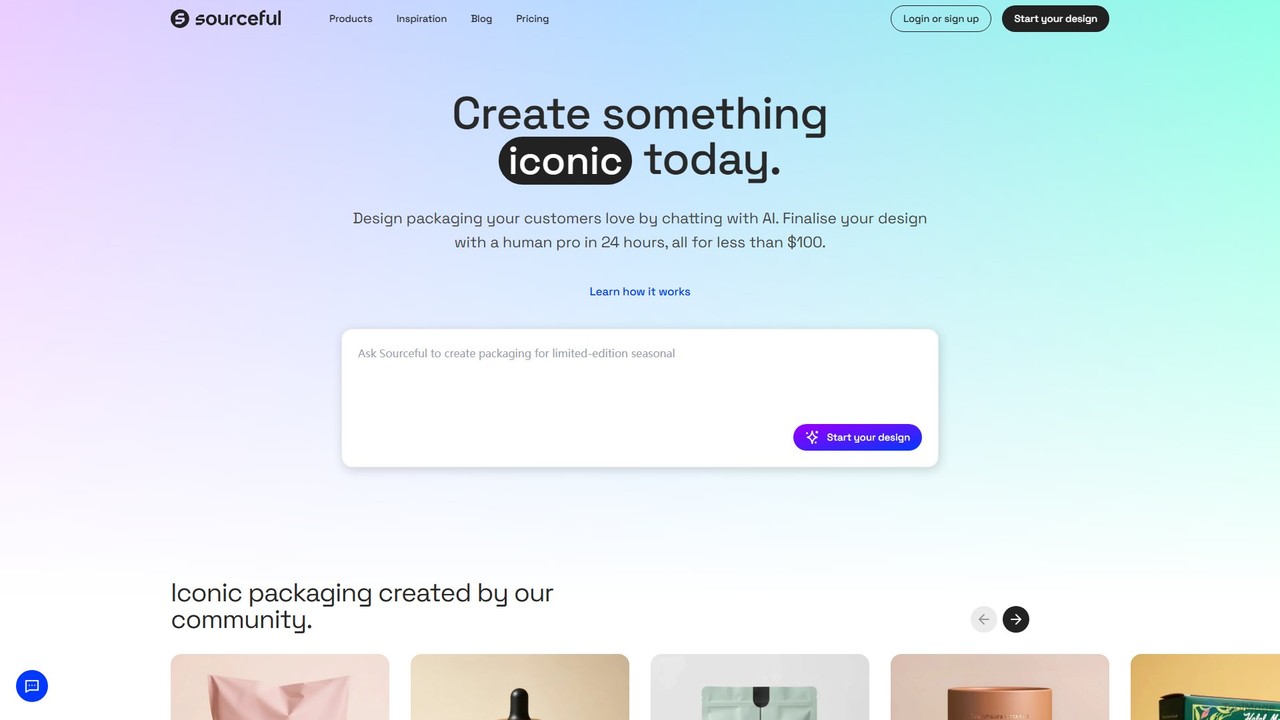
Sourceful is an AI-powered platform for creating professional packaging designs. Generate unlimited concepts by chatting with an AI, then have a human expert finalize your chosen design into a print-ready file within 48 hours. It combines AI's speed with professional oversight, offering features like 3D mockups, performance analysis, and artwork extraction for brands in e-commerce, beauty, and food & beverage.
About Product Design
Product Design AI tools are specialized platforms that leverage artificial intelligence to streamline and enhance the creation, iteration, and optimization of product visuals and user experiences. These tools utilize advanced algorithms to generate design concepts, automate repetitive tasks, and provide data-driven insights for improved product appeal. They empower designers, marketers, and e-commerce businesses to rapidly prototype, visualize, and refine products, significantly accelerating the design lifecycle and boosting market readiness.
Core Features
- AI-Powered Concept Generation: Automatically generates diverse design variations, styles, and layouts based on textual prompts or existing assets.
- Automated Image Enhancement: Removes backgrounds, adjusts lighting, and upscales product photos for professional e-commerce listings.
- 3D Product Visualization: Creates realistic 3D models and virtual try-on experiences from 2D images or basic inputs.
- UI/UX Design Assistance: Suggests optimal user interface layouts, element placements, and interaction flows based on user data and design principles.
- Design Optimization & A/B Testing: Analyzes design elements and predicts user preferences, facilitating data-driven design improvements.
Use Cases
These tools are invaluable for e-commerce businesses, product managers, and graphic designers. They are used to quickly generate multiple product image variations for A/B testing on online stores, create compelling marketing visuals for social media campaigns, and develop interactive 3D models for augmented reality product previews, enhancing customer engagement and conversion rates.
How to Choose
When selecting Product Design AI tools, consider the specific design tasks you need to automate, such as image generation, 3D modeling, or UI/UX assistance. Evaluate the quality and realism of the AI-generated output, its integration capabilities with your existing design software or e-commerce platforms, and the tool's ease of use. Also, assess the pricing model and scalability to ensure it aligns with your budget and future growth.

Product DesignUse Cases
Generate Diverse Product Image Variations
E-commerce brands use AI to create hundreds of unique product image variations (e.g., different backgrounds, lighting, angles, or models) from a single studio shot. This allows for extensive A/B testing on product pages to identify the most engaging visuals, directly impacting conversion rates and reducing the need for costly photoshoots.
Create Lifestyle Product Photos
Marketers and small business owners leverage AI to transform standard product cutouts into realistic lifestyle images. By inputting a product image and a text prompt describing the desired scene, AI generates high-quality visuals that resonate with target audiences, saving time and resources compared to traditional photography.
Design Marketing Banners & Ads
Digital marketing teams utilize AI product design tools to rapidly generate visually appealing banners and advertisements for new product launches or promotional campaigns. The AI can adapt designs to various platform specifications and suggest optimal layouts, ensuring consistent branding and maximizing ad effectiveness across channels.
Automate 3D Model Creation for AR/VR
E-commerce retailers employ AI to convert 2D product images into interactive 3D models. This enables customers to view products in augmented reality (AR) or virtual reality (VR) environments, offering an immersive shopping experience. The automation significantly reduces the manual effort and specialized skills traditionally required for 3D modeling.
Personalize E-commerce UI/UX Elements
Product managers and UX designers use AI to dynamically adjust website or app interface elements based on individual user behavior and preferences. For example, AI can suggest personalized product recommendation layouts or optimize button placements, leading to a more intuitive and engaging shopping journey for each customer.
Rapid Prototyping of E-commerce Storefronts
Web designers and developers use AI to quickly generate wireframes and mockups for new e-commerce website layouts or feature additions. By providing basic requirements, AI can propose various design options, allowing for faster iteration and stakeholder feedback, thereby accelerating the development cycle of online stores.