Imamind
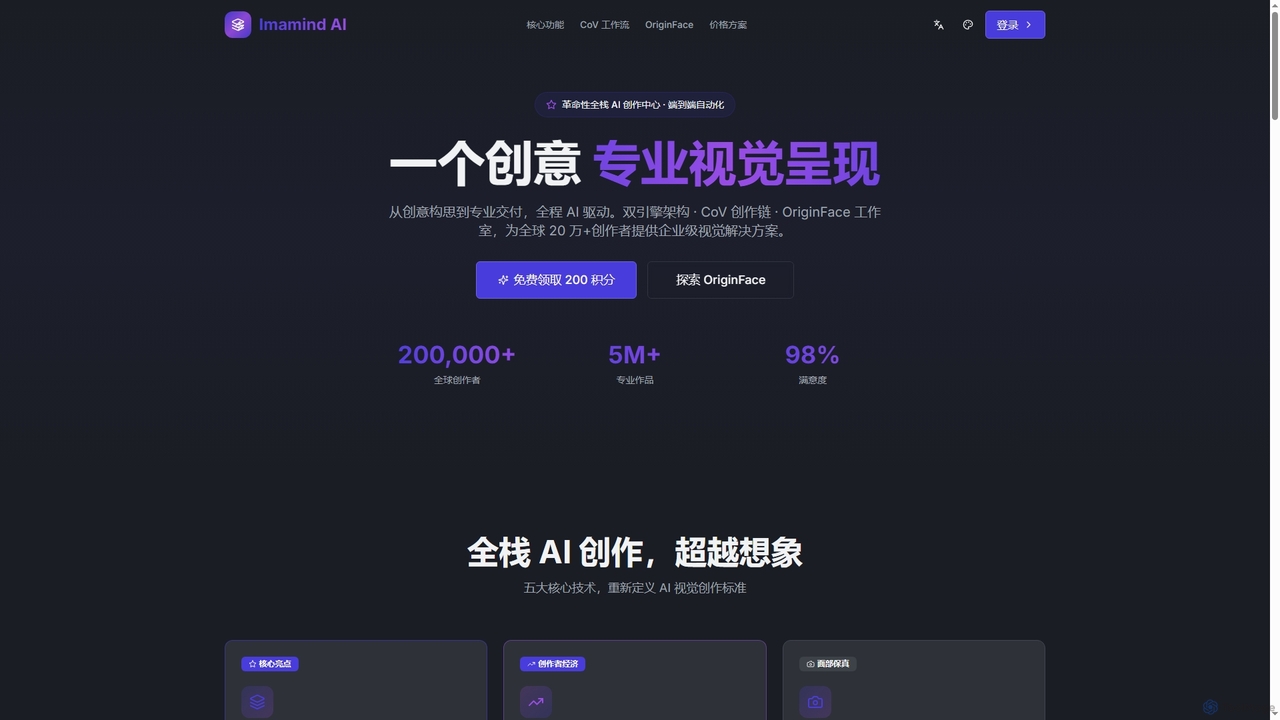
Imamind is a revolutionary full-stack AI visual design platform that automates the entire creative process from concept to …
Imamind is a revolutionary full-stack AI visual design platform that automates the entire creative process from concept to professional delivery. It offers dual-engine architecture, intelligent AI workflows, precise face fidelity for portraits, and advanced AI editing tools, empowering over 200,000 creators globally.
About Product Imaging
AI Product Imaging tools are a specialized category of software that uses artificial intelligence to create, enhance, and manipulate product visuals for e-commerce. These tools leverage generative AI models to produce photorealistic images, virtual scenes, and model showcases from text prompts or existing photos. They automate the entire visual content creation pipeline, from removing backgrounds to generating complete lifestyle shots, significantly reducing the need for traditional photoshoots. This technology empowers businesses to create high-quality, consistent, and diverse product imagery at scale.
Core Features
- AI Background Generation: Instantly remove, replace, or generate realistic backgrounds or studio settings for product photos.
- Virtual Photoshoots: Create entirely new, photorealistic images of products in various scenes and contexts without a physical camera.
- AI Model Generation: Showcase apparel and accessories on AI-generated human models, offering diversity in ethnicity, age, and body type.
- 3D Rendering & Visualization: Transform product designs or simple images into interactive 3D models and high-fidelity renderings.
- Image Enhancement & Upscaling: Automatically improve the quality, resolution, color balance, and lighting of existing product images.
Use Cases
These tools are primarily used by e-commerce brands, online retailers, and marketing agencies. For instance, a furniture company can generate images of a sofa in hundreds of different living room styles. A fashion brand can display a single dress on various AI models to appeal to a global audience. Marketplace sellers on platforms like Amazon or Shopify use them to create compliant, clean product images in bulk.
How to Choose
When selecting an AI Product Imaging tool, consider the quality and realism of the generated images first. Evaluate the specific features you need, such as background editing, virtual model generation, or 3D capabilities. Assess the tool's ease of use and workflow integration with your e-commerce platform. Finally, compare pricing models, whether it's a subscription-based service or a pay-per-image credit system, to align with your budget and usage volume.

Product ImagingUse Cases
Generate Lifestyle Scenes for Furniture
An e-commerce manager for a furniture brand needs to showcase a new armchair in various home settings. Instead of organizing expensive and time-consuming photoshoots, they upload a single studio shot of the chair to an AI Product Imaging tool. Using text prompts like 'armchair in a minimalist Scandinavian living room with natural light' or 'armchair in a cozy rustic cabin by the fireplace', the tool generates dozens of unique, high-resolution lifestyle images in minutes. This allows them to refresh their product listings and social media content frequently, increasing customer engagement and conversion rates without the logistical overhead.
Create On-Model Imagery for Apparel
An independent fashion designer wants to sell their new collection online but lacks the budget for model photoshoots. They take flat-lay photos of their garments and use an AI tool with model generation capabilities. The designer can select from a diverse range of AI-generated models, specifying ethnicity, body type, and age. The tool then realistically drapes the clothing onto the selected models, creating professional-looking on-model photos. This process not only saves thousands of dollars but also promotes inclusivity by showcasing products on a variety of body shapes that represent their actual customer base.
Batch Processing for Marketplace Compliance
An Amazon FBA seller manages hundreds of product listings, each requiring images with a pure white background. Manually editing each photo is tedious and costly. The seller uses an AI Product Imaging tool to batch-process their entire catalog. They upload 500 images at once, and the AI automatically detects the product, removes the original background, and replaces it with a compliant white background (RGB 255, 255, 255). The tool also auto-crops and resizes the images to meet Amazon's specifications. The entire process takes under an hour, saving over 95% of the time and cost associated with manual editing.
Generate Ad Creatives at Scale
A marketing team for a direct-to-consumer skincare brand needs to create a high volume of ad creatives for social media campaigns. They use an AI imaging tool that offers ad templates. By uploading one high-quality image of their product, they can instantly generate dozens of variations formatted for Instagram Stories, Facebook carousels, and Google Display Ads. The AI can add promotional text, change background colors to match campaign themes, and even place the product in relevant lifestyle contexts, like on a bathroom vanity. This enables the team to A/B test numerous creative concepts quickly and affordably, optimizing their ad spend for higher returns.
Create 360-Degree Views for Electronics
A seller of high-end headphones wants to provide a more interactive online shopping experience. Instead of complex 3D modeling software or expensive rotating photography rigs, they use an AI imaging tool. They upload several static photos of the headphones from different angles. The AI analyzes these images, understands the product's geometry, and generates a smooth, interactive 360-degree spin view. This asset can be embedded directly into their product page on Shopify. As a result, customers can examine the product from all angles, leading to higher confidence in their purchase and a reduction in product returns due to unmet expectations.
Enhance Food Photography for Delivery Apps
A local restaurant owner lists their menu on several food delivery apps like Uber Eats and DoorDash. Their self-taken photos look amateurish and unappetizing. Using an AI Product Imaging tool, they upload their existing photos. The AI automatically enhances the images by improving lighting, boosting color saturation to make ingredients look fresh, and sharpening details. It can also replace the cluttered kitchen background with a clean, rustic wooden table or a professional-looking slate surface. The result is a menu with vibrant, mouth-watering photos that stand out from competitors, leading to a measurable increase in online orders.