ToolMage
Sign in

Best 5 Recommendation Engine AI tools for E Commerce

Popular Recommendation Engine AI tools in E Commerce include liftigniter, AI Gift Guru, GiftHuntr, Giftylist, and yourperfectpresents, helping you work more efficiently.

liftigniter
Paid

liftigniter

LiftIgniter is an AI-powered, real-time personalization platform designed for digital publishers and e-commerce businesses. It leverages machine learning to understand user intent and deliver hyper-personalized content and product recommendations, aiming to significantly boost user engagement, conversions, and revenue.

Analytics
Visits 213.7KFavorites 94Likes 97
Giftylist
Free

Giftylist

Giftylist is an AI-powered gift recommendation tool that simplifies finding the perfect present. By using either a guided gift finder or a conversational AI assistant named Gifty, users can receive unique and thoughtful gift suggestions tailored to the recipient's relationship, interests, and the specific occasion, making gifting easy and stress-free.

Recommendation Engine
Visits 3.6KFavorites 118Likes 115
AI Gift Guru
Free

AI Gift Guru

AI Gift Guru is a free, AI-powered tool designed to simplify gift-giving. By providing details about the recipient such as their relationship to you, age, gender, interests, and the specific occasion, the tool generates unique and personalized gift ideas. It helps you find the perfect present for anyone, effortlessly, while catering to your budget.

Recommendation Engine
Visits 5.8KFavorites 110Likes 119
yourperfectpresents
Free

yourperfectpresents

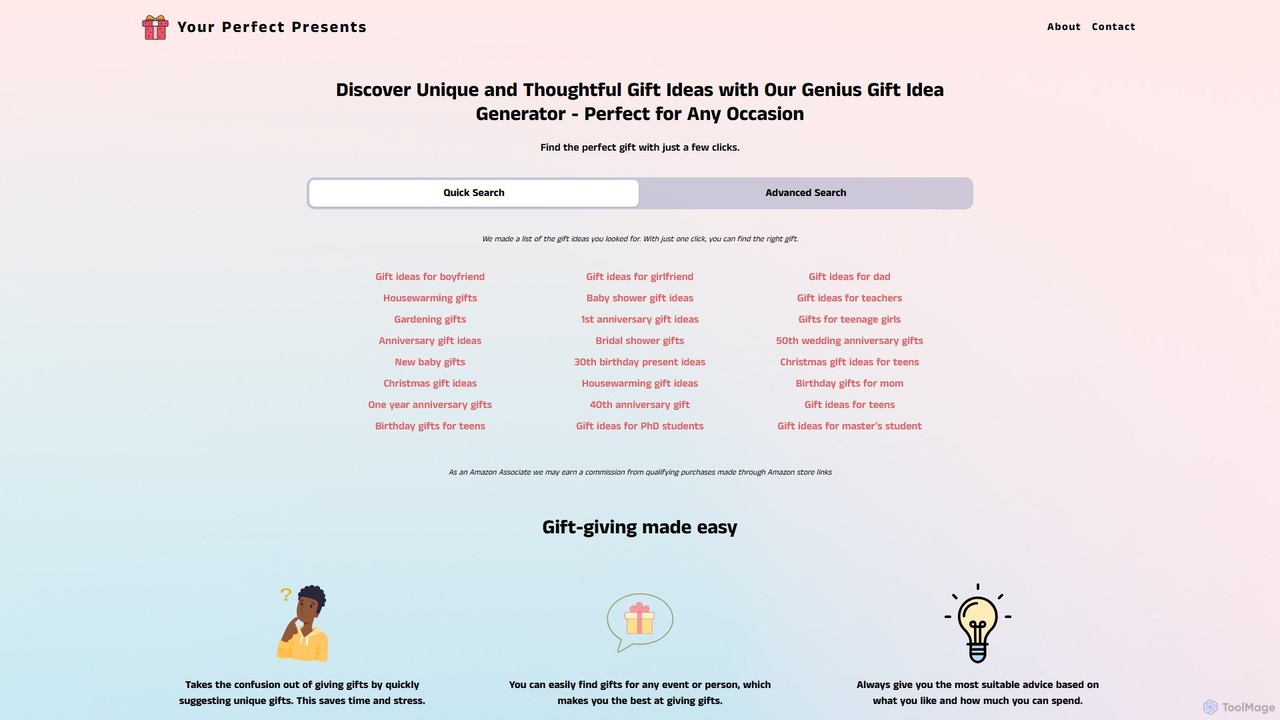
yourperfectpresents is an AI-powered gift idea generator that helps you find unique and thoughtful presents for any occasion. By analyzing the recipient's age, gender, interests, and your budget, the tool provides personalized recommendations with direct links to purchase on Amazon, making gift-giving simple and stress-free.

Recommendation Engine
Visits 3.5KFavorites 129Likes 125
GiftHuntr
Free

GiftHuntr

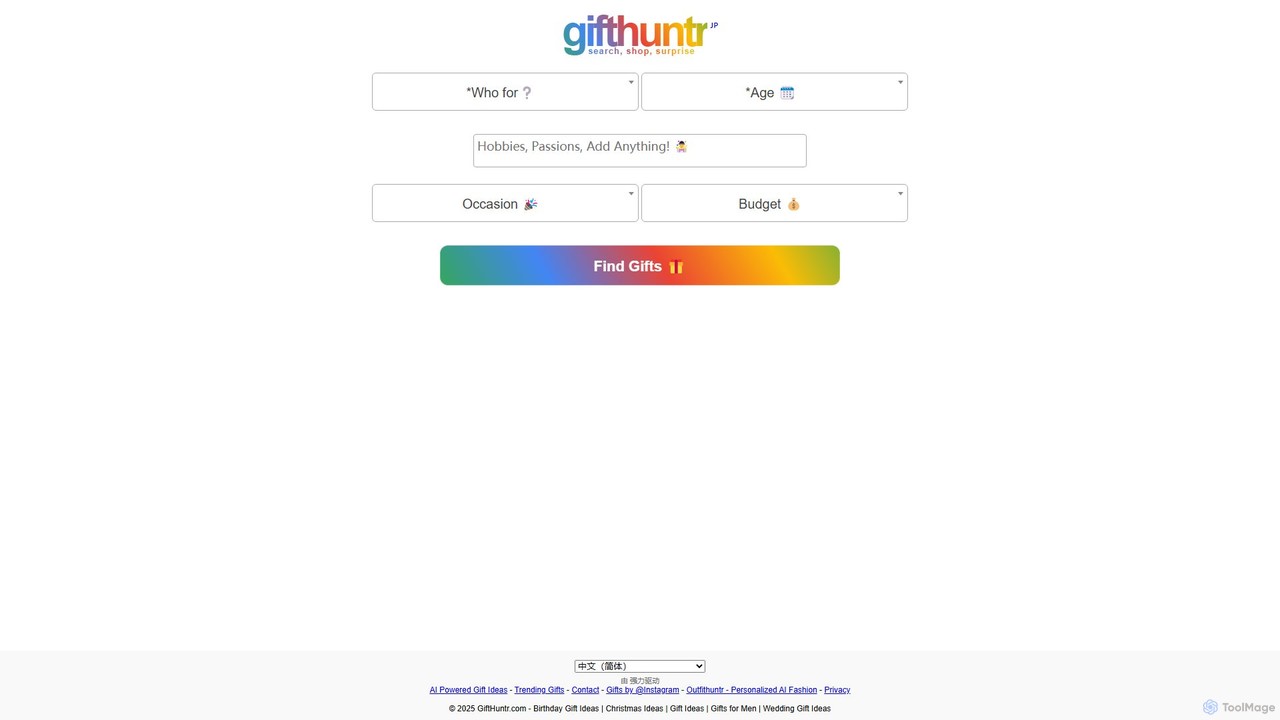
GiftHuntr is an AI-powered gift idea generator that helps you find the perfect present for any occasion. By analyzing the recipient's personality, interests, and hobbies, it provides unique and personalized gift suggestions for birthdays, Christmas, weddings, and more. It also includes a price comparison tool to ensure you get the best deal.

Recommendation Engine
Visits 5.5KFavorites 92Likes 93

About Recommendation Engine

Recommendation Engines are AI-powered systems designed to suggest relevant items—such as products, content, or services—to users. These tools leverage machine learning algorithms to analyze user behavior, preferences, and historical data, predicting what a user is most likely to be interested in. By providing personalized suggestions, recommendation engines significantly enhance user experience, drive engagement, and boost conversion rates, particularly within e-commerce and content platforms.

Core Features

  • Personalized Suggestions: Delivers tailored product, content, or service recommendations based on individual user data.
  • Behavioral Analysis: Analyzes past interactions, purchase history, viewing patterns, and explicit preferences to build user profiles.
  • Real-time Adaptation: Adjusts recommendations instantly as user behavior or item popularity changes.
  • A/B Testing & Optimization: Allows for testing different recommendation strategies and algorithms to maximize effectiveness.
  • Scalability: Capable of handling large datasets and high user traffic, adapting to growing business needs.

Applicable Scenarios

Recommendation engines are indispensable for e-commerce platforms aiming to increase average order value and customer loyalty. They are also vital for media streaming services to improve content discovery and retention, and for online marketplaces to facilitate service matching between providers and consumers.

How to Choose

When selecting a recommendation engine, consider its data integration capabilities with your existing systems, the flexibility and sophistication of its algorithms, and its ability to provide real-time recommendations. Evaluate scalability to ensure it can grow with your user base, and look for robust A/B testing features to continuously optimize performance and ROI.

Featured tool rankings

Recommendation Engine use cases

1

Personalized Product Recommendations in E-commerce

An e-commerce manager uses a recommendation engine to display 'Customers who bought this also bought' or 'Recommended for you' sections on product pages and checkout. By analyzing browsing history, purchase data, and similar user behavior, the engine suggests highly relevant products, leading to a significant increase in average order value and cross-selling opportunities, often boosting sales by 10-30%.

2

Content Discovery for Media Streaming Platforms

A media company uses a recommendation engine to suggest movies, TV shows, or music to subscribers based on their viewing/listening history, ratings, and the preferences of similar users. This ensures users discover new content they'll enjoy, increasing watch time, subscription retention, and overall platform engagement by providing a highly personalized entertainment experience.

3

Personalized Email Marketing Campaigns

A marketing team integrates a recommendation engine with their email marketing platform to send personalized product suggestions in newsletters or abandoned cart recovery emails. Instead of generic promotions, customers receive tailored recommendations based on their browsing history or past purchases, significantly improving email open rates, click-through rates, and ultimately, conversion from email campaigns.

4

Dynamic Pricing and Offer Optimization

Retailers use recommendation engines to dynamically adjust product prices or offer personalized discounts based on individual customer segments, their price sensitivity, and real-time demand. This strategy maximizes revenue by offering competitive prices to price-sensitive customers while maintaining higher margins for those less sensitive, optimizing profitability across the customer base.

5

Talent Matching in Recruitment Platforms

Recruitment platforms deploy recommendation engines to match job seekers with relevant job openings and employers with suitable candidates. By analyzing resumes, job descriptions, skills, and past hiring data, the engine provides highly accurate matches, significantly reducing the time-to-hire and improving the quality of placements for both parties in the job market.

6

Personalized News Feed and Article Suggestions

News publishers and content aggregators utilize recommendation engines to curate personalized news feeds and suggest articles to readers. Based on reading habits, topics of interest, and engagement metrics, the engine delivers highly relevant content, increasing user time on site, reducing bounce rates, and fostering a more engaging and informative reading experience for each individual.

Recommendation Engine FAQ

What is a Recommendation Engine?

A Recommendation Engine is an AI-powered system that suggests relevant items to users based on their past behavior, preferences, and similar user data. It uses machine learning algorithms to predict user interest, enhancing personalization across platforms like e-commerce, media streaming, and content aggregation. Its core purpose is to improve user experience and drive engagement by offering tailored suggestions.

How do Recommendation Engines differ from simple filtering?

Recommendation Engines go beyond simple filtering by using advanced AI algorithms to learn and predict user preferences, even for items they haven't explicitly searched for. Simple filtering relies on explicit criteria (e.g., price range, category), while recommendation engines analyze implicit signals, behavioral patterns, and collaborative filtering to offer proactive, personalized, and often surprising suggestions that enhance discovery and engagement.

What are the main benefits of using a Recommendation Engine in e-commerce?

In e-commerce, Recommendation Engines offer several key benefits. They significantly increase average order value (AOV) through cross-selling and up-selling, improve customer retention by providing a personalized shopping experience, and boost conversion rates by presenting highly relevant products. Additionally, they enhance product discovery, reduce bounce rates, and provide valuable insights into customer preferences, ultimately driving higher revenue and customer loyalty.

What types of algorithms do Recommendation Engines typically use?

Recommendation Engines commonly employ several types of algorithms. Collaborative Filtering recommends items based on the preferences of similar users or items. Content-Based Filtering suggests items similar to those a user has liked in the past. Hybrid Models combine these approaches for improved accuracy. Other methods include matrix factorization, deep learning, and context-aware recommendations, all aiming to provide the most relevant and personalized suggestions.

How can businesses measure the effectiveness of a Recommendation Engine?

Businesses can measure the effectiveness of a Recommendation Engine through various metrics. Key performance indicators include increased conversion rates, higher average order value (AOV), improved customer retention rates, and reduced bounce rates. Other important metrics are click-through rates (CTR) on recommendations, engagement time with suggested content, and the diversity of recommended items. A/B testing different recommendation strategies is also crucial for continuous optimization and proving ROI.