ToolMage
Sign in

Best 1 Shopping AI tools for E Commerce

Popular Shopping AI tools in E Commerce include CouponGPTs, helping you work more efficiently.

CouponGPTs
Freemium

CouponGPTs

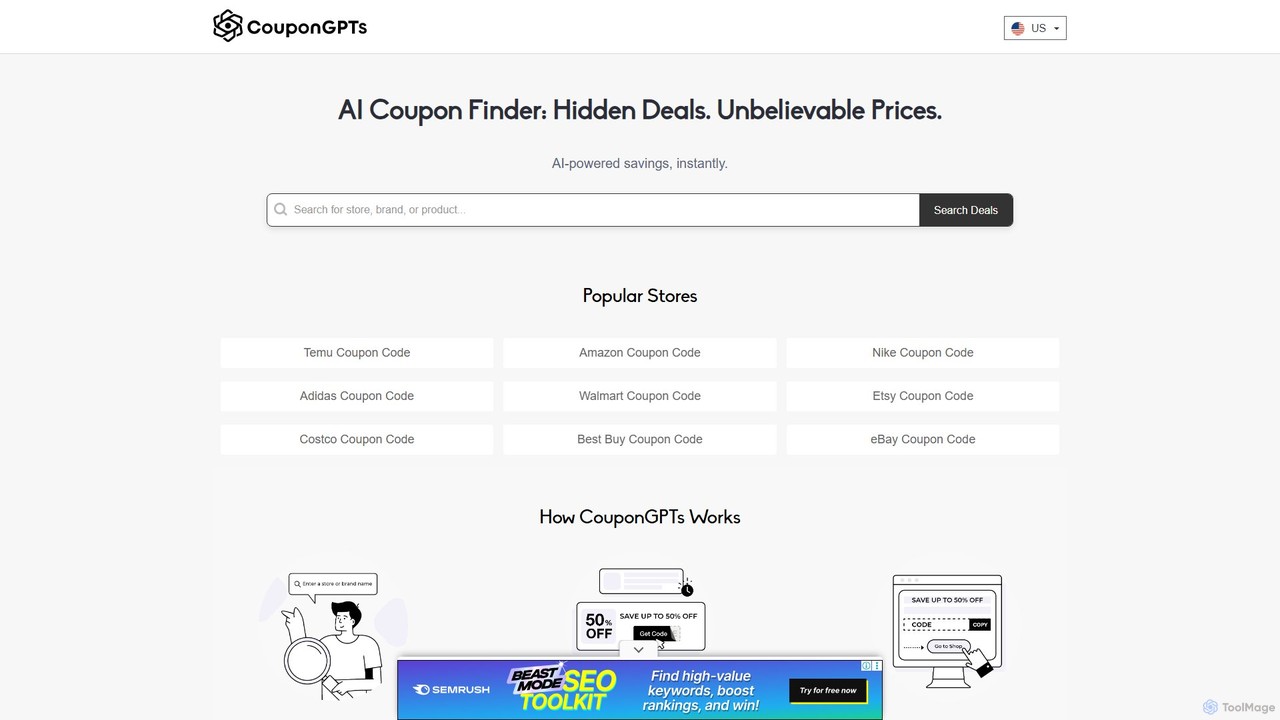
CouponGPTs is an AI-powered coupon finder that leverages GPT and NLP technology to scour the web for the best deals and promo codes. It offers a personalized search experience, helping users instantly find valid discounts for their favorite stores, making online shopping more efficient and affordable.

Shopping
Visits 5.7KFavorites 146Likes 129

About Shopping

AI Shopping tools are applications designed to enhance the online retail experience through artificial intelligence. They utilize machine learning algorithms to analyze customer data, behavior, and preferences to deliver personalized interactions and streamline the purchasing process. These tools empower consumers to discover relevant products more effectively and help retailers increase engagement, conversion rates, and customer satisfaction. The core value lies in transforming standard e-commerce browsing into a smart, interactive, and highly tailored journey.

Core Features

  • Personalized Recommendations: Analyzes user browsing history and purchase data to suggest highly relevant products.
  • Visual Search: Allows users to find products by uploading an image instead of using text-based keywords.
  • AI Chatbots & Assistants: Provides 24/7 customer support, answers product queries, and guides users through their purchase.
  • Virtual Try-On (VTO): Uses augmented reality (AR) to let customers visualize products like apparel or makeup on themselves.
  • Dynamic Pricing & Promotions: Adjusts prices and offers in real-time based on demand, competition, and user behavior.

Use Cases

These tools are widely used by e-commerce businesses of all sizes, from fashion and beauty brands to electronics and furniture retailers. Marketing teams use them to create personalized campaigns, while customer service departments leverage AI chatbots to handle inquiries efficiently. Individual shoppers also benefit directly from browser extensions or apps that offer price tracking and automated coupon application.

How to Choose

When selecting an AI Shopping tool, consider its integration capabilities with your existing e-commerce platform (e.g., Shopify, Magento). Evaluate the accuracy and sophistication of its recommendation engine. For customer-facing tools like virtual try-on, assess the user experience and realism. Also, consider the pricing model—whether it's based on usage, subscription, or a percentage of sales—and ensure it aligns with your business scale.

Shopping use cases

1

Personalized Fashion Styling Recommendations

A fashion retailer wants to increase average order value by helping customers build complete outfits. They integrate an AI shopping assistant into their website. When a customer views a product, like a pair of jeans, the AI analyzes the item's style, color, and fabric, along with the customer's browsing history. It then instantly generates a 'Shop the Look' section, suggesting a compatible shirt, jacket, and shoes. This not only simplifies the shopping process but also encourages customers to purchase multiple items, turning a single product view into a full outfit sale.

2

Virtual Furniture Placement with Augmented Reality

An online furniture store faces the common challenge of customers being unsure how a piece of furniture will look and fit in their home. By implementing an AI-powered virtual try-on tool, they allow shoppers to use their smartphone's camera to place a 3D model of a sofa or table directly into their living room via augmented reality. The tool accurately scales the furniture and allows users to view it from different angles. This immersive experience reduces purchase uncertainty, significantly lowers product return rates, and enhances customer confidence in buying large items online.

3

Automated Price Tracking and Coupon Finding

An avid online shopper wants to ensure they always get the best deal without spending hours comparing prices. They install an AI-powered browser extension. While they browse a product on an e-commerce site, the AI tool works in the background, automatically scanning thousands of other retailers for a better price. When the shopper proceeds to checkout, the tool also searches for and tests all available coupon codes, applying the one that provides the greatest discount. This automates the entire deal-finding process, saving the user both time and money on every purchase.

4

AI Chatbot for Product Discovery and Support

An electronics retailer wants to improve customer engagement and guide users to the right products. They deploy an AI shopping chatbot on their website. A customer looking for a new laptop can interact with the chatbot, answering questions about their budget, primary use (e.g., gaming, work, travel), and preferred features (e.g., screen size, battery life). Based on these inputs, the AI chatbot provides a curated list of 2-3 suitable laptops, explaining the pros and cons of each. It can also answer follow-up questions, compare models, and direct the user to the checkout page, acting as a knowledgeable virtual sales associate.

5

Visual Search for Finding Similar Products

A user sees a piece of clothing on social media but doesn't know the brand or where to buy it. Using an e-commerce app with an AI visual search feature, they upload a screenshot. The AI analyzes the image, identifying key attributes like the item's type (dress), color (blue), pattern (floral), and style (A-line). It then searches the retailer's entire inventory and displays a list of visually similar dresses available for purchase. This transforms inspiration found anywhere into a direct shopping opportunity, bridging the gap between seeing and buying.

6

Dynamic Pricing for Competitive Advantage

An online retailer selling consumer electronics wants to remain competitive in a fast-moving market. They use an AI dynamic pricing tool that continuously monitors competitors' prices, stock levels, and market demand. The AI automatically adjusts the prices of their products in real-time. For example, it might slightly lower the price of a popular smartphone to match a competitor's flash sale, or increase the price of a rare accessory when stock is low elsewhere. This strategy allows the retailer to maximize profit margins and sales volume without constant manual intervention, ensuring they always offer a compelling price point.

Shopping FAQ

What are AI Shopping tools?

AI Shopping tools are software applications that use artificial intelligence to personalize and improve the online shopping experience. They analyze user behavior, preferences, and product data to offer features like personalized recommendations, visual search, and intelligent chatbots. The primary goal is to make shopping more efficient and enjoyable for consumers while helping retailers increase sales and customer loyalty.

How to choose the right AI Shopping tool?

Choosing the right AI Shopping tool depends on your specific goals. Consider the following factors:

  • Integration: Ensure the tool can seamlessly integrate with your existing e-commerce platform (e.g., Shopify, WooCommerce, Magento).
  • Key Features: Identify your primary need. Do you need a better recommendation engine, a customer support chatbot, or a virtual try-on feature?
  • Scalability: Select a tool that can grow with your business and handle increasing traffic and data volume.
  • User Experience: For customer-facing tools, prioritize those that are intuitive, fast, and provide a high-quality, realistic experience (e.g., for AR).
  • Analytics: Look for tools that provide clear data and insights on performance, so you can measure its impact on sales and engagement.
What is the difference between AI Shopping tools and general E-commerce platforms?

The main difference lies in their scope and focus. E-commerce platforms (like Shopify or BigCommerce) are comprehensive systems for running an entire online store, managing inventory, processing payments, and handling logistics. AI Shopping tools, on the other hand, are specialized applications that often plug into these platforms. They focus specifically on enhancing the customer-facing shopping experience through features like personalization, search, and interactive support, rather than managing the backend operations of the business.

Can AI shopping tools be used by individual consumers?

Yes, absolutely. While many AI shopping tools are designed for businesses to integrate into their websites, many others are created for direct use by consumers. These often take the form of browser extensions or mobile apps. Popular examples include tools that automatically track prices and send alerts, find and apply coupon codes at checkout, or use visual search to find products from photos. These tools empower individual shoppers to save time and money.

What are the main benefits of using AI in shopping?

Using AI in shopping offers significant benefits for both shoppers and retailers. For shoppers, the key advantages are:

  • Personalization: Receiving product recommendations and offers tailored to individual tastes.
  • Convenience: Faster product discovery through features like visual search and AI assistants.
  • Savings: Tools that automatically find the best prices and apply discounts.

For retailers, the benefits include:

  • Increased Conversions: Personalized experiences guide customers to purchase more effectively.
  • Higher Customer Loyalty: A smooth and helpful shopping journey encourages repeat business.
  • Operational Efficiency: AI chatbots can handle customer queries 24/7, freeing up human agents.