
ToolMage
Sign in

Best 1 Upselling AI tools for E Commerce

Popular Upselling AI tools in E Commerce include Vanga AI, helping you work more efficiently.

Vanga AI
Paid

Vanga AI

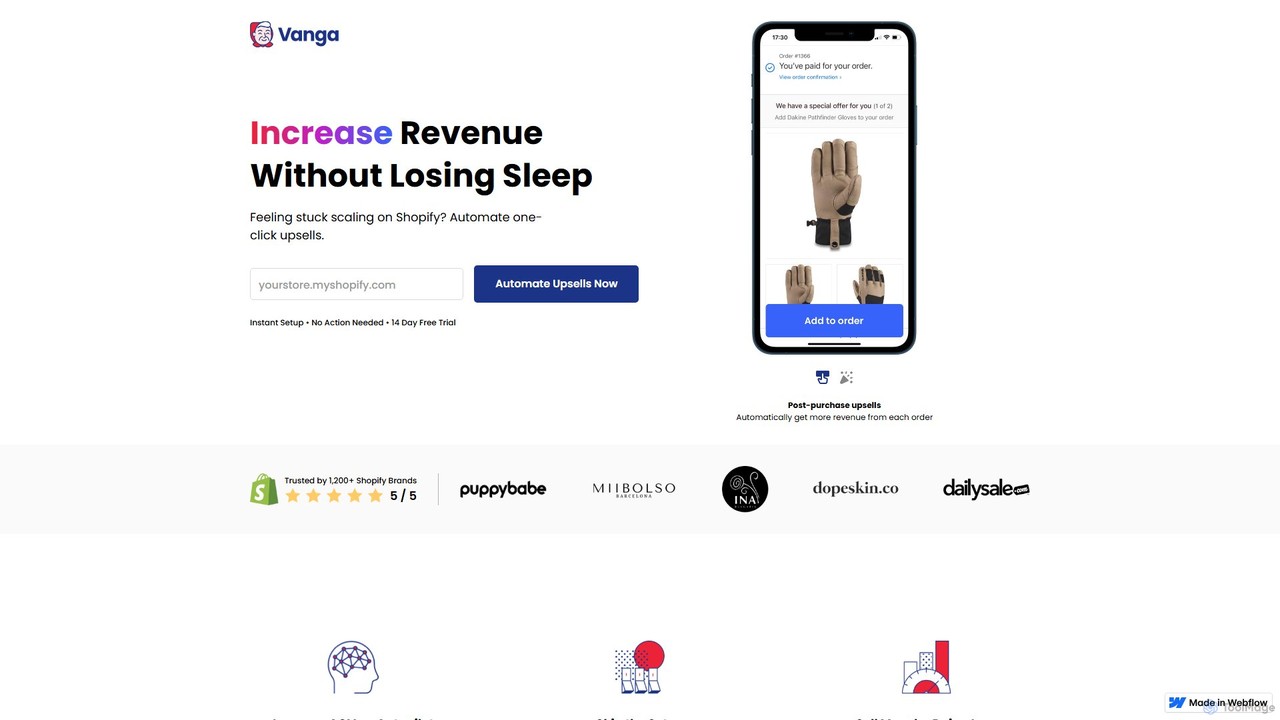
Vanga AI is an intelligent Shopify app that automates upsells and cross-sells to boost your store's revenue. Using AI, it analyzes customer behavior to recommend products they are most likely to buy together, seamlessly integrating into the native Shopify checkout to increase your average order value with minimal effort.

Upselling
Visits 5.2KFavorites 156Likes 156

About Upselling

AI Upselling tools are a specialized category of software designed to automatically identify and present opportunities to encourage customers to purchase a higher-end version of a product or relevant upgrades. These tools leverage machine learning to analyze customer behavior, purchase history, and real-time browsing data to predict which offers are most likely to convert. The primary value is to increase the Average Order Value (AOV) and customer lifetime value by making highly relevant, personalized suggestions at critical points in the sales funnel. They go beyond simple rule-based suggestions by adapting their recommendations dynamically.

Core Features

  • Predictive Recommendations: Utilizes AI to analyze data and predict which premium products or add-ons a specific customer is most likely to buy.
  • Behavioral Triggers: Automatically presents upselling offers based on specific user actions, such as time spent on a page, items added to cart, or cart value.
  • Dynamic Offer Personalization: Customizes the upselling message, product, and timing for each individual user to maximize relevance and conversion rates.
  • A/B Testing and Optimization: Allows for testing different upselling strategies, offers, and placements to continuously improve performance based on real data.
  • Performance Analytics: Provides detailed dashboards to track key metrics like AOV increase, conversion rates of offers, and overall revenue lift.

Applicable Scenarios

These tools are essential for e-commerce businesses of all sizes, from fashion and electronics retailers to digital goods stores. They are also widely used in SaaS and subscription-based services to encourage users to upgrade to higher-tier plans. In the travel and hospitality industry, they are used to offer room upgrades, premium packages, or better seats.

Selection Criteria

When choosing an AI Upselling tool, consider its integration capabilities with your existing e-commerce platform (e.g., Shopify, Magento, WooCommerce). Evaluate the sophistication of its AI model and the level of personalization it offers. Also, assess the customization options for the offer's appearance and placement, and ensure its analytics dashboard provides actionable insights for your business goals.

Upselling use cases

1

E-commerce Checkout Optimization

An online fashion retailer uses an AI upselling tool to analyze a customer's cart in real-time. When a customer adds a pair of jeans, the AI identifies a premium leather belt that is frequently purchased with that specific item by high-spending customers. Just before checkout, a non-intrusive pop-up displays the belt as a 'recommended upgrade' to complete the look. This personalized, context-aware suggestion increases the average order value by prompting an impulse purchase of a higher-margin item.

2

SaaS Subscription Tier Upgrades

A project management SaaS provider uses an AI upselling tool to monitor account usage. The system identifies a team on a 'Basic' plan that is consistently approaching their file storage limit and frequently using features that are more robust in the 'Pro' plan. Instead of a generic upgrade email, the tool triggers a personalized in-app message highlighting how the 'Pro' plan's unlimited storage and advanced reporting would directly solve their current workflow bottlenecks. This targeted approach results in a higher conversion rate for plan upgrades.

3

Travel and Hospitality Package Upgrades

An online travel agency's booking engine integrates an AI upselling tool. When a user selects a standard hotel room, the AI analyzes their profile and browsing history. If it detects interest in luxury travel or past bookings of premium rooms, it presents a time-sensitive offer to upgrade to a 'Sea View Suite' for a small additional fee. The offer is framed as an exclusive deal based on their customer loyalty, creating a sense of urgency and value that significantly increases the uptake of room upgrades and ancillary services.

4

Post-Purchase Upselling for Electronics

A consumer electronics store uses an AI tool for post-purchase communication. After a customer buys a new laptop, the system waits for a week and then triggers an automated email. Instead of a generic accessory list, the AI suggests an upgrade to a premium 3-year extended warranty, citing the high value of the device and the peace of mind it offers. The timing is crucial, as it allows the customer to appreciate the new device first. This targeted, value-driven upsell is more effective than offering it at the point of sale when the customer is already making a large payment.

5

In-App Purchase Upselling in Gaming

A mobile game developer employs an AI upselling tool to increase revenue from in-app purchases. The AI tracks a player's behavior, skill level, and spending habits. When a player is about to buy a 'Small Gem Pack', the AI determines if they are a highly engaged user. If so, it presents a one-time offer for a 'Medium Gem Pack' that provides 50% more value for only a 20% higher price. This dynamic offer, tailored to player engagement, encourages larger transaction sizes without alienating casual players with overly aggressive promotions.

6

B2B Software Add-On Recommendations

A B2B company selling CRM software uses an AI upselling tool integrated into their customer portal. The tool analyzes how a client company uses the software. If it detects that their marketing team is exporting data to a separate analytics tool daily, it triggers a recommendation for their integrated 'Advanced Analytics Module'. The upsell proposal is sent to the account manager, complete with data showing the client's current usage patterns and a calculated ROI for the add-on. This empowers the sales team to make a data-driven, relevant upsell pitch that solves a clear customer need.

Upselling FAQ

What are AI Upselling tools?

AI Upselling tools are software applications that use artificial intelligence and machine learning to encourage customers to buy a more expensive or upgraded version of a product they are considering. Unlike traditional methods that show static offers, these tools analyze vast amounts of data—such as user behavior, past purchases, and real-time context—to present personalized, timely, and highly relevant upgrade suggestions. Their main goal is to increase Average Order Value (AOV) and enhance customer lifetime value by improving the relevance of offers.

What is the difference between AI Upselling and Cross-selling tools?

The primary difference lies in the type of recommendation. Upselling aims to persuade a customer to buy a more expensive, upgraded, or premium version of the same product (e.g., a larger screen TV). Cross-selling, on the other hand, involves suggesting related or complementary products (e.g., a soundbar to go with the new TV). AI tools for each function are specialized; upselling tools focus on 'better', while cross-selling tools focus on 'also'. Many advanced e-commerce AI platforms combine both capabilities, but their underlying algorithms and strategic goals are distinct.

How do I choose the right AI Upselling tool for my e-commerce store?

Choosing the right tool depends on several factors. Consider the following:

  • Integration: Ensure the tool seamlessly integrates with your e-commerce platform (e.g., Shopify, WooCommerce, BigCommerce).
  • AI Sophistication: Look for tools that offer true machine learning-based personalization rather than simple rule-based logic. Ask about the data points they use for recommendations.
  • Customization: The tool should allow you to customize the look, feel, and placement of upselling offers to match your brand's style.
  • Analytics: A strong analytics dashboard is crucial. It should provide clear insights into how upselling efforts are impacting your AOV, conversion rates, and overall revenue.
  • A/B Testing: The ability to test different offers and strategies is key to optimizing your results over time.
Can AI Upselling tools negatively impact the user experience?

Yes, if implemented poorly. An effective AI upselling tool enhances the user experience by providing relevant, helpful suggestions that feel like a personalized service. However, if the tool is too aggressive, shows irrelevant offers, or interrupts the user's journey with intrusive pop-ups, it can be detrimental. The key is to use AI to ensure relevance and timing. A good tool will present the right upgrade offer to the right customer at the right moment, adding value rather than creating friction in the buying process.

Who benefits most from using AI Upselling tools?

A wide range of businesses can benefit, but they are particularly effective for:

  • E-commerce Stores: Retailers in fashion, electronics, beauty, and home goods can significantly increase their average order value.
  • SaaS and Subscription Companies: These businesses use upselling to move customers from free or basic tiers to more profitable premium plans.
  • Travel and Hospitality: Airlines, hotels, and booking agencies use them to sell upgrades like better seats, premium rooms, or travel packages.
  • Digital Goods and Gaming: Companies selling software, in-game items, or digital content can use AI to suggest more valuable versions or bundles.

Essentially, any business with a tiered product or service structure can leverage AI upselling to boost revenue and customer loyalty.