ToolMage
Sign in

Best 1 Application Assistant for Education

Popular Application Assistant in Education include Lyra, helping you work more efficiently.

Lyra
Freemium

Lyra

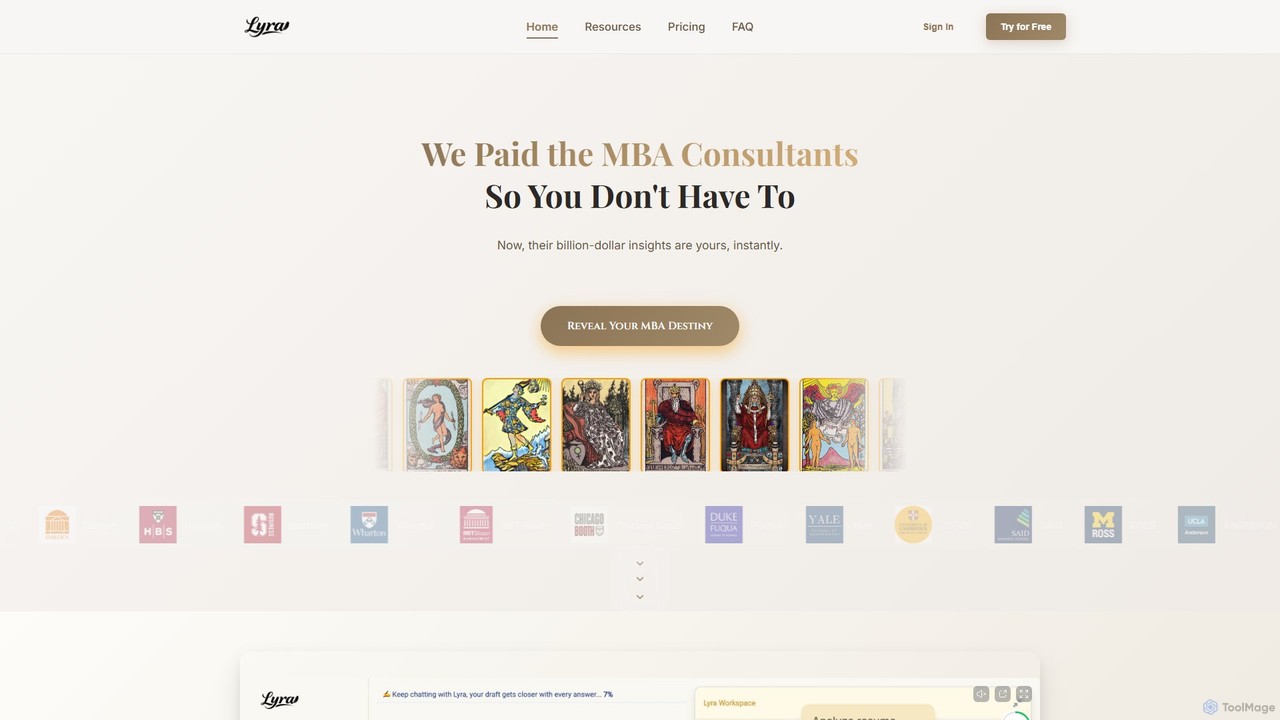
Lyra is a specialized AI assistant designed to help MBA applicants write compelling and authentic application essays. By leveraging proven strategies from top business schools like Harvard, Stanford, and Wharton, Lyra guides users through a step-by-step process, from resume analysis to final draft, ensuring a polished and impactful submission.

Job Application
Visits 4.1KFavorites 116Likes 102

About Application Assistant

Application Assistant tools are AI-powered platforms designed to streamline and enhance the process of creating college, job, or grant applications. They leverage natural language processing to help users draft compelling personal statements, build professional resumes, and prepare for interviews. These assistants guide users through each step, from brainstorming initial ideas to polishing the final submission, significantly improving the quality and coherence of application materials. Their primary goal is to help applicants present their qualifications effectively and increase their chances of success.

Core Features

  • AI Essay Editing: Get suggestions for improving grammar, tone, clarity, and structure in personal statements and cover letters.
  • Resume & CV Optimization: Create and tailor resumes with industry-specific keywords and professional templates optimized for applicant tracking systems (ATS).
  • Interview Simulation: Practice answering common and role-specific interview questions with AI-driven feedback on responses and delivery.
  • Application Management: Organize deadlines, track submission statuses, and manage checklists for multiple applications in one centralized place.

Use Cases

These tools are primarily used by high school and university students applying for higher education, as well as job seekers across various industries crafting resumes and cover letters. Professionals applying for grants, fellowships, or specialized programs also use these tools to structure complex proposals and personal histories, ensuring all components are polished and persuasive.

How to Choose

When selecting an Application Assistant, consider the specific type of application you're working on (e.g., academic vs. professional). Evaluate the depth of its writing feedback, the quality of its resume templates, and whether it offers specialized features like interview preparation. Also, review its data privacy policy to ensure your personal information is handled securely.

Featured tool rankings

Application Assistant use cases

1

Crafting a Compelling University Personal Statement

A high school senior applying to competitive universities struggles to articulate their experiences into a powerful narrative. Using an AI Application Assistant, they input achievements and personal anecdotes. The tool helps brainstorm unique essay angles, suggests structural outlines, and provides sentence-level feedback to improve flow and impact. The result is a polished, authentic personal statement that effectively showcases their strengths, completed in a fraction of the time.

2

Tailoring a Resume for a Specific Tech Job

A software developer wants to apply for a Senior Engineer role. They upload their existing resume and the job description to an Application Assistant. The AI analyzes the job's required skills (e.g., 'Kubernetes,' 'Go,' 'CI/CD') and suggests adding these keywords. It also recommends rephrasing bullet points to highlight relevant project outcomes, ensuring the resume passes through Applicant Tracking Systems (ATS) and catches the recruiter's eye.

3

Preparing for a Behavioral Job Interview

A recent graduate has a final-round interview for a marketing position. They use an Application Assistant's interview simulation feature. The tool generates common behavioral questions like 'Tell me about a time you faced a conflict.' The user records their answers, and the AI provides feedback on clarity, confidence, use of the STAR method (Situation, Task, Action, Result), and speaking pace. This practice helps them build confidence and deliver structured, impactful answers during the actual interview.

4

Managing Multiple Scholarship Applications

A college student is applying for five different scholarships, each with unique essay prompts and deadlines. An Application Assistant with project management features allows them to create a dashboard. They can track each application's status, set reminders for deadlines, and store drafts of different essay versions. This centralized system prevents missed deadlines and ensures each application is complete and submitted correctly, reducing the stress of managing complex requirements.

5

Writing a Professional Cover Letter from Scratch

A career changer applying for a role in a new industry is unsure how to write an effective cover letter. They provide the AI Application Assistant with their resume and the job details. The tool generates a structured draft that connects their transferable skills to the new role's requirements. It helps them articulate their motivation for the career change and highlights their potential value to the new employer, creating a professional and persuasive letter.

6

Refining a Graduate School Statement of Purpose

A researcher applying for a Ph.D. program needs to write a highly specific Statement of Purpose (SOP). They use an AI assistant to check for academic tone, clarity, and conciseness. The tool identifies jargon that could be simplified, flags passive voice, and ensures the SOP clearly links their past research to the target program's faculty and resources. This refinement process helps transform a good draft into a compelling academic document that stands out to the admissions committee.

Application Assistant FAQ

What is an AI Application Assistant?

An AI Application Assistant is a software tool that uses artificial intelligence to help users create and manage applications for school, jobs, or grants. Its core functions typically include assisting with writing essays and resumes, preparing for interviews, and tracking deadlines. These tools aim to improve the quality of application materials and streamline the entire process for the applicant.

How do I choose the right Application Assistant tool?

To choose the right tool, first identify your primary need. Are you focused on writing a personal statement, building a resume, or preparing for interviews? Consider the following factors:

  • Specialization: Does the tool cater to academic (college) or professional (job) applications?
  • Feature Set: Look for specific features like plagiarism checkers, ATS optimization for resumes, or interactive interview practice.
  • Feedback Quality: Evaluate how deep and useful the AI's suggestions are for your specific writing style and needs.
  • Ease of Use: The interface should be intuitive and help you stay organized, not add complexity.

What's the difference between an Application Assistant and a general AI writer?

While both use AI for writing, an Application Assistant is a specialized tool. General AI writers are versatile but lack context-specific features for applications. Application Assistants offer structured templates for resumes, provide feedback based on university or job requirements, include interview simulators, and often have deadline trackers. They are designed specifically for the unique workflows and nuances of the application process, which a general writer does not address.

Can an AI Application Assistant guarantee my acceptance?

No tool can guarantee acceptance. Admissions and hiring decisions depend on many factors beyond your application materials, such as your qualifications, competition, and interview performance. However, an AI Application Assistant can significantly improve the quality, clarity, and professionalism of your application. It helps you present your best self on paper, which can increase your chances of making a positive impression and securing an interview.

Who should use an AI Application Assistant?

These tools are beneficial for a wide range of users who are navigating a formal application process. This includes:

  • High school students applying to colleges and for scholarships.
  • University students applying for graduate school, internships, or their first job.
  • Job seekers at any career level, from entry-level to executive, looking to optimize their resumes and cover letters.
  • Professionals and researchers applying for grants, fellowships, or certifications.