Education Best in category 1 results Architecture AI Tool

Popular AI tools in the Architecture field of Education include ArchitectureHelper, etc., helping you quickly improve efficiency.

ArchitectureHelper

ArchitectureHelper

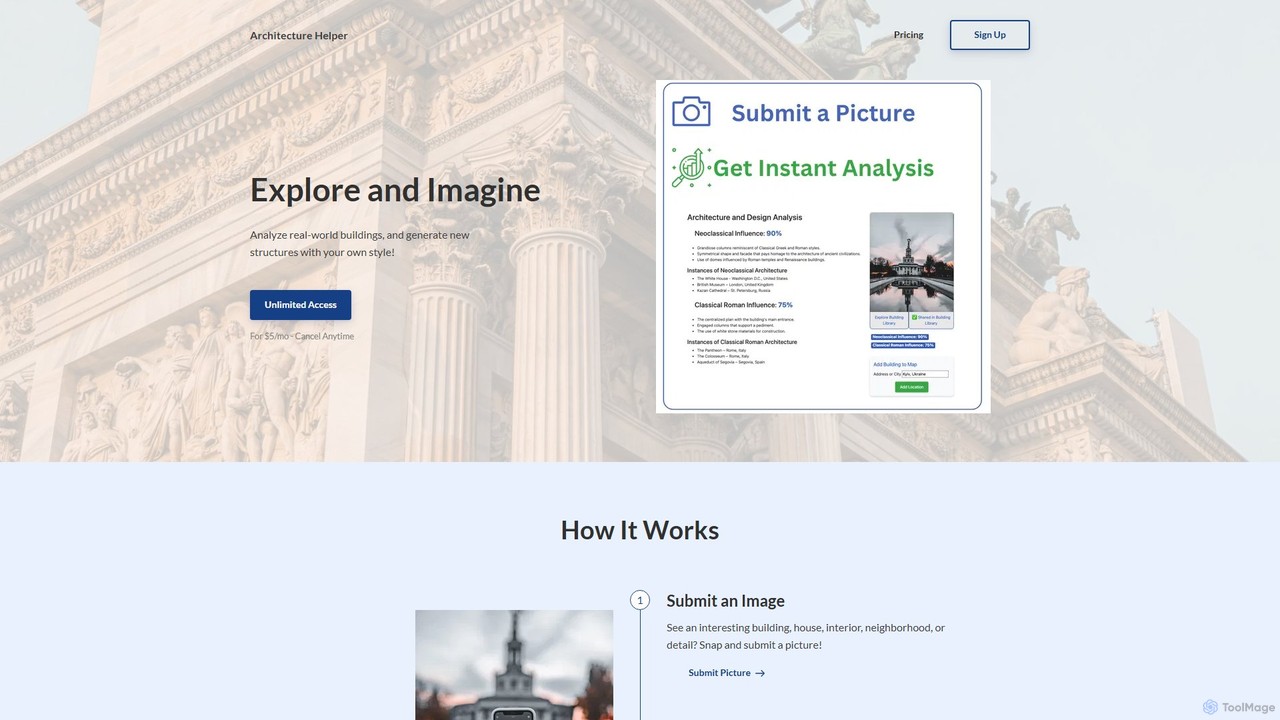
ArchitectureHelper is an AI-powered platform for architecture enthusiasts, travelers, and students. It allows users to identify architectural styles …

11.2K

About Architecture

Architecture AI tools are specialized software applications that leverage artificial intelligence to assist professionals in the architectural, engineering, and construction (AEC) industry. These tools utilize machine learning, generative design, and data analysis to streamline various stages of the design and building process. They enhance efficiency, foster innovation, and provide data-driven insights, making them valuable assets within the broader field of education and professional development for future architects and designers.

Core Features

  • Generative Design: Automatically creates multiple design options based on specified parameters and constraints.
  • Parametric Modeling: Allows for dynamic adjustment of design elements and immediate visualization of changes.
  • Building Information Modeling (BIM) Integration: Seamlessly integrates with BIM workflows for comprehensive project management and data analysis.
  • Performance Simulation: Simulates environmental factors like light, wind, and energy consumption to optimize building performance.
  • Automated Documentation: Generates construction drawings, schedules, and reports from design models, reducing manual effort.

Applicable Scenarios

Architects use these tools for rapid conceptual design exploration, generating diverse layouts and forms. Urban planners leverage AI for optimizing city master plans, considering factors like traffic flow and green spaces. Construction firms apply AI for predictive analysis of project timelines and resource allocation, minimizing delays and cost overruns.

How to Choose

When selecting Architecture AI tools, consider their compatibility with existing software (e.g., CAD, BIM), the specific design tasks they automate, the level of generative control offered, and the learning curve for your team. Evaluate the accuracy of simulations and the robustness of data analysis features to ensure they meet project demands.

ArchitectureUse Cases

1

Rapid Conceptual Design Exploration

Architects and designers can utilize AI tools to quickly generate hundreds of design variations for a project's initial conceptual phase. By inputting site constraints, programmatic requirements, and aesthetic preferences, the AI explores a vast solution space, presenting diverse layouts, forms, and material options. This significantly accelerates the ideation process, allowing designers to evaluate more possibilities and refine their vision efficiently, moving beyond traditional manual sketching limitations.

2

Optimizing Building Performance and Sustainability

Environmental consultants and sustainable design specialists employ AI-powered simulation tools to analyze a building's performance across various metrics. These tools can predict energy consumption, daylighting, thermal comfort, and wind patterns based on design parameters and local climate data. This enables designers to make informed decisions early in the design process, optimizing building orientation, facade design, and material selection to achieve higher energy efficiency and meet sustainability goals.

3

Automated Space Planning and Layout Generation

Interior designers and space planners use AI to automate the complex task of arranging furniture, equipment, and functional zones within a given space. By defining adjacency requirements, circulation paths, and specific area needs, the AI generates optimized floor plans that maximize usability and efficiency. This is particularly valuable for large-scale projects like offices, hospitals, or residential complexes, where manual layout planning is time-consuming and prone to errors.

4

Streamlining Construction Documentation

Project managers and BIM specialists leverage AI tools to automate the generation of detailed construction documentation. From a 3D model, the AI can automatically create floor plans, sections, elevations, schedules, and material take-offs, ensuring consistency and accuracy. This reduces the manual effort involved in drafting and coordinating drawings, minimizing errors and accelerating the handover process from design to construction, thereby improving overall project delivery.

5

Urban Planning and Master Plan Optimization

Urban planners and city developers utilize AI to analyze complex urban data and optimize master plans for new developments or redevelopments. These tools can simulate the impact of different planning scenarios on traffic flow, public space utilization, infrastructure needs, and environmental factors. By evaluating various options, AI helps create more livable, sustainable, and efficient urban environments, addressing challenges like population density and resource management.

6

Predictive Maintenance and Facility Management

Facility managers and building owners use AI-driven platforms to predict maintenance needs and optimize building operations. By analyzing data from sensors, building systems, and historical maintenance records, AI can identify potential equipment failures before they occur. This proactive approach reduces downtime, extends asset lifespan, and optimizes energy usage, leading to significant cost savings and improved operational efficiency throughout the building's lifecycle.

ArchitectureFrequently Asked Questions